Food certification has moved from a back-office compliance task into a market-access system. Food companies use certification to prove food safety controls, support exports, satisfy retailers, verify claims, and reduce supplier approval friction.
The market covers ISO 22000, FSSC 22000, BRCGS, SQF, HACCP-based systems, organic, halal, kosher, non-GMO, gluten-free, vegan, allergen, traceability, and sustainability-linked certifications.
The best way to read the market is by purpose: some certificates unlock retailers, some support exports, some protect brand trust, and others verify packaging claims. Together, they create recurring demand around audits, renewals, training, supplier controls, and documentation.
Executive Food Certification Market Benchmarks
• The global food certification market is estimated at USD 6.41 billion in 2025, making certification a multi-billion-dollar compliance and market-access category.
• The market is forecast to reach USD 8.72 billion by 2031, showing steady demand across food manufacturing, retail, exports, and product claims.
• The implied food certification CAGR is about 5.25% between 2025 and 2031.
• Another market benchmark places the sector at USD 5.85 billion in 2024 and USD 7.72 billion by 2029.
• FSSC 22000 has more than 37,000 certified organizations, showing the scale of management-system food safety certification.
• FSSC 22000 operates across more than 150 countries, making it a global scheme for multinational food supply chains.
• BRCGS Food Safety has more than 22,000 certificated sites, especially important for retailer-facing and private-label supply chains.
• BRCGS reaches more than 130 countries, which makes it one of the major global buyer-recognition systems.
• Organic, halal, kosher, non-GMO, gluten-free, vegan, and allergen-related certifications add growth beyond core food safety schemes.
• North America and Europe remain mature certification markets, while Asia-Pacific shows strong growth potential as packaged food production, exports, and organized retail expand.
| Metric | Current signal | Market implication |
|---|---|---|
| Market size | USD 6.41 billion in 2025 | Large recurring service market. |
| Forecast | USD 8.72 billion by 2031 | More sites, schemes, products, exports. |
| Growth rate | About 5.25% CAGR | Steady renewal-driven growth. |
| FSSC footprint | 37,000+ certified organizations in 150+ countries | Global supplier infrastructure. |
| BRCGS footprint | 22,000+ certificated sites in 130+ countries | Strong retailer influence. |
| Certification range | Food safety, organic, halal, kosher, non-GMO, gluten-free, vegan, allergen, traceability | Layered buyer and claim proof. |
Editorial readout
Food certification growth is not only regulatory. It is driven by buyer approval, export readiness, retailer access, product-claim trust, audit discipline, and brand protection.
Why Food Certification Is Becoming a Market-Access Requirement
Food certification is becoming a market-access requirement because buyers need proof before they trust suppliers. Retailers, importers, foodservice groups, and private-label customers often ask for recognized third-party certification before a manufacturer can enter their supply chain.
Certification also reduces friction inside global food trade. A food exporter may have a safe plant, trained employees, and documented controls, but buyers still need standardized proof. Certification turns internal systems into a recognized external signal.
• Retailers use certification to screen suppliers before onboarding packaged food, ingredients, chilled food, frozen food, and private-label products.
• Exporters use certification to support customs documentation, importer confidence, and destination-market requirements.
• Private-label suppliers use certification to prove that factory systems can meet retailer expectations at scale.
• Food processors use certification to reduce audit duplication because one recognized scheme can satisfy multiple buyer reviews.
• Claim-based certification helps brands defend organic, halal, kosher, non-GMO, gluten-free, vegan, and allergen-free product promises.
| Demand driver | Where it appears | Business implication |
|---|---|---|
| Retailer onboarding | Supermarkets, private label, importer approval | Shelf-access requirement. |
| Export access | Cross-border food trade | Less buyer uncertainty. |
| Product claims | Organic, halal, kosher, gluten-free, non-GMO, vegan | Stronger claim trust. |
| Food safety risk | Meat, dairy, seafood, ready-to-eat, infant food | Documented process control. |
| Audit efficiency | Large buyer networks | Reduces duplicate audits. |
Demand readout
Certification has become a buyer language. It tells retailers, importers, regulators, and customers that a food business can document, control, and verify what it produces.
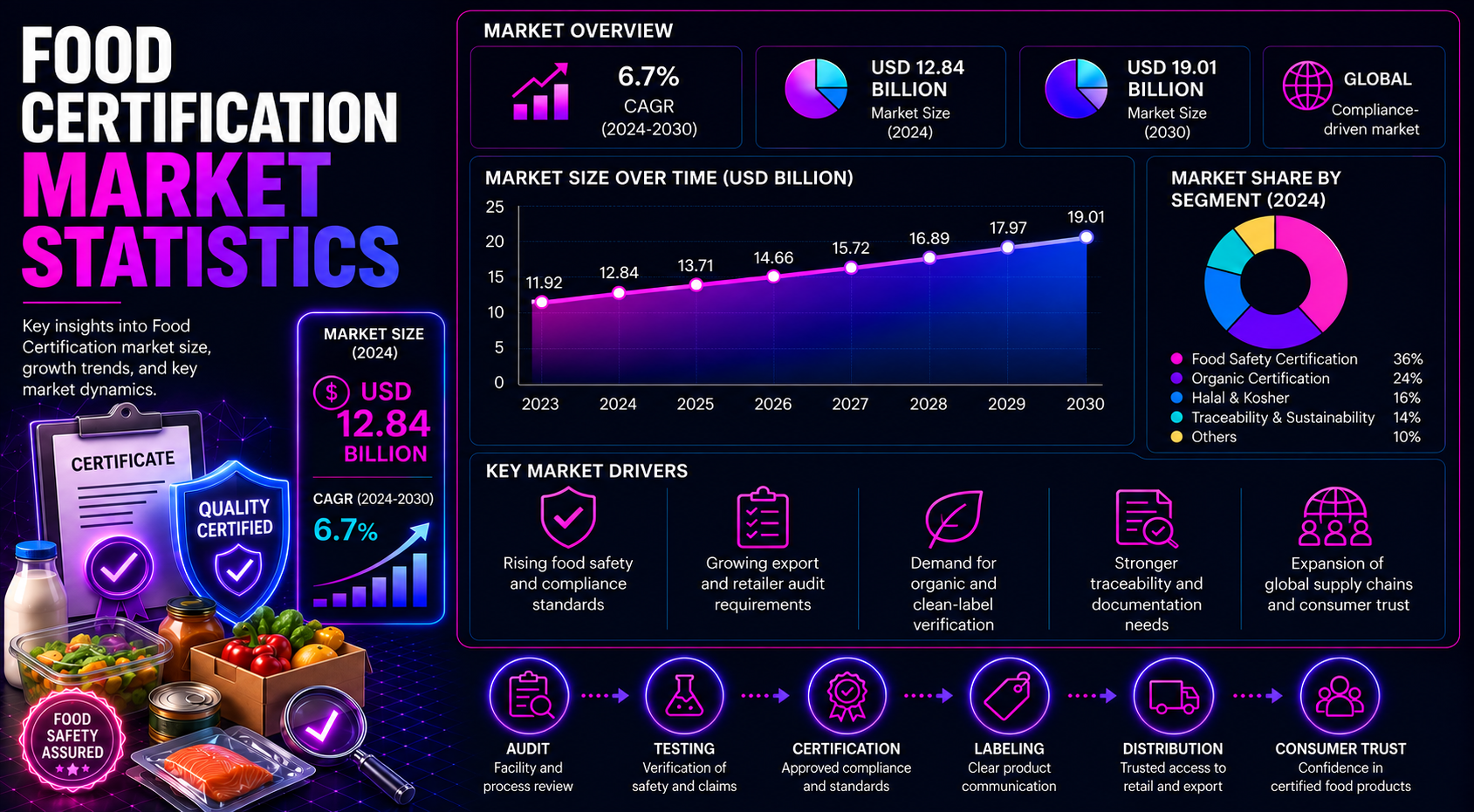
Food Certification Market Size Statistics
The food certification market is forecast to grow steadily because certification is not a one-time purchase. Food businesses renew certificates, update documentation, add new facilities, expand into new countries, certify new product lines, and adopt additional schemes when buyers or regulators ask for them.
The global food certification market is estimated at USD 6.41 billion in 2025 and is forecast to reach USD 8.72 billion by 2031. That implies a CAGR of about 5.25%, which is consistent with a market supported by recurring audits, renewals, training, supplier controls, product claims, and cross-border trade.
• Food certification market estimates vary because some reports include only certification services while others include audit support, testing, inspection, training, and claim verification.
• Market size also changes depending on whether organic, halal, kosher, non-GMO, gluten-free, vegan, and sustainability-related certifications are included.
• Growth is strongest where food production is increasingly exported, organized retail is expanding, and buyers require recognized third-party standards.
• Certification spending is usually recurring because food companies renew certificates and update systems when schemes, buyers, products, or markets change.
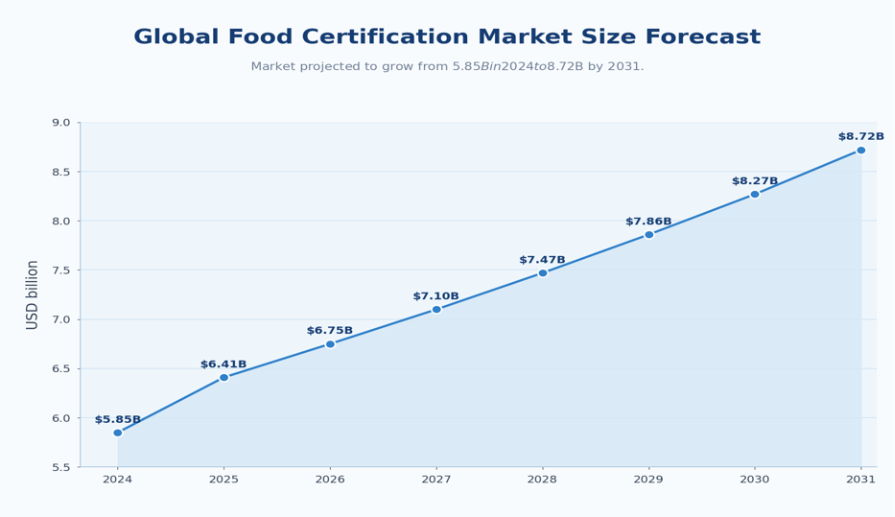
figure 1;Global food certification market size forecast.
| Year / period | Market value | Interpretation |
|---|---|---|
| 2024 | USD 5.85 billion | Alternative market benchmark. |
| 2025 | USD 6.41 billion | Current market signal. |
| 2027 | USD 7.10 billion | Renewal and scheme adoption. |
| 2029 | USD 7.72 billion | Alternative forecast benchmark for the market. |
| 2031 | USD 8.72 billion | Recurring demand outlook. |
| 2025–2031 | About 5.25% CAGR | Market-access cycle growth. |
Market size readout
The market’s growth rate is moderate but durable. Certification demand expands when companies add products, buyers, export markets, facilities, schemes, and claims.
Food Safety Certification Statistics
Food safety certification is the backbone of the food certification market. It gives buyers a structured way to evaluate whether a food company has documented controls around hazards, traceability, hygiene, corrective actions, supplier management, and audit readiness.
Core food safety schemes include ISO 22000, FSSC 22000, BRCGS Food Safety, SQF, and HACCP-based programs. These systems are especially important for food manufacturers, ingredient suppliers, meat processors, dairy plants, seafood exporters, bakeries, beverage producers, and ready-to-eat food companies.
• Food safety certification becomes more important as product risk increases across meat, dairy, seafood, chilled foods, frozen foods, and ready-to-eat categories.
• GFSI-recognized schemes help global buyers compare food safety systems across suppliers and countries.
• HACCP-based controls remain central because most certification systems require hazard identification, monitoring, corrective action, and verification.
• Food safety certification can reduce buyer audit friction when a recognized scheme is accepted by multiple customers.
• Certification also supports internal discipline because it forces facilities to keep documentation, training, corrective actions, and management review current.
| Scheme / system | Main users | Why it matters |
|---|---|---|
| ISO 22000 | Food manufacturers, processors, supply-chain operators | Management-system framework. |
| FSSC 22000 | Manufacturers, packaging, storage, transport, catering, retail/wholesale | Global GFSI-recognized system. |
| BRCGS Food Safety | Retailer-facing and private-label suppliers | Retailer/buyer acceptance. |
| SQF | Manufacturers, processors, foodservice suppliers | Buyer recognition system. |
| HACCP | Most food categories | Hazard-control foundation. |
Food safety readout
Food safety certification connects factory controls with buyer confidence. It shows that risks are not only understood but documented, monitored, corrected, and reviewed.
Certification Type Statistics
The food certification market is layered. Food safety certification may be the core, but many food businesses also need product-specific, claim-based, religious, organic, or traceability certifications. A company may need FSSC 22000 for a plant, halal certification for a product line, organic certification for ingredients, and non-GMO verification for packaging claims.
This layered structure explains why certification demand can grow even when the number of food companies grows slowly. The same company may add certificates when it enters new retailers, export destinations, product categories, or claim-sensitive consumer segments.
• Food safety certification remains the highest-demand category because it applies across factories, suppliers, retail chains, and export markets.
• Organic certification acts as both a compliance system and a premium consumer trust signal.
• Halal certification is critical for Muslim-majority markets and for global exporters targeting halal-sensitive supply chains.
• Kosher certification is important in the United States, Israel, Europe, and ingredient-heavy packaged food categories.
• Non-GMO, gluten-free, vegan, plant-based, and allergen-related certifications support consumer-facing product claims.
• Traceability and sustainability-linked certifications are becoming more relevant as retailers and regulators ask for stronger supply-chain visibility.
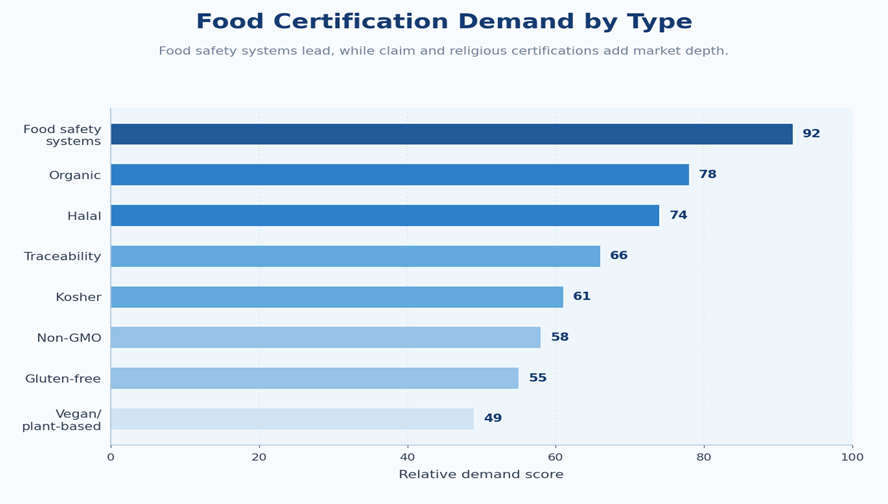
Figure 2; Food certification demand by certification type
| Certification type | Main users | Business implication |
|---|---|---|
| Food safety systems | Manufacturers, processors, exporters | Core buyer trust signal. |
| Organic | Produce, dairy, packaged food, beverages, baby food | Premium regulated claims. |
| Halal | Meat, poultry, dairy, ingredients, processed food, restaurants | Halal market access. |
| Kosher | Ingredients, packaged food, beverages, dairy, snacks | Trusted claim access. |
| Non-GMO | Packaged food, ingredients, cereals, snacks, beverages | Ingredient transparency. |
| Gluten-free / allergen | Bakery, snacks, cereals, frozen food | Risk-sensitive claims. |
| Vegan / plant-based | Meat alternatives, dairy alternatives, snacks, beverages | Lifestyle claim proof. |
| Traceability | Exporters, retailers, high-risk categories | Traceability and recall readiness. |
Type readout
The market is not one certification market. It is a layered certification economy where food safety, religious compliance, organic rules, product claims, and retailer standards overlap.
FSSC 22000 and BRCGS Certification Footprint
FSSC 22000 and BRCGS Food Safety are two of the clearest examples of certification becoming global supply-chain infrastructure. Both schemes help buyers evaluate suppliers across countries, categories, and production systems.
FSSC 22000 has more than 37,000 certified organizations across more than 150 countries. BRCGS Food Safety covers more than 22,000 certificated sites across more than 130 countries. These footprints show that food certification is not a niche activity; it is a standard part of international food business.
• FSSC 22000 is used across food manufacturing, food packaging, storage, transport, catering, retail/wholesale, and related supply-chain categories.
• BRCGS Food Safety is especially influential in retailer-facing and private-label supply chains.
• Large food companies often use scheme recognition to standardize supplier expectations across countries.
• Certification bodies, auditors, consultants, and internal quality teams benefit from recurring audit and renewal demand.
• Scheme footprint matters because buyers are more likely to recognize standards with wide global adoption.
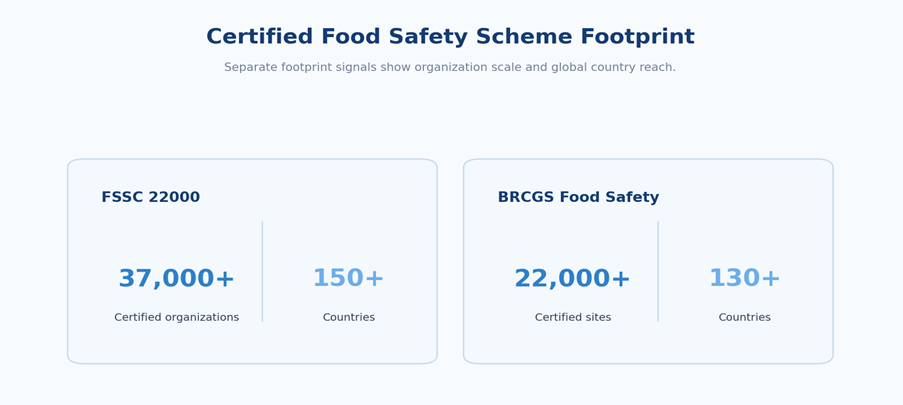
Figure 3; Food safety scheme footprint comparison
| Scheme | Known footprint | Market implication |
|---|---|---|
| FSSC 22000 | 37,000+ certified organizations | Global system demand. |
| FSSC 22000 | 150+ countries | Cross-border food safety language. |
| BRCGS Food Safety | 22,000+ certificated sites | Retail/private-label signal. |
| BRCGS Food Safety | 130+ countries | Global buyer recognition. |
| Scheme renewals | Recurring audit cycle | Recurring compliance work. |
Scheme readout
FSSC and BRCGS show how certification has become operating infrastructure for supplier approval, retail trust, export readiness, and audit standardization.
Organic, Halal, Kosher, and Claim-Based Certification Statistics
Consumer-facing certifications work differently from factory food safety certification. They often sit on packaging, sales documents, export files, retailer portals, and brand claims. They help consumers and buyers trust a product without needing to understand the full sourcing or production system behind it.
Organic certification supports regulated premium positioning. Halal and kosher certification support religious compliance and market access. Non-GMO, gluten-free, vegan, plant-based, and allergen-related certifications support lifestyle, health, and transparency claims.
• Organic certification is important in produce, dairy, packaged food, cereals, snacks, beverages, oils, and baby food.
• Halal certification is important in Muslim-majority markets and across meat, poultry, dairy, ingredients, processed food, beverages, and restaurants.
• Kosher certification remains important in the United States, Europe, Israel, packaged foods, ingredients, dairy, snacks, and beverages.
• Non-GMO certification is most visible in packaged foods, cereals, snacks, beverages, and ingredient-heavy products.
• Gluten-free certification helps brands communicate safety and trust to celiac and gluten-sensitive consumers.
• Vegan and plant-based certification supports dairy alternatives, meat alternatives, snacks, beverages, desserts, and functional foods.
• Allergen-related certification is especially relevant where cross-contact risk can damage trust and create serious safety concerns.
| Certification | Product categories | Market implication |
|---|---|---|
| Organic | Produce, dairy, grains, beverages, baby food | Premium regulated claims. |
| Halal | Meat, poultry, dairy, ingredients, foodservice | Halal/import access. |
| Kosher | Ingredients, dairy, snacks, beverages | Religious compliance access. |
| Non-GMO | Cereals, snacks, beverages, ingredients, packaged foods | Ingredient transparency. |
| Gluten-free | Bakery, snacks, cereals, frozen food | Health-sensitive trust. |
| Vegan / plant-based | Meat alternatives, dairy alternatives, beverages | Lifestyle positioning. |
| Allergen-related | Bakery, snacks, desserts, children’s food, prepared foods | Reduces claim ambiguity. |
Claim readout
Consumer-facing certifications turn complex sourcing, religious, health, lifestyle, or safety claims into simple trust signals that buyers and shoppers can recognize quickly.
Regional Food Certification Market Intelligence
Regional certification demand depends on the buyer environment. North America and Europe are mature because organized retail, private-label supply chains, and food safety expectations are strong. Asia-Pacific is growth-heavy because food exports, packaged food manufacturing, and organized retail are expanding. Latin America is export-driven, while the Middle East and Africa are shaped by halal, imports, and growing retail systems.
North America
North America has a mature certification environment. Supplier approval, private-label manufacturing, large retailers, foodservice buyers, organic claims, non-GMO labeling, gluten-free trust signals, kosher certification, SQF, BRCGS, and FSSC all play roles across food categories.
Europe
Europe is certification-intensive because regulation, retailer expectations, traceability, organic standards, and cross-border trade are strong. BRCGS, IFS, organic certification, sustainability signals, and product traceability are important in many European food supply chains.
Asia-Pacific
Asia-Pacific has strong growth potential because packaged food production, food exports, urban retail, and food safety modernization are increasing. China and India are important scale markets, while Indonesia and Malaysia have strong halal certification relevance.
Latin America
Latin America’s certification demand is strongly export-linked. Brazil, Mexico, Chile, Peru, and Argentina rely on certification across meat, fruit, coffee, grains, seafood, beverages, and processed food trade.
Middle East and Africa
Middle East and Africa demand is shaped by halal certification, food imports, retail modernization, government procurement, and expanding foodservice channels. UAE, Saudi Arabia, Egypt, South Africa, and Nigeria are important planning markets.
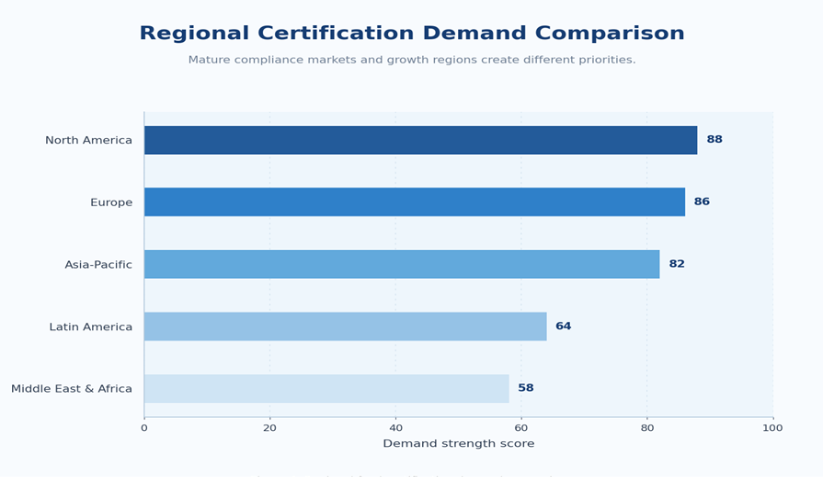
Figure 4; Regional food certification demand comparison.
| Region | Demand signal | Planning implication |
|---|---|---|
| North America | Retailer, private-label, SQF, organic, non-GMO, kosher, BRCGS, FSSC | Buyer approval and claims. |
| Europe | Regulation, traceability, organic rules, BRCGS/IFS, sustainability | Compliance and retail access. |
| Asia-Pacific | Packaged food, exports, halal demand, food safety modernization | Market-specific planning. |
| Latin America | Export-driven demand in meat, fruit, coffee, grains, seafood, and processed foods | Export buyer access. |
| Middle East & Africa | Halal, imports, retail modernization, foodservice | Religious/import approval. |
Regional readout
North America and Europe are compliance-heavy, Asia-Pacific is growth-heavy, Latin America is export-heavy, and the Middle East is strongly shaped by halal and import-compliance demand.
Country-Level Food Certification Statistics
Country-level certification strategy matters because the same certificate does not unlock every market. One country may prioritize retailer-recognized food safety schemes. Another may prioritize halal import controls, organic documentation, local standards, or export buyer verification.
The country-level view should be used as a planning scorecard. It helps food companies decide which certificates are needed for target buyers, export destinations, product claims, and retail channels.
• United States: High demand for SQF, BRCGS, FSSC, organic, non-GMO, gluten-free, kosher.
• Canada: Strong food safety, organic, retailer, and export-related certification needs.
• Mexico: Export, retail, food safety, and processed-food certification pressure.
• Brazil: Meat, poultry, grains, coffee, fruit, and export-related certification.
• Argentina: Meat, grains, processed food, and export certification needs.
• Chile: Fruit, seafood, wine, and export-oriented certification.
• United Kingdom: BRCGS relevance, retailer compliance, organic, private-label pressure.
• Germany: Food safety, organic, sustainability, traceability, and retail standards.
• France: Organic, quality, traceability, retail, and export-related certification.
• Italy: Organic, quality, export, processed food, and specialty product certification.
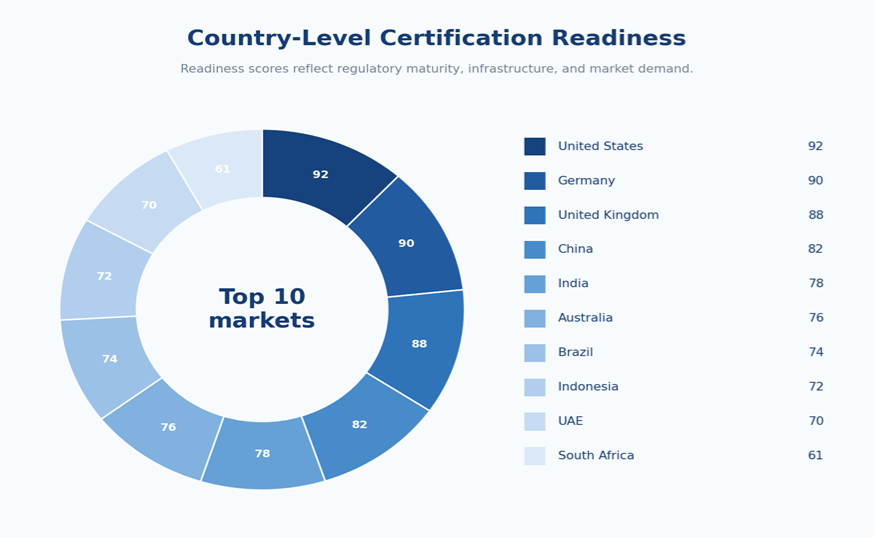
Figure 5 ; Country -level certification readiness scorecard.
Key Country Certification Scorecard
| Country / market | Certification pressure | Market implication |
|---|---|---|
| United States | SQF, BRCGS, FSSC, organic, non-GMO | Mature claim market. |
| Germany | Food safety, organic, traceability | High compliance demand. |
| United Kingdom | BRCGS, retail, private label | Supplier approval market. |
| China | Food safety, imports, packaged food | Trade modernization. |
| India | Processed food, organic, halal | Buyer access. |
| Brazil | Meat, poultry, grains, coffee | Export strength. |
| Indonesia | Halal, packaged food, exports | Halal-led access. |
| UAE | Halal, imports, retail, foodservice | Import/retail confidence. |
Country readout
Country strategy should focus on priority markets that combine buyer approval, export access, food safety pressure, claim verification, and regional certification demand.
End-User Food Certification Demand Statistics
Food certification demand changes by end user. A dairy processor does not face the same pressure as a packaging supplier, seafood exporter, bakery, beverage company, ingredient supplier, or private-label manufacturer. Each end user needs certification for a different mix of food safety, buyer approval, product claims, and export access.
• Food manufacturers use certification to prove facility controls and satisfy buyer approval requirements.
• Ingredient suppliers use certification because one ingredient can enter hundreds of downstream products.
• Meat, poultry, dairy, and seafood processors face stronger certification pressure because the categories are risk-sensitive.
• Retail and private-label suppliers often need recognized schemes before onboarding.
• Packaging, storage, transport, and logistics providers increasingly face certification pressure because they affect product safety and traceability.
| End-user group | Certification need | Priority certification areas |
|---|---|---|
| Food manufacturers | Buyer approval, audit readiness, product quality | FSSC, BRCGS, SQF, HACCP, ISO 22000 |
| Ingredient suppliers | Downstream buyer trust and claim consistency | Food safety, non-GMO, halal, kosher, organic |
| Meat and poultry processors | High-risk category controls and export access | Food safety, halal, kosher, traceability |
| Dairy processors | Safety, cold-chain trust, export documentation | Food safety, organic, kosher, halal |
| Seafood exporters | Traceability, import controls, buyer assurance | Food safety, sustainability, export certification |
| Packaging suppliers | Food-contact safety and supply-chain assurance | FSSC packaging, BRCGS packaging, ISO systems |
End-user readout
Certification demand is strongest where food safety risk, brand exposure, export value, retailer dependence, and claim sensitivity are high.
Food Product Category Certification Statistics
Certification pressure is highest when a product is risky, widely distributed, exported, sold with a claim, or used as an ingredient in many other products. This is why certification intensity differs sharply between categories.
• Meat and poultry often require strong food safety, halal, kosher, traceability, and export controls.
• Dairy requires strong hygiene, cold-chain, food safety, organic, halal, and kosher certification in many markets.
• Seafood certification is shaped by food safety, traceability, sustainability, and export buyer expectations.
• Bakery, cereal, and snack categories often combine food safety with gluten-free, allergen, organic, non-GMO, and private-label requirements.
• Infant food and children’s food carry high trust expectations because shoppers and retailers are more risk-sensitive.
• Plant-based foods often combine food safety, vegan, non-GMO, allergen, and sustainability-linked certifications.
| Product category | Certification pressure | Common certification needs |
|---|---|---|
| Meat and poultry | Very high | Food safety, halal, kosher, traceability, export documentation |
| Dairy | High | Food safety, organic, kosher, halal, cold-chain controls |
| Seafood | High | Food safety, traceability, sustainability, export compliance |
| Bakery | Medium-high | Food safety, gluten-free, allergen, organic, private label |
| Processed foods | High | Food safety, BRCGS, FSSC, halal, kosher, claim verification |
| Plant-based food | High | Vegan, non-GMO, allergen, food safety, sustainability |
Category readout
Certification pressure rises when a food product is high-risk, exported, branded, widely distributed, or sold with a consumer-facing claim.
Retailer, Export, and Supply-Chain Certification Statistics
Retailer, export, and supply-chain requirements create much of the commercial force behind food certification. A certificate can shorten buyer review, support import documentation, reduce repeated audits, and help a supplier prove that controls are already in place.
• Retailers often require recognized third-party certification before approving private-label or high-risk suppliers.
• Exporters use certification to show buyers that food safety and claim systems are documented before shipment.
• Importers rely on certification to reduce uncertainty when evaluating suppliers in other countries.
• Supplier audits become easier when a facility already maintains recognized scheme documentation.
• Traceability certification helps companies prove supply-chain visibility across ingredients, processing, storage, and distribution.
| Compliance driver | Where it matters | Business implication |
|---|---|---|
| Retailer onboarding | Supermarkets, private label, national accounts | Gatekeeping requirement. |
| Export documentation | Cross-border food shipments | Importer trust. |
| Buyer audits | Large food brands and retailers | Fewer duplicate audits. |
| Private-label supply | Retail-owned brands | Documented controls. |
| Traceability | High-risk and claim-sensitive supply chains | Recall readiness. |
| Product claims | Packaging and marketing claims | Claim credibility proof. |
Supply-chain readout
Certification reduces friction. It helps suppliers move faster through buyer approval, export checks, retailer onboarding, and private-label programs.
Food Certification Market Forecasts and Growth Drivers
The food certification market outlook is steady because certification demand repeats. A food company may start with one facility certification, then add another scheme, certify more products, enter a new export market, add an organic or halal line, or adopt stricter buyer documentation.
Growth is supported by food trade, packaged food expansion, organized retail, private label, food safety modernization, traceability requirements, consumer trust expectations, and the rise of verified product claims.
• Expanding global food trade increases the need for standardized proof across countries.
• Organized retail growth creates more formal supplier approval processes.
• Private-label production increases certification pressure because retailers want documented controls behind their own brands.
• Food safety regulation keeps management systems, audits, and corrective actions important.
• Consumer-facing claims create demand for organic, halal, kosher, non-GMO, vegan, gluten-free, allergen, and traceability certifications.
• Traceability requirements increase the value of documentation that connects sourcing, processing, storage, and distribution.
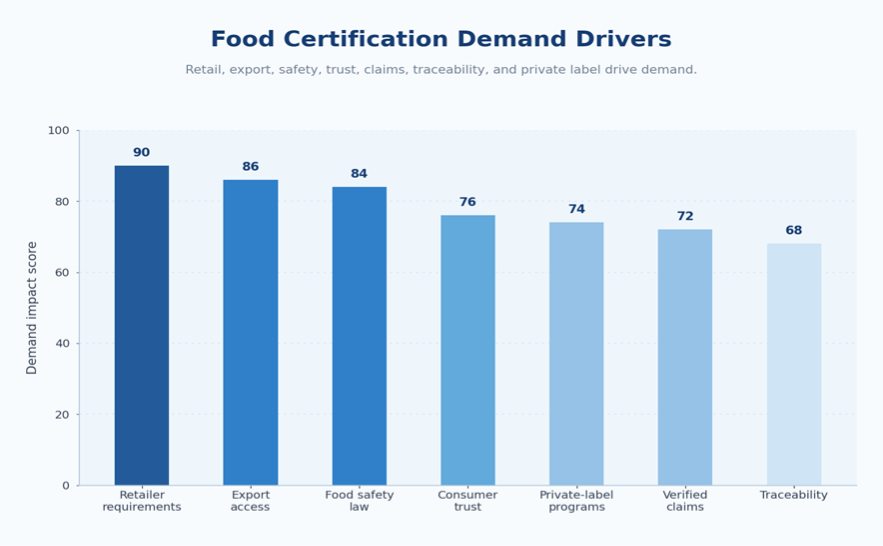
Figure 6; Food certification demand drivers.
| Growth driver | Demand impact | Market implication |
|---|---|---|
| Retailer requirements | Very high | Retailer approval pressure. |
| Export access | Very high | Recognized export documents. |
| Food safety law | High | Regulatory audit pressure. |
| Consumer trust | High | Verified shopper trust. |
| Verified claims | High | Claims need proof. |
| Traceability | Medium-high | Traceability and recalls. |
| Private label | Medium-high | Private-label documentation. |
Outlook readout
The market outlook remains steady because certification demand recurs and expands as companies add products, sites, markets, buyers, and claims.
Food Certification Market Challenges
The food certification market grows because certification is useful, but adoption is not effortless. Many food companies struggle with cost, documentation, internal expertise, multiple scheme requirements, audit preparation, and corrective action management.
• Audit cost can be difficult for small and mid-sized suppliers, especially when multiple schemes are required.
• Documentation burden increases when companies must maintain procedures, records, training files, supplier approvals, and corrective actions.
• Scheme complexity rises when different buyers ask for different certifications.
• Country-specific rules create additional complexity for exporters.
• Certification fatigue can appear when teams treat audits as paperwork rather than operating systems.
• Claim misuse risk increases when brands make organic, halal, kosher, non-GMO, gluten-free, vegan, or allergen statements without strong verification.
Challenge readout
The issue is not whether certification is useful. The issue is whether companies can manage cost, documentation, training, audit readiness, corrective actions, and renewal cycles.
Food Certification Market Diagnostic
A strong certification plan should start with diagnosis. The best question is not which certificate is popular. The better question is which certification unlocks the buyer, country, product claim, facility approval, or risk requirement.
• Start with target buyers because retailer and importer requirements often determine the first required certification.
• Map target countries because halal, organic, food safety, import, and labeling rules differ by market.
• Map product categories because meat, dairy, seafood, infant food, bakery, snacks, and beverages carry different risk profiles.
• Map product claims because organic, vegan, gluten-free, non-GMO, halal, kosher, and allergen statements need proof.
• Review documentation maturity before scheduling audits because poor records can create avoidable nonconformities.
| Diagnostic area | What to check | Action signal |
|---|---|---|
| Market access | Which buyers or countries require certification? | Prioritize revenue access. |
| Buyer requirements | Which schemes are accepted by key customers? | Avoid unused certificates. |
| Regulatory exposure | Which laws or import rules apply? | Align with risk. |
| Product claim risk | Which claims appear on packaging? | Verify before launch. |
| Food safety risk | Which categories are high-risk? | Strengthen controls. |
| Certification overlap | Where do schemes duplicate requirements? | Reduce audit burden. |
| Audit readiness | Are records, training, and corrective actions current? | Close audit gaps. |
| Renewal calendar | When do certificates expire? | Avoid access gaps. |
Diagnostic readout
A certification plan should start with market access. The right certificate is the one that solves a buyer, country, product, claim, or risk problem.
90-Day Food Certification Benchmark Plan
A 90-day certification plan helps teams move from confusion to readiness. The timeline does not guarantee certification in every case, but it creates a practical operating rhythm for gap analysis, documentation, internal controls, training, and audit scheduling.
| Timing | What to do | Output |
|---|---|---|
| Days 1-30 | Map buyers, countries, products, claims, and required schemes | Requirement matrix |
| Days 1-30 | Review existing documents, procedures, supplier files, and training records | Gap ownership plan |
| Days 31-60 | Prepare documents, update procedures, train teams, and choose a certification body | Audit-ready pack |
| Days 31-60 | Conduct an internal audit and review major nonconformity risks | Internal audit report |
| Days 61-90 | Close corrective actions and collect evidence | Closure log |
| Days 61-90 | Schedule external audit and build renewal calendar | Timeline and renewal system |
| Ongoing | Track supplier coverage, product claims, buyer audits, and certificate renewals | Performance dashboard |
Planning principle
A 90-day plan turns certification from a vague compliance goal into an operational timeline with owners, documents, training, internal audit evidence, and renewal controls.
Metrics Food Certification Teams Should Track
Food certification should be managed as a performance system, not only as a once-a-year audit event. The best teams track certification coverage, renewal timing, audit findings, supplier status, corrective actions, claim verification, and cost.
• Certified site count shows how much of the operating footprint is covered by recognized schemes.
• Renewal status prevents certificate lapses that can disrupt buyer approval or export access.
• Audit nonconformities show where controls, documentation, or training need improvement.
• Corrective action closure time measures how quickly a team responds to audit findings.
• Supplier certification coverage shows whether upstream risk is controlled.
• Product claim verification rate shows whether consumer-facing claims are backed by evidence.
• Certification cost per site or product line helps management compare compliance investment with market access value.
| Metric | Why it matters | Business use |
|---|---|---|
| Certified sites | Facility coverage | Tracks certification footprint. |
| Renewal status | Prevents expiry | Protects market access. |
| Audit nonconformities | Control weaknesses | Improves operations. |
| Corrective action closure time | Response discipline | Reduces audit delays. |
| Supplier certification coverage | Upstream risk | Improves sourcing confidence. |
Scorecard readout
Food certification becomes easier to manage when teams treat it as an operating scorecard covering sites, suppliers, claims, renewals, findings, and buyer acceptance. The future of food certification belongs to companies that treat certificates as proof of operating maturity. The certificate matters, but the system behind it matters more.
Strategic readout
The strongest certification strategy connects each certificate to a buyer, market, claim, facility, or supplier decision, keeping compliance work tied to commercial value.
The strongest certification programs are cross-functional. Quality manages systems, regulatory manages claims, procurement manages supplier evidence, operations keeps procedures live, and sales uses certificates to unlock buyers.
That shift changes how management should evaluate certification budgets. A certificate that opens a major retailer, protects an export contract, supports a premium organic line, or verifies a fast-growing claim should be viewed as access infrastructure.
Food certification is shifting from defensive compliance to proactive commercial capability. Companies once treated certification mainly as something needed to pass an audit. Today, certification helps unlock channels, countries, retailers, product claims, and supply-chain trust.
Certification works best when it is tied to a named buyer, country, product line, or claim. The strongest strategy starts with market access and works backward to the scheme, facility, evidence, and renewal calendar.
Buyer readiness readout
Buyer readiness improves when scheme selection, facility scope, supplier evidence, and renewal timing are visible before sales or export commitments.
Claim Verification and Consumer Trust Signals
Claim-based certification connects technical controls with the consumer-facing package. Organic, halal, kosher, non-GMO, gluten-free, vegan, allergen-related, and sustainability-linked claims can strengthen trust when the claim is backed by evidence.
A claim without verification can create retailer rejection, consumer complaints, regulatory attention, or brand damage. The strongest programs connect marketing, quality, regulatory, procurement, and operations so the packaging promise matches production evidence.
• Organic claims should be supported by certification scope, supplier records, ingredient status, and production controls.
• Halal, kosher, gluten-free, allergen, vegan, and plant-based claims should be checked against ingredients, processing aids, shared equipment, label review, and facility scope.
Claim verification readout
Claim certification turns trust into a visible market signal. The value is highest when the certification mark, supplier evidence, production controls, and packaging claim all tell the same story.
Certification Bodies, Labs, and Advisory Service Opportunities
Food certification also creates a wider services market around audits, testing, training, consulting, and digital compliance. Growth is strongest where requirements are recurring, complex, and tied to buyer revenue.
Certification bodies benefit from renewal cycles. Laboratories support allergen, microbiology, residue, nutrition, and claim verification. Consultants help suppliers prepare documentation, conduct gap assessments, and close nonconformities.
• Testing labs support certification through allergen, microbiology, residue, nutrition, and product-claim validation.
• Consultants support gap assessments, internal audits, document control, training, corrective actions, and scheme selection.
Service-market readout
The strongest service opportunities appear where complexity is high: multi-site manufacturers, exporters, claim-heavy brands, high-risk categories, and retailer-facing suppliers.
Strategic Market Interpretation
Food certification is shifting from defensive compliance to commercial capability. The stronger view is that certification helps unlock channels, countries, retailers, product claims, and supply-chain trust.
A certificate that opens a retailer, protects an export contract, supports an organic line, or verifies a fast-growing claim should be treated as access infrastructure, not just compliance cost.
Strategic readout
The future of food certification belongs to companies that treat certificates as proof of operating maturity. The certificate matters, but the system behind it matters more.
Buyer Approval and Supplier Readiness Signals
Food certification is most valuable when it shortens the distance between supplier readiness and buyer approval. Retailers, importers, foodservice groups, and private-label programs use certificates to reduce risk and simplify onboarding.
A recognized certificate does not replace specifications, product labels, allergen controls, traceability files, or commercial review, but it gives the supplier a stronger starting point.
Buyer readiness readout
Certification works best when it is tied to a named buyer, country, product line, or claim. The strongest strategy starts with market access and works backward to the scheme, facility, evidence, and renewal calendar.
Food Certification Adoption Priorities
Food certification programs should be prioritized by commercial value, not certificate count. A company can hold many certificates and still miss the buyer, export, claim, or supplier requirement that controls market access.
For manufacturers, the first priority is usually the facility-level scheme required by core buyers. For exporters, it may be the market-specific mix of food safety, halal, organic, kosher, ingredient, or import documentation. For brands, product-claim verification can shape shopper trust and retailer approval.
This priority logic keeps each certificate connected to a measurable business signal. The goal is fewer buyer delays, cleaner claim evidence, stronger supplier proof, and better export readiness.
Adoption readout
Adoption planning should rank certificates by market access, buyer urgency, claim risk, product risk, and renewal timing.
Data and Documentation Discipline
Food certification depends on documentation discipline. The certificate is the visible output, but the system behind it is built from procedures, supplier records, training files, product specifications, audit evidence, corrective actions, and renewal calendars.
The most mature certification teams maintain a live evidence file for each certificate. That file shows the scheme scope, facility scope, product scope, supplier evidence, claim evidence, audit history, nonconformity status, renewal date, and responsible owner. This approach reduces last-minute audit pressure and makes the program easier to explain to retailers, importers, and internal leadership.
• Each certificate should have one owner, one renewal date, one scope summary, and one evidence folder.
• Each product claim should be supported by ingredient evidence, supplier proof, process controls, and label review.
• Each supplier certificate should be tracked by scheme, site, product scope, expiry date, and relevance to claims or food safety risk.
Documentation discipline also supports management reporting. Leaders do not need every audit detail, but they should see expiring certificates, open findings, high-risk suppliers, claim gaps, and buyer-critical certifications.
Documentation readout
The best certification systems are easy to audit because the evidence is current, scoped, owned, and connected to buyer, claim, supplier, and renewal decisions. This discipline also improves handoff between quality, procurement, regulatory, sales, and operations teams. When each team sees the same evidence status, certification decisions become faster, buyer responses become cleaner, and renewal risks become easier to manage before they affect revenue. The strongest retained tables show market size, type demand, regional demand, country readiness, risk areas, planning actions, and team metrics.The reduced row counts make the article easier to scan without removing the key market logic.
Operational sections now rely more on short explanatory paragraphs and fewer stacked table rows.
It also supports cleaner reporting and stronger renewal ownership.This keeps the closing section useful for planning without adding visual weight.The strongest certification teams treat evidence management as a c continuous control system. That keeps certification useful for buyer approval, claim protection, supplier monitoring, export readiness, and renewal planning.
Operations readout
Corrective actions should be tracked by owner, due date, evidence file, verification status, and buyer impact.Supplierevidence should be checked before product launch, export shipment, private-label approval, and major claim changes.
Renewal calendars should identify certificate owner, scheme scope, expiry date, audit window, and buyer-critical status.
This matters because buyer confidence often depends on how quickly a company can answer documentation requests. Retailers, importers, and private-label customers may ask for scheme certificates, facility scope, supplier proof, allergen controls, halal or kosher evidence, organic records, and corrective-action status before approval decisions move forward.
Certification programs perform best when renewal calendars, audit evidence, supplier documents, and product-claim files are managed as part of normal operations. The strongest food companies do not wait for audit season to organize records; they maintain evidence throughout the year.
Food Certification Market Statistics FAQ
How big is the food certification market?
The global food certification market is estimated at USD 6.41 billion in 2025 and is forecast to reach USD 8.72 billion by 2031. Another benchmark places the market at USD 5.85 billion in 2024 and USD 7.72 billion by 2029.
What is driving food certification market growth?
Growth is driven by retailer requirements, export access, food safety regulation, private-label programs, consumer trust, traceability, and verified product claims such as organic, halal, kosher, non-GMO, gluten-free, vegan, and allergen-related certification.
Which certification types are most important?
The most important categories include food safety systems such as ISO 22000, FSSC 22000, BRCGS, SQF, and HACCP-based programs, plus organic, halal, kosher, non-GMO, gluten-free, vegan, allergen, and traceability certifications.
Which regions have the strongest food certification demand?
North America and Europe are mature certification regions because of organized retail, private label, regulation, traceability, and claim verification. Asia-Pacific has strong growth potential, Latin America is export-driven, and the Middle East is strongly shaped by halal and import-compliance demand.
Why do food companies need certification?
Food companies need certification to prove food safety controls, satisfy buyers, enter retailers, support export documentation, verify product claims, reduce audit friction, and build trust with importers, retailers, regulators, and consumers.
What metrics should certification teams track?
Certification teams should track certified sites, renewal status, audit nonconformities, corrective action closure time, supplier certification coverage, product claim verification, buyer audit pass rate, certification cost, and time to certification.
Final Takeaway
Food certification is now a core market-access system. Strong programs help companies enter markets, satisfy buyers faster, verify claims, reduce audit friction, and build trust.
The strongest strategy is choosing the right certification for the right buyer, country, category, facility, supplier network, and claim.
As food supply chains become more global and claim-driven, certification remains one of the clearest signals that a food business is ready to compete. Teams that treat certification as an operating system will be better positioned to win buyer approval, protect trust, and expand across markets.