Electric blankets are no longer only seasonal bedding accessories pulled from a closet during cold nights. They now sit between several durable consumer trends: home-comfort spending, rising attention to energy bills, demand for targeted personal heating, online bedding comparison, and stronger expectations around product safety. The category is still seasonal, but it is also becoming more measurable because consumers compare wattage, fabric, heat settings, automatic shut-off, washability, warranty, and reviews before buying.
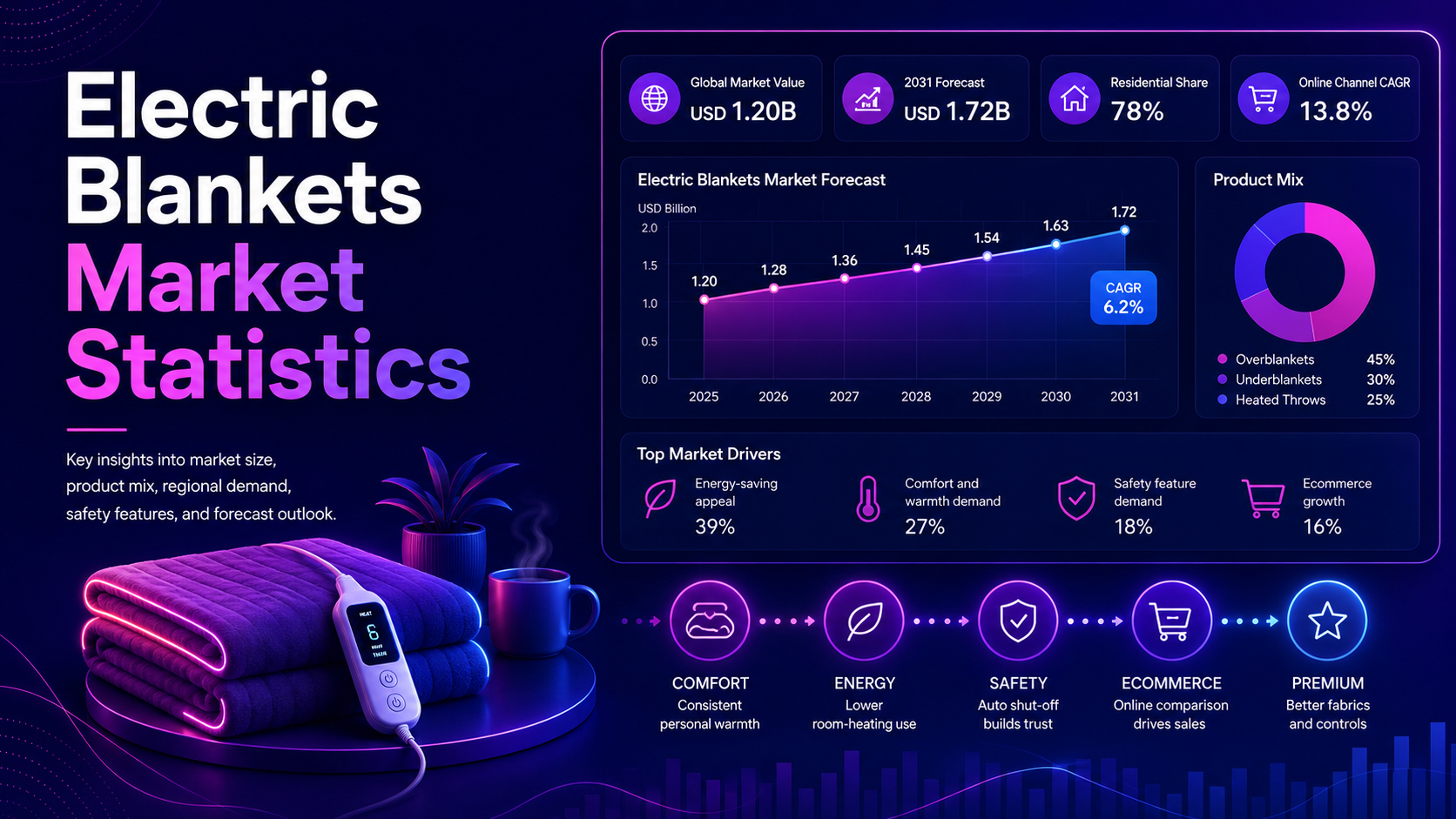
The market statistics show a category that is steady rather than speculative. Grand View Research estimated the global category market at USD 1.07 billion in 2023 and listed a USD 1.15 billion 2024 market size. Mordor Intelligence placed the market at USD 1.20 billion in 2025 and projected USD 1.72 billion by 2031. Those numbers are not identical, but they tell the same story: the market has a clear base, a recurring winter use case, and room for growth through safer materials, premium comfort features, ecommerce, and regional expansion.
For readers, the most useful view is a market scorecard: which regions are growing, which product types carry demand, which safety features build trust, and which channels turn seasonal interest into completed sales. Each section therefore connects the benchmark statistics to a practical market interpretation.
Executive Electric Blanket Benchmarks
These headline statistics frame the article. They show the scale of the market, the major forecast signals, the strength of regional demand, the role of household buyers, and the importance of energy efficiency and safety. A useful market scorecard should separate market size, product mix, region, channel, and trust factors instead of treating electric blankets as one simple winter item.
What the benchmark numbers mean in practice
- The market has already crossed the billion-dollar line: Grand View places global revenue at USD 1.07 billion in 2023 and USD 1.15 billion in 2024, giving the category a solid household-goods base rather than a niche winter-only profile.
- By 2030, Grand View expects the market to reach USD 1.86 billion at an 8.2% CAGR, which points to steady replacement, premiumization, and energy-saving demand rather than a short seasonal spike.
- Mordor’s USD 1.20 billion 2025 estimate and USD 1.72 billion 2031 forecast support the same story: electric blankets are expanding gradually as practical home-comfort products.
- Custom Market Insights gives the longer horizon a stronger curve, moving from USD 1,066.77 million in 2024 to USD 2,271.99 million by 2034 as online access and product upgrades broaden demand.
- Zion’s higher baseline of USD 1,369.52 million in 2024 and USD 2,651.55 million by 2034 shows how provider scope can vary, but all major views still point upward.
- Asia Pacific is the largest regional signal in Grand View’s outlook, with USD 340.6 million in 2023, helped by manufacturing scale, winter markets, and wider ecommerce access.
- North America remains a mature comfort market: it held 28.7% of global revenue in 2023 and is expected to reach USD 546.1 million by 2030.
- Europe’s USD 245.1 million 2023 market and USD 422.7 million 2030 forecast show why heating-cost messaging matters in colder, energy-sensitive households.
- Overblankets are still the most familiar purchase format, leading Mordor’s 2025 product mix with 45.10% share.
- Material and size choices are practical, not decorative: polyester led with 42.63% share in 2025, while queen variants captured 37.81% because shared beds remain a major use case.
- Households are the core buyer group, accounting for 83.41% of 2025 end-user demand, so most market movement starts with residential comfort and heating habits.
- Offline retail still held 61.41% of 2025 distribution, but online platforms are growing fastest at 13.77% CAGR as shoppers compare safety features, sizes, and reviews before buying.
- The energy argument is easy for consumers to understand: many electric blankets sit around 50 to 150 watts, while space heaters often draw about 750 to 1,500 watts.
- Safety must stay visible: ESFI links heating pads and electric blankets to around 500 fires a year, with older products over 10 years old involved in almost all of those incidents.
The pattern behind these numbers is simple: the category grows when warmth, lower running costs, safer controls, and easier purchasing all work together.
Why Electric Blankets Are Becoming a Steady Home-Comfort Market
Category demand is strongest when several needs overlap. Consumers want warmth in the bedroom or living room, but they also want to avoid heating spaces that are not being used. That makes electric blankets part of a wider home-comfort and energy-control conversation. The category is practical, familiar, and easy to understand, but product innovation has changed how it is positioned: many modern blankets now emphasize softness, multiple heat levels, timers, automatic shut-off, and easy care.
- Energy-saving pressure is the strongest demand driver in Mordor’s model, adding an estimated +2.1 percentage points to expected growth.
- Smart controls, better timers, and improved safety features add another +1.8 percentage points, showing that buyers are paying attention to convenience as well as warmth.
- Comfort and wellness also matter, with health and therapeutic benefits adding +1.2 percentage points to the growth outlook.
- Product choice is built around three everyday heating moments: overblankets for body warmth, underblankets for bed pre-warming, and electric pads for targeted comfort.
- Material variety is broad enough to support different price points, with wool, cotton, polyester, acrylic, and other fabrics serving comfort, durability, and budget needs.
- The market also splits naturally into economy, mid-range, and premium tiers, which lets brands compete on price, fabric feel, controls, or safety reassurance.
- Size segmentation follows household use: single blankets serve personal warmth, full/queen products support couples, and king sizes suit premium bedding buyers.
- Country coverage across 16 markets shows that electric blankets are now tracked as a global home-comfort category, not just a cold-region specialty item.
This is why the article treats electric blankets as a decision category, not only a product category: buyers compare comfort, energy use, safety, fabric, size, and price before they trust the purchase.
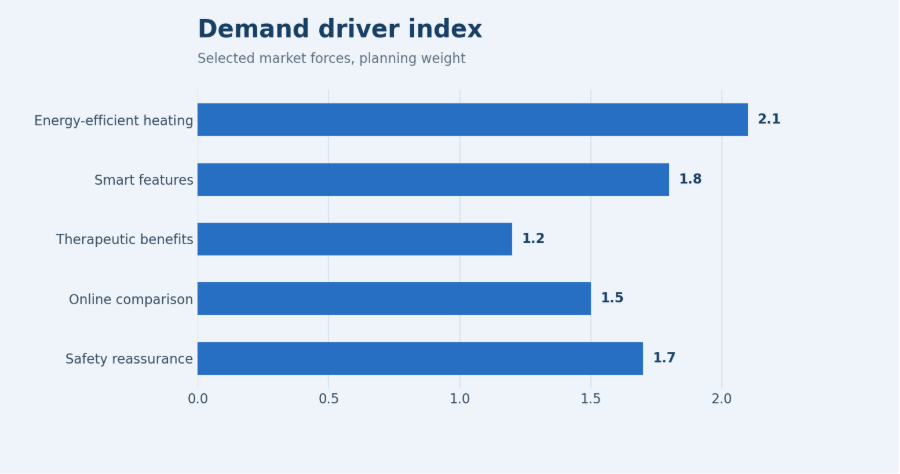
Figure 1. Demand drivers show why electric blankets are evaluated as comfort, efficiency, safety, and retail-access products together.
| Demand factor | Market signal | Why it matters |
|---|---|---|
| Cold-weather comfort | Recurring winter use | Keeps the category visible each year |
| Energy-cost pressure | Targeted personal heating | Supports cost-saving messaging |
| Product upgrades | Controls, softness, washability | Helps premium products justify price |
| Ecommerce access | Reviews and easy comparison | Expands reach beyond seasonal stores |
| Safety reassurance | Auto shut-off and certifications | Reduces buyer hesitation |
Market Size and Forecast: How Fast the Category Is Growing
Market-size estimates differ by research provider because each report uses a different base year, forecast period, scope, and segmentation logic. The useful point is not that every provider reports the exact same value. The useful point is that the estimates cluster around a billion-dollar market with mid-single-digit to high-single-digit annual growth. That creates room for premiumization, but also shows that the market is still tied to seasonality, safety perception, and household purchasing behavior.
- The market was already sizable before the latest forecast cycle, moving from USD 817.1 million in 2019 to USD 873.9 million in 2020.
- By 2023 and 2024, the category had moved into clear billion-dollar territory at USD 1.07 billion and USD 1.15 billion respectively.
- Grand View’s USD 1.86 billion 2030 forecast suggests durable growth built on replacement demand, better designs, and recurring winter use.
- Mordor’s year-to-year view moves from USD 1.20 billion in 2025 to USD 1.27 billion in 2026, a modest but healthy step for a mature household category.
- Its longer outlook reaches USD 1.72 billion by 2031, with a 6.18% CAGR that keeps the forecast realistic rather than inflated.
- Custom Market Insights is more bullish, projecting USD 2.27 billion by 2034 at a 7.85% CAGR as the category benefits from broader adoption and online distribution.
- Zion also sees room for growth, forecasting USD 2.65 billion by 2034 at a 6.83% CAGR.
- Taken together, the estimates describe a steady billion-dollar home-comfort market, not a speculative technology boom.
The important takeaway is consistency across forecasts. The exact number changes by source, but every major estimate points to a market that is growing steadily rather than shrinking or flattening.
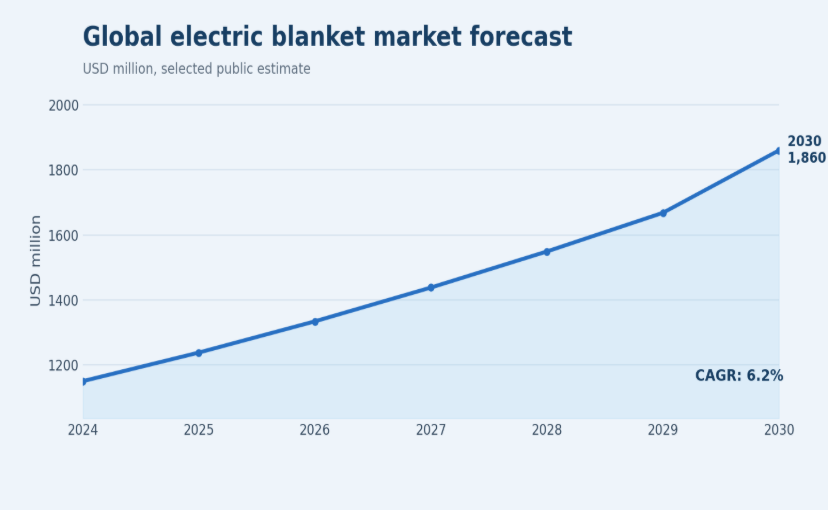
Figure 2. Global forecast estimates point to steady billion-dollar growth rather than a speculative spike.
| Market signal | Value / direction | What it means |
|---|---|---|
| Current market value | USD 1.07B-1.37B range | Shows a clear global demand base |
| 2030-2034 forecast | USD 1.72B-2.65B range | Shows long-term growth potential |
| CAGR range | About 6.18%-8.2% | Indicates steady, not explosive, growth |
| Main driver | Comfort and energy savings | Explains the consumer reason to buy |
| Main restraint | Safety concerns and seasonality | Explains why growth needs trust-building |
Regional Demand: Where Cold Weather, Energy Costs, and Retail Access Meet
Regional demand is shaped by climate, but climate is not the only factor. A cold country with low electrical-bedding trust may not behave like a cold country with strong retail access and safety certification awareness. A warmer region can still have pockets of demand in mountain areas, winter cities, hotels, and premium households. For that reason, regional statistics should be read as a mix of weather exposure, energy costs, income, retail maturity, and consumer confidence.
- Asia Pacific led the regional picture with USD 340.6 million in 2023, or 31.7% of global revenue, giving it the strongest mix of scale and growth potential.
- By 2030, Asia Pacific is expected to reach USD 590.0 million at an 8.2% CAGR as production depth, urban households, and ecommerce reinforce demand.
- North America followed closely with USD 308.1 million in 2023 and 28.7% of global revenue, reflecting cold-weather use and established retail access.
- Its USD 546.1 million 2030 forecast and 8.5% CAGR show that mature markets can still grow when replacement and premium features are strong.
- Europe generated USD 245.1 million in 2023, or 22.8% of global revenue, with energy-cost sensitivity making the personal-heating message more relevant.
- The region’s USD 422.7 million 2030 outlook and 8.1% CAGR suggest steady demand in winter-heavy markets.
- Latin America remains smaller but meaningful, rising from USD 97.2 million in 2023 to a projected USD 169.1 million by 2030.
- Middle East and Africa is more niche, moving from USD 79.0 million in 2023 to USD 132.5 million by 2030, mainly where climate, imports, and premium bedding demand align.
The regional story is therefore not one-size-fits-all. North America and Europe behave like mature comfort markets, while Asia Pacific combines scale, manufacturing depth, and fast online reach.
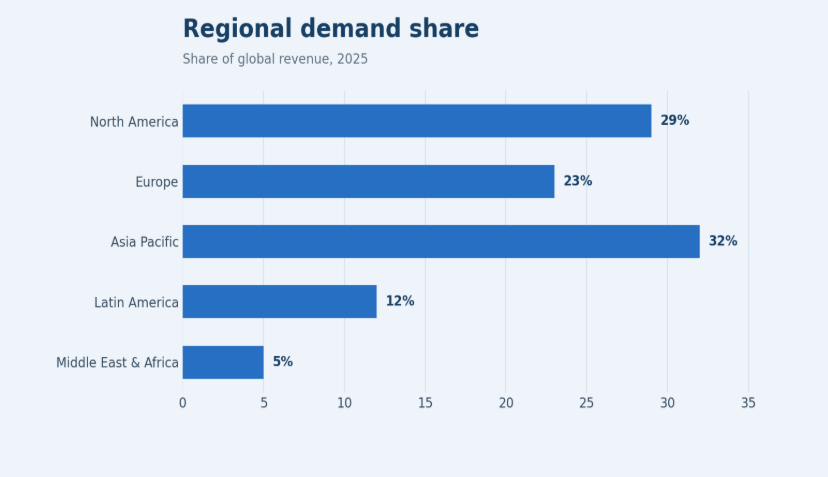
Figure 3. Regional share data shows why Asia Pacific, North America, and Europe form the core demand base.
| Region | Demand signal | Market meaning |
|---|---|---|
| North America | Mature winter and bedding market | Strong replacement and premium demand |
| Europe | Energy-cost and winter comfort demand | Personal heating value proposition matters |
| Asia Pacific | Largest 2023 regional revenue signal | Manufacturing, ecommerce, and income growth support demand |
| Latin America | Smaller but selective base | Colder markets and urban buyers matter most |
| Middle East & Africa | Niche but tracked market | Growth depends on climate pockets and premium imports |
Country-Level Demand: Mature Markets vs Emerging Growth
Country-level statistics make the market more useful because electric blanket adoption varies sharply by income, retail access, energy cost, home-heating habits, and product trust. A U.S. buyer comparing a queen-size heated blanket online is not making the same decision as an emerging-market buyer who is seeing electric bedding as a new comfort item. Country data helps separate large mature markets from smaller markets that may grow from ecommerce and urban household adoption.
- The United States stands out as the largest country signal, representing about 31.56% of the 2024 global benchmark in Cognitive Market Research’s framework.
- China’s 10.35% share matters because the country is both a production hub and a growing consumer market for heated bedding.
- Germany’s 5.94% share makes it one of Europe’s stronger markets, supported by winter demand and mature household goods retail.
- The United Kingdom accounted for about 5.04%, and its energy-price context makes cost-saving personal warmth especially easy to understand.
- Canada’s 4.80% share reflects the combination of cold weather, North American retail maturity, and recurring winter household demand.
- Japan’s 3.17% share points to premium comfort and compact-home use, while India’s 2.76% share shows a smaller but emerging opportunity.
- France, Italy, Spain, and South Korea cluster in the 2.30% to 2.76% range, which makes them useful mid-sized markets rather than minor footnotes.
- Brazil’s 2.14% share is notable for Latin America, while Australia at 1.20% and Argentina at 0.84% show more selective seasonal demand.
These shares should be read as a demand map. Larger mature markets help anchor revenue, while smaller countries can still matter when climate, retail access, and energy prices create a clear use case.
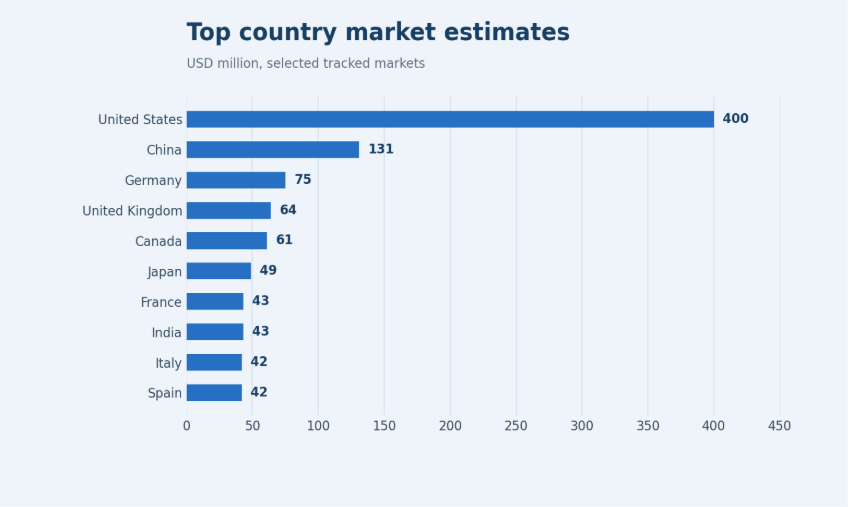
Figure 4. Country-level demand is led by mature winter markets and large manufacturing and consumer economies.
| Country | Market signal | Why it matters |
|---|---|---|
| United States | Largest country signal | Strong retail, winter, and online sales base |
| China | Large production and demand role | Important for supply and domestic growth |
| Germany | Strong European benchmark | Cold-weather household goods market |
| United Kingdom | Heating-cost sensitivity | Personal heating can support energy-saving behavior |
| Canada | Cold-climate demand | Premium and replacement sales are relevant |
| India | Emerging opportunity | Urban ecommerce expands access |
Product Mix: Over-blankets, Underblankets, Throws, and Heated Mattress Pads
Product mix matters because electric blankets are not bought for one identical use case. Some shoppers want a bed pre-warmer, some want a sofa throw, some want full-body warmth, and some want dual-control bedding for two people. Product type also affects channel strategy: heated throws can work well as gifts and marketplace items, while underblankets and mattress pads may require clearer sizing and installation guidance.
- Over-blankets lead because shoppers understand them quickly; Mordor places the segment at 45.10% share in 2025.
- On Mordor’s USD 1.20 billion 2025 base, that share translates to about USD 541.20 million in over-blanket revenue.
- Underblankets grow more quietly but steadily, with a 6.88% CAGR through 2031 because bed pre-warming remains a clear use case.
- The core product map is simple for buyers: over-blankets for top-layer warmth, underblankets for the mattress, and electric pads for targeted heating.
- Heated throws add a lifestyle angle because they are easy to gift, easy to display online, and useful on sofas as much as beds.
- Heated mattress pads compete with underblankets when the buyer wants stable warmth beneath the sleeper instead of a blanket layered above.
- Dual controls solve a real household problem in queen and king sizes: two sleepers rarely want exactly the same heat setting.
- Smart controls and timers lift perceived value because they combine convenience with a stronger safety story.
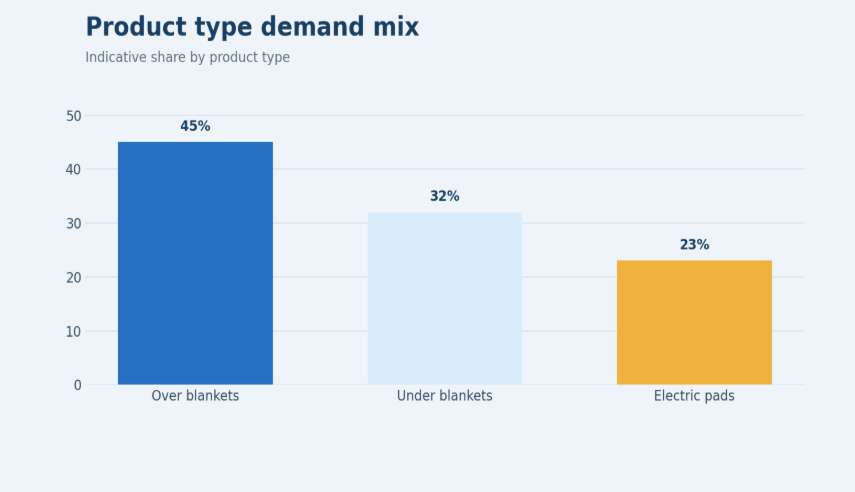
Figure 5. Product type mix separates bed warming, sofa comfort, and premium-control use cases.
| Product type | Main buyer need | Market role |
|---|---|---|
| Over blanket | Full-body warmth | Mainstream comfort product |
| Underblanket | Bed pre-warming | Strong winter bedroom use |
| Heated throw | Sofa and living-room warmth | Giftable and ecommerce-friendly |
| Heated mattress pad | Stable bed heating | Premium bedding alternative |
| Smart blanket | Timed and adjustable warmth | Higher-value feature segment |
Material and Design Trends: Fabric, Size, Washability, and Heat Controls
Electric blankets compete as bedding products as much as electrical products. Heat matters, but shoppers also judge softness, fabric weight, texture, washability, controller design, size availability, and the number of heat settings. The more the product feels like quality bedding, the easier it is to move beyond price-only competition. Design statistics are therefore important because they connect functional warmth to perceived comfort and trust.
- Polyester remains the practical leader, with 42.63% material share in 2025 because it balances cost, warmth, and durability.
- Applied to Mordor’s 2025 estimate, polyester represents roughly USD 511.56 million in segment value.
- Fleece is the comfort-led growth story, expected to expand at a 9.76% CAGR through 2031 as shoppers look for softness, not only heat.
- Queen-size variants led with 37.81% share in 2025, reflecting shared-bed demand and mainstream bedroom sizing.
- That queen-size share equals about USD 453.72 million in estimated 2025 revenue on Mordor’s market base.
- Single-size variants are growing fastest at 7.95% CAGR for 2026 to 2031, a useful signal for personal-use buyers, students, and renters.
- Automatic shut-off and overheat protection are no longer extras; Fact.MR identifies them as key safety features that shape buyer confidence.
- Programmable pre-warming and timed shut-off help premium models feel easier and safer to use, especially at bedtime.
Design statistics matter because they explain why some blankets sell at basic prices while others earn premium positioning through fabric feel, controls, washability, and safety reassurance.
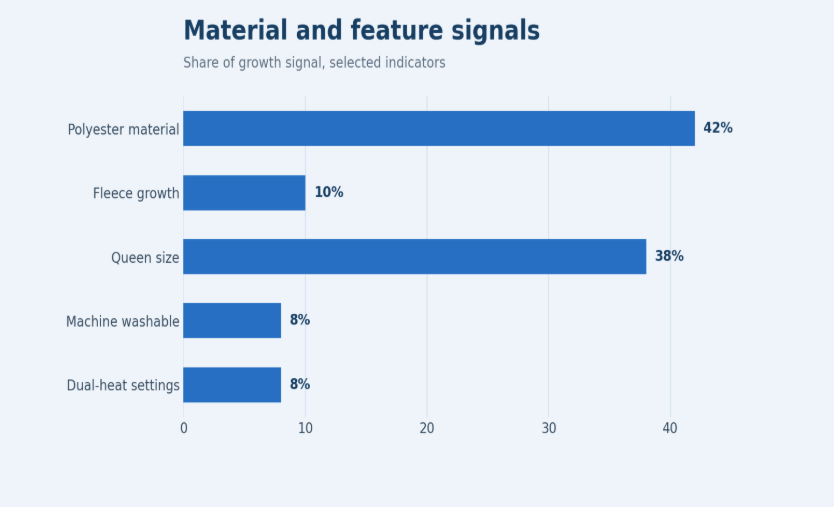
Figure 6. Material and feature signals show how softness, washability, and safety improve product value.
| Design factor | Consumer benefit | Market impact |
|---|---|---|
| Fleece / plush fabric | Softness and comfort | Supports premium positioning |
| Machine washable | Easier maintenance | Reduces purchase hesitation |
| Auto shut-off | Safety and convenience | Important trust feature |
| Dual control | Personalized warmth | Strong for queen and king sizes |
| Multiple heat levels | Better comfort control | Supports higher-value SKUs |
End-User Demand: Households, Older Adults, Students, Hospitality, and Care Settings
Residential buyers dominate the category, but the reasons for purchase vary. A family may want a warmer bed without turning up central heating. A student may want a compact personal-heating option. An older adult may need consistent warmth and simple controls. Hotels and care settings may value guest comfort, but they must also think carefully about safety, cleaning, maintenance, and liability.
- Households dominate the buyer base, accounting for 83.41% of 2025 end-user demand in Mordor’s benchmark.
- That household share translates to roughly USD 1,000.92 million in 2025 segment revenue on Mordor’s market estimate.
- Hospitality is smaller but faster-moving, advancing at an 11.47% CAGR as hotels and guest properties look for seasonal comfort upgrades.
- The tracked end-user mix – hotels, hospitals, and households – shows that demand stretches beyond ordinary bedrooms into care and guest settings.
- Older adults remain strategically important because controlled warmth, simple controls, and visible safety features can matter more than style alone.
- Students and renters buy for a different reason: compact living, budget pressure, and limited control over whole-home heating.
- Care settings need a stricter product story, with safer models, clear cleaning rules, and replacement guidance that staff can follow.
- Premium households often treat electric blankets as part of a wider bedding upgrade, not just an emergency winter purchase.
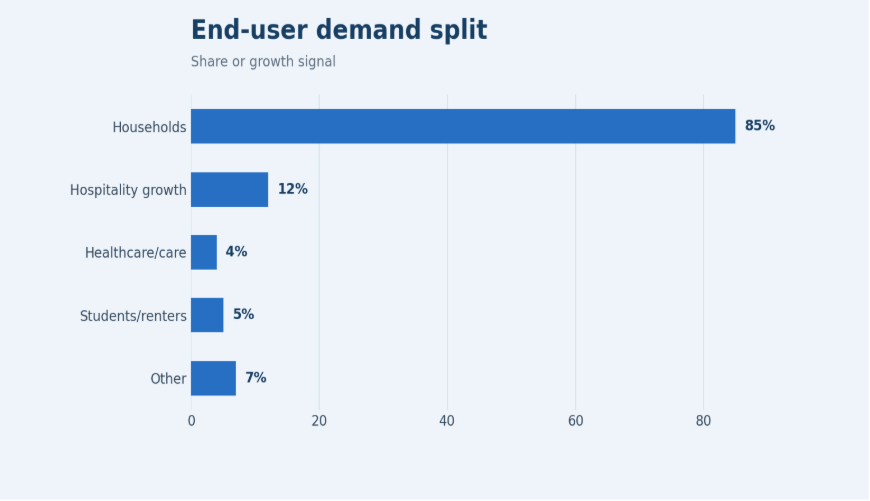
Figure 7. Residential buyers anchor demand, while hospitality and care settings add specialized use cases.
| End user | Main need | Market opportunity |
|---|---|---|
| Households | Affordable warmth | Largest demand base |
| Older adults | Consistent personal warmth | Safety features are critical |
| Students | Low-cost heating | Strong for compact living spaces |
| Hospitality | Guest comfort | Seasonal and premium-use opportunity |
| Healthcare / care homes | Controlled warmth | Safety and compliance matter most |
Distribution Channels: Online Marketplaces, Bedding Stores, and Seasonal Retail
Electric blankets are easy to compare online because shoppers can evaluate size, fabric, heat settings, warranty, reviews, price, and safety claims before purchase. At the same time, offline retail remains important because consumers may want to feel fabric softness, compare blanket weight, and buy during seasonal promotions. The channel mix therefore combines convenience with trust.
- Offline retail still matters because many shoppers want to feel the fabric; Mordor gives offline outlets 61.41% distribution share in 2025.
- On Mordor’s 2025 market base, that offline share equals about USD 736.92 million in channel revenue.
- Online platforms are the fastest-growing channel at 13.77% CAGR because reviews, delivery speed, and comparison tools fit the way shoppers research electrical bedding.
- In North America, offline remained the largest revenue-generating channel in 2023, showing that store-based seasonal retail still carries weight.
- Europe and Asia Pacific showed the same offline leadership in 2023, even as online growth becomes harder to ignore.
- Marketplaces help smaller brands compete by making price, reviews, delivery speed, and seasonal search visibility immediately visible.
- Brand websites are more useful for premium products because they can explain certifications, controllers, warranty, and care instructions without marketplace clutter.
- Specialty bedding stores and department stores still serve buyers who want to judge softness, weight, and finish before purchasing.
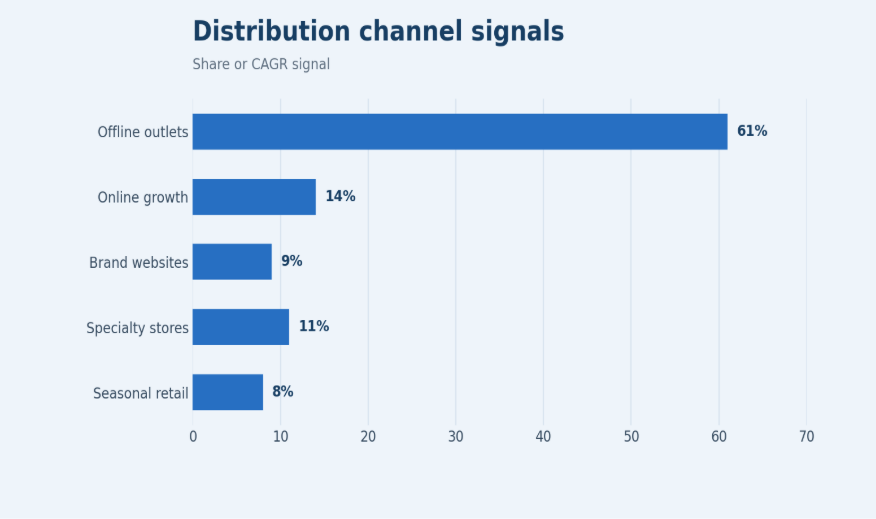
Figure 8. Channel data shows offline stores still matter, while online platforms grow faster.
| Channel | Buyer behavior | Market meaning |
|---|---|---|
| Online marketplaces | Price and review comparison | Strong discovery channel |
| Brand websites | Trust and warranty clarity | Useful for premium brands |
| Specialty stores | Fabric and quality inspection | Important for comfort-led buyers |
| Supermarkets | Seasonal impulse purchase | Strong during winter |
| Department stores | Gift and household category | Supports mid-premium sales |
Energy Savings: Why Personal Heating Is Part of the Market Story
Energy-use data is central to the category market because the product is often positioned as targeted personal heating. The claim should be framed carefully. An electric blanket does not replace home heating in every situation, but it can reduce reliance on whole-room heating during specific moments such as bedtime, sofa use, mild winter evenings, and short personal-warmth needs. This makes wattage comparison an important part of the article.
- Many electric blankets sit in a modest 50 to 150 watt range, which is why the category can be positioned as targeted personal heating.
- That looks very different from space heaters, which are often in the 750 to 1,500 watt range and are designed to warm air rather than a person directly.
- Endeca’s 100 to 150 watt range supports the same consumer message: the blanket warms the user rather than the whole room.
- A practical usage example makes the savings easier to picture: a 150-watt blanket used 6 hours a night for 4 months totals about 108 kWh per year.
- Single-size models can be even lighter on energy, with EDF placing many of them between 40 and 60 watts.
- Double blankets move higher but remain modest, with EDF citing around 80 watts for a typical model.
- King-size products can reach up to 250 watts, so size still matters when consumers compare running costs.
- The honest energy message is targeted warmth: electric blankets can reduce some heating use, but they should not be framed as a full replacement for safe room heating.
The goal is not to claim that an electric blanket replaces a heating system. The stronger claim is more practical: it can reduce some unnecessary room-heating use when the person only needs localized warmth.
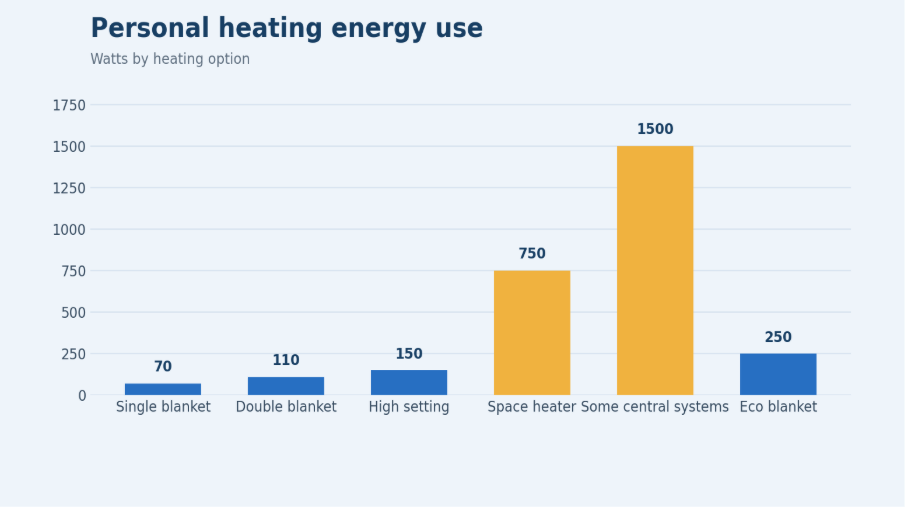
Figure 9. Energy-use comparisons explain why electric blankets are positioned as targeted personal heating.
| Heating option | Energy pattern | Consumer meaning |
|---|---|---|
| Electric blanket | Low direct personal heating | Warms the person, not the whole room |
| Space heater | Higher localized room heating | Useful but can cost more per hour |
| Central heating | Whole-home heating | Comfortable but expensive in winter |
| Heated mattress pad | Bed-specific warmth | Useful for night-time energy control |
Safety and Trust: The Biggest Purchase Barrier in Electric Blankets
Safety is one of the most important factors in this market because an electric blanket combines heat, fabric, wiring, and sleep. Even when consumers want warmth and lower heating costs, they may hesitate if they worry about overheating, old wiring, poor certification, or washing damage. Strong brands turn safety into a selling point by making automatic shut-off, overheat protection, detachable controllers, and clear care instructions visible.
- ESFI’s estimate of around 500 fires per year keeps safety near the center of the buying decision.
- The most important detail is product age: ESFI says almost all of those fires involve blankets more than 10 years old.
- Automatic shut-off directly answers one of the buyer’s biggest fears: leaving heat on too long.
- Overheat protection is equally important because it reassures shoppers that the product is designed to control temperature risk.
- Smart features and enhanced safety are growth factors because they turn a cautious purchase into a more confident one.
- Timed shut-off and programmable pre-warming make the product easier to manage at night, when convenience and safety overlap.
- Clear washing guidance matters because many shoppers worry that machine washing will damage wiring, sensors, or controllers.
- Safety reassurance is most important for older adults, care settings, guest rooms, and any household replacing an older blanket.
This is the section where brands should avoid vague safety language. Specific features, clear replacement guidance, and visible certification do more work than generic promises.
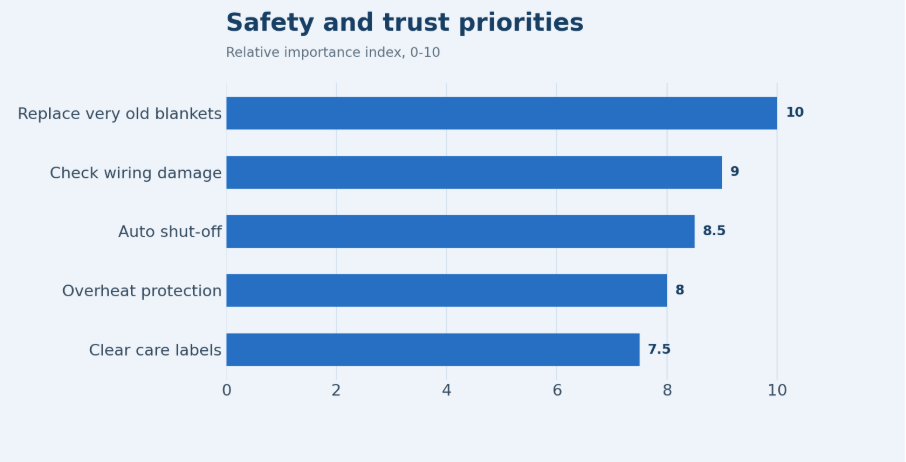
Figure 10. Safety risk data shows why replacement education and auto-shutoff features matter.
| Safety factor | Risk signal | Market response |
|---|---|---|
| Old blanket | Higher wear risk | Encourage replacement |
| Damaged wiring | Fire and overheating concern | Stronger inspection guidance |
| No auto shut-off | Higher misuse risk | Promote safer models |
| Poor certification | Trust issue | Highlight safety marks |
| Incorrect washing | Product damage risk | Clear care instructions |
Purchase Barriers: Why Some Consumers Still Avoid Electric Blankets
A balanced market article should also explain why some consumers do not buy electric blankets. The barriers are not only price-related. Some shoppers worry about fire risk, older product reputation, cheap imports, washing difficulty, wiring damage, seasonality, or whether a blanket will be used often enough to justify the purchase. These barriers help explain why the market grows steadily instead of explosively.
- Safety concerns remain visible because the category is connected to around 500 fires each year in ESFI’s public guidance.
- Product age is the clearest warning sign: almost all reported fires involve blankets more than 10 years old.
- Seasonality also limits purchase frequency because many buyers only think about electric blankets when cold weather arrives.
- Price sensitivity is strongest in entry-level markets where shoppers compare electric blankets with thermal blankets, space heaters, or extra bedding.
- Maintenance confusion can stop a purchase when shoppers do not understand washing rules or how the controller should be detached.
- Low-cost imports make the category more accessible, but they also raise the value of visible certification, warranty clarity, and retailer quality checks.
- Heated mattress pads compete hardest when the buyer’s main need is bed-specific warmth rather than a flexible blanket.
- Space heaters compete when shoppers want to warm the air in part of a room, not just keep their body warm.
Growth Drivers: Comfort, Energy Costs, Ecommerce, and Aging Populations
The strongest growth opportunities appear where comfort, energy savings, and safety reassurance overlap. A basic electric blanket can compete on price, but a well-positioned blanket competes on warmth, softness, control, washability, trust, and lower personal-heating energy use. Growth drivers should therefore be read as a connected system rather than isolated trends.
- Energy-efficient heating is the strongest named growth lever, adding +2.1 percentage points to Mordor’s driver model.
- Technology and smart features add +1.8 percentage points, which explains why premium controls matter in a product that can otherwise look basic.
- Health and therapeutic benefits add +1.2 percentage points, especially for buyers who associate warmth with comfort, sleep quality, or muscle relaxation.
- Online platforms grow at a 13.77% CAGR, making ecommerce a major demand pathway even where offline retail still leads today.
- Hospitality grows at 11.47% CAGR from a smaller base, which makes it a useful opportunity for seasonal guest-comfort positioning.
- Fleece’s 9.76% CAGR shows that softness and texture can be as important as heat output in premium positioning.
- Single-size variants grow at 7.95% CAGR, a signal that personal-use, student, renter, and compact-home buyers should not be overlooked.
- Underblankets grow at 6.88% CAGR, reinforcing the continued appeal of bedroom-specific warmth.
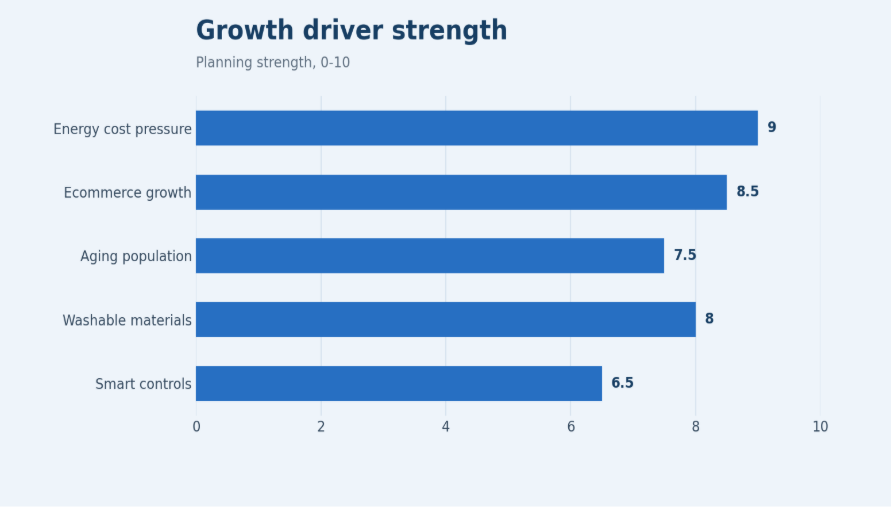
Figure 11. Growth drivers are strongest where energy costs, ecommerce, and product trust overlap.
| Growth driver | Market effect | Who benefits |
|---|---|---|
| Energy-cost pressure | More interest in personal heating | Electric blanket brands |
| Aging population | Higher need for controlled warmth | Safety-focused brands |
| Ecommerce growth | Easier comparison and access | Online retailers |
| Smart controls | Higher-value products | Premium manufacturers |
| Washable materials | Lower consumer hesitation | Bedding brands |
Competitive Positioning: What Electric Blanket Brands Compete On
The competitive landscape is not only about which company sells the most units. Electric blanket brands compete on feature credibility. A low-price product can win seasonal marketplace traffic, but premium products need to justify value through fabric, controller quality, safety features, warranty, and consistent customer reviews. This is especially important because shoppers cannot separate warmth from trust in this category.
- Price remains important because electric blankets are often compared as seasonal household purchases.
- Fabric quality supports premium pricing when brands can prove softness, durability, and washability.
- Safety features such as automatic shut-off and overheat protection are central to buyer confidence.
- Smart controls and programmable pre-warming help differentiate higher-value products.
- Size range matters because queen variants led with 37.81% share in 2025, while single variants were the fastest-growing size segment.
- Warranty clarity is important for online conversion because shoppers want reassurance before buying an electrical bedding product.
- Ratings and reviews are especially influential in marketplaces because shoppers use them as a trust shortcut.
- Seasonal campaigns should be timed around winter demand, holiday gifting, and energy-cost conversations.
| Competitive factor | Why it matters | Best-fit brand strategy |
|---|---|---|
| Price | Drives mass-market volume | Compete in marketplaces |
| Fabric quality | Supports premium pricing | Highlight comfort and softness |
| Safety features | Builds trust | Use certifications clearly |
| Smart controls | Differentiates premium products | Target higher-income buyers |
| Warranty | Reduces purchase risk | Important for online conversion |
Forecast Outlook: How the Market Could Grow Through 2031
The forecast outlook should remain realistic. Electric blankets are not a hyper-growth technology category, but they are a resilient home-comfort product with room for better materials, safer controls, ecommerce penetration, and regional expansion. The most useful forecast view compares where the market is already large with where growth rates may be more attractive.
- Grand View’s 2030 view puts the global market at USD 1.86 billion, which supports a steady-growth outlook.
- Mordor’s 2031 forecast lands at USD 1.72 billion, slightly more conservative but still positive.
- North America is projected to reach USD 546.1 million by 2030 as replacement demand and premium bedding features continue to support sales.
- Asia Pacific remains the largest forecast signal at USD 590.0 million by 2030, helped by scale, manufacturing depth, and ecommerce growth.
- Europe is projected to reach USD 422.7 million by 2030, with the energy-cost story keeping personal heating relevant.
- Latin America is projected to reach USD 169.1 million by 2030, with demand concentrated in colder and higher-income urban markets.
- Middle East and Africa is projected to reach USD 132.5 million by 2030, a smaller but still measurable opportunity in select climates and premium retail channels.
- Online platforms are projected to grow at 13.77% CAGR, making channel shift one of the clearest forecast themes for brands and retailers.
The forecast is strongest when these signals are read together: steady global value growth, regional demand concentration, faster online channels, and product upgrades that make consumers feel safer buying.
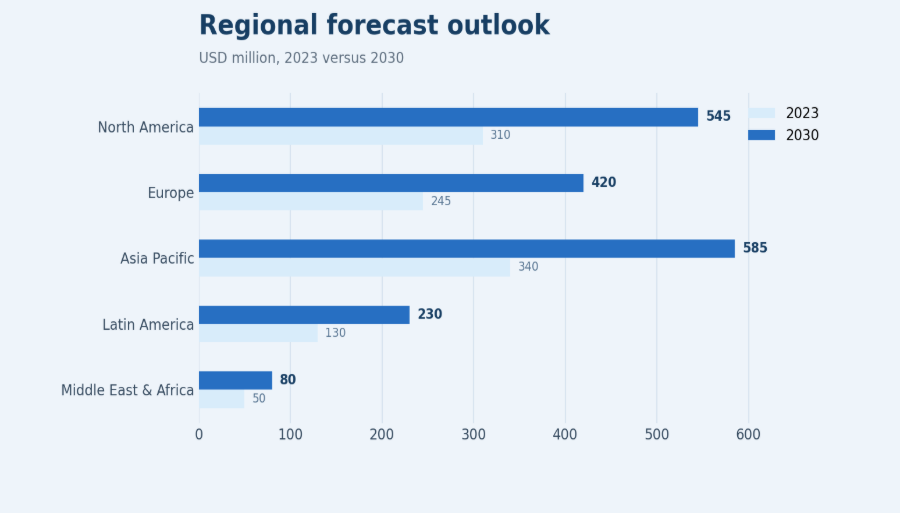
Figure 12. Regional forecasts point to steady growth across all major markets through 2030.
| Forecast area | Expected direction | Reason |
|---|---|---|
| Global market value | Upward | Winter demand and energy awareness |
| Asia Pacific | Large forecast base | Manufacturing and ecommerce expansion |
| North America | Stable growth | Mature replacement and premium demand |
| Europe | Supported by energy cost pressure | Personal heating value proposition |
| Smart blankets | Higher-value growth | Comfort and control features |
90-Day Electric Blanket Market Planning Framework
Statistics become more useful when they are converted into a planning cycle. A 90-day framework helps a manufacturer, retailer, ecommerce team, or content publisher move from market data to action. The goal is not to chase every benchmark. The goal is to identify the markets, product types, safety messages, and channels that can produce measurable demand.
| Timing | What to review | Output |
|---|---|---|
| Days 1-30 | Review global, regional, country, product, and channel data | Demand map by region and product type |
| Days 31-60 | Compare safety features, pricing, materials, online reviews, and competitor positioning | Product positioning plan |
| Days 61-90 | Test channel strategy, seasonal campaigns, and energy-saving messaging | Market-ready sales and content plan |
Electric Blankets Market KPI Dashboard
A useful KPI dashboard should not only track revenue. It should connect market value, growth rate, regional concentration, product features, channel mix, safety, and energy messaging. Category demand depends on all of these at once, so a one-number scorecard is too shallow for a production-ready market article.
| KPI | Why it matters |
|---|---|
| Global market size | Shows total demand base |
| CAGR | Measures growth speed |
| Regional share | Shows where demand is concentrated |
| Country-level growth | Identifies expansion markets |
| Product-type share | Shows which blanket styles lead |
| Online sales share | Measures ecommerce importance |
| Average selling price | Tracks premiumization |
| Safety feature adoption | Shows consumer trust improvement |
| Replacement cycle | Indicates recurring demand |
| Energy-cost messaging | Shows demand driver strength |
Electric Blankets Market Statistics FAQ
How big is the electric blankets market?
Electric blankets are now a clear billion-dollar home-comfort category. Grand View estimates the market at USD 1.07 billion in 2023 and USD 1.15 billion in 2024, with a forecast of USD 1.86 billion by 2030. Mordor’s view is similar, moving from USD 1.20 billion in 2025 to USD 1.72 billion by 2031.
What is the expected CAGR of the electric blankets market?
Forecasts vary by scope, but they all point upward. Grand View projects 8.2% CAGR from 2024 to 2030, Mordor projects 6.18% from 2026 to 2031, Custom Market Insights gives 7.85% through 2034, and Zion estimates 6.83% through 2034.
Which region leads the electric blankets market?
Asia Pacific is the largest regional signal in Grand View’s outlook, with USD 340.6 million in 2023 and 31.7% of global revenue. North America and Europe remain close behind, which makes the market a mix of manufacturing depth, winter demand, retail maturity, and energy-cost awareness.
Why are electric blankets becoming more popular?
Demand is rising because the product solves several household problems at once. Buyers want targeted warmth, lower heating reliance, softer bedding, safer controls, and easier online comparison. The category grows best when comfort, cost control, and trust are all visible in the product message.
Are electric blankets energy efficient?
They can be efficient for targeted personal warmth. Many models use about 50 to 150 watts, while space heaters often draw around 1,500 watts. That does not make electric blankets a full heating replacement, but it does make them useful for bed, sofa, and short-duration winter comfort.
Which type of electric blanket is most popular?
Over-blankets lead the product mix because they are easy to understand and buy. Mordor places them at 45.10% of 2025 product share, equal to about USD 541.20 million on its USD 1.20 billion market base. Underblankets, throws, and pads still matter because they serve different heating moments.
What safety features matter most in electric blankets?
The most important trust features are auto shut-off, overheat protection, quality wiring, detachable controllers, visible certification, and clear washing instructions. ESFI links heating pads and electric blankets to around 500 fires each year, with older products over 10 years old involved in nearly all reported cases.
Which countries have strong electric blanket demand?
Cognitive Market Research’s country framework puts the United States first at about 31.56% of the global benchmark. China follows at 10.35%, with Germany, the United Kingdom, Canada, Japan, India, France, Italy, Spain, South Korea, Brazil, Australia, and Argentina also appearing as tracked demand markets.
How does ecommerce affect electric blanket sales?
Ecommerce helps shoppers compare size, fabric, heat settings, safety features, warranty, reviews, and price before buying. Mordor still shows offline retail ahead at 61.41% of 2025 distribution, but online platforms grow fastest at 13.77% CAGR, making digital product pages more important each winter season.
What is the future outlook for electric blankets?
The outlook is steady rather than explosive. Grand View projects USD 1.86 billion by 2030, while Mordor forecasts USD 1.72 billion by 2031. Growth should come from replacement purchases, online retail, safer controls, softer materials, energy-cost messaging, and premium designs.
Final Takeaway
Electric blanket demand is no longer only a cold-weather story. It reflects how households manage warmth, heating costs, product safety, and everyday convenience. The strongest statistics point to a practical, recurring category where buyers want soft materials, washable construction, clear controls, auto shut-off, overheat protection, and confidence that the product is safe to use.
For brands and retailers, the lesson is simple: reliable warmth needs to be paired with trust. Products that combine comfort-led fabrics, safety reassurance, energy-use messaging, clear warranties, and strong online proof will be better positioned than products sold only on price or seasonal need.


