Functional beverages are no longer a small wellness niche. They now sit between traditional soft drinks, sports nutrition, gut-health products, energy drinks, hydration solutions, dairy alternatives, functional waters, and daily wellness routines. The shopper is still buying taste and convenience, but the purchase decision now often includes a functional promise: more energy, better hydration, digestive support, immune support, focus, recovery, relaxation, or a lower-sugar daily drink.
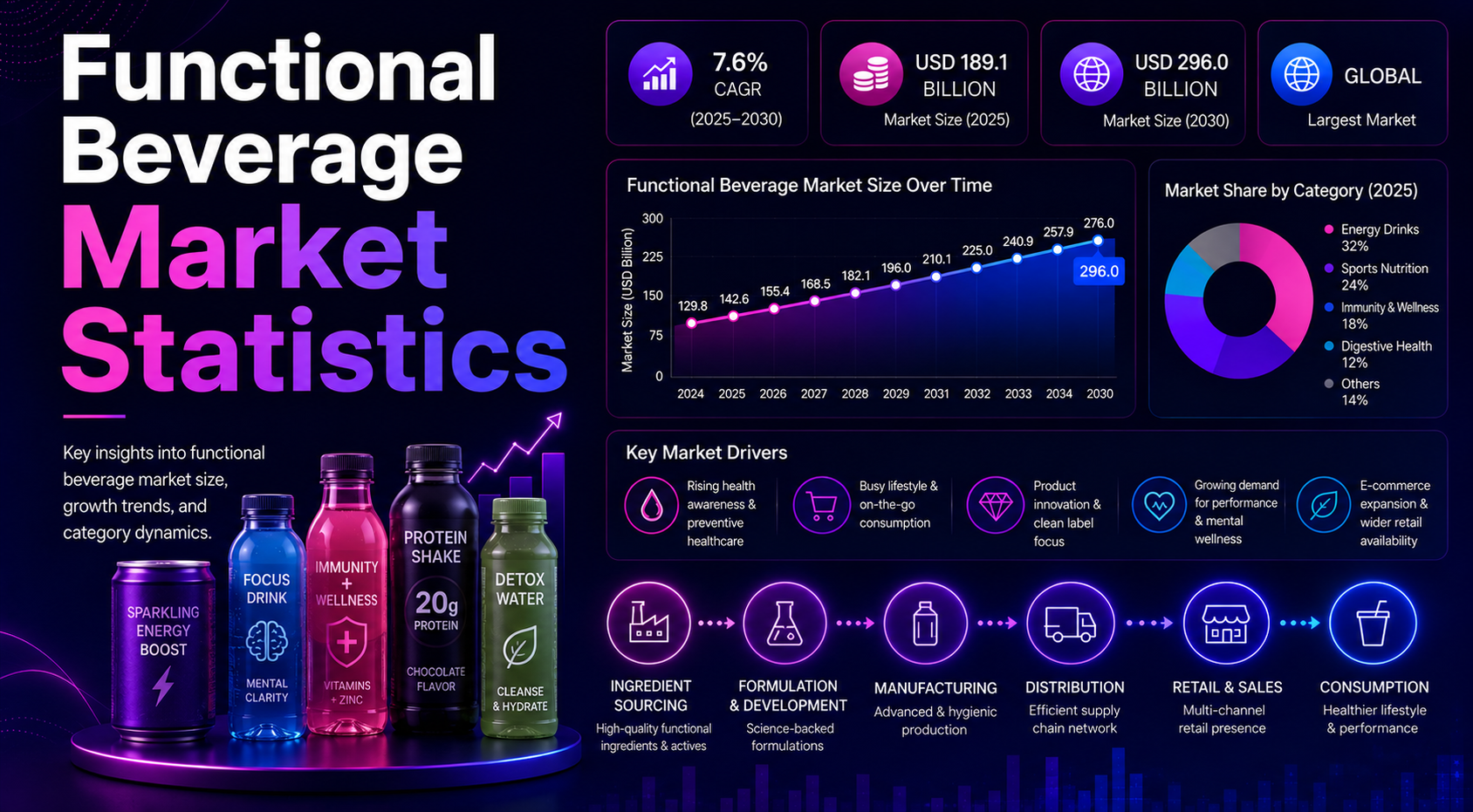
The headline numbers show how large the category has become. One market view places functional beverages at USD 151.80 billion in 2025 and forecasts USD 239.95 billion by 2031, while another places functional drinks at USD 164.68 billion in 2025 and projects USD 315.89 billion by 2033. Those estimates differ, but the direction is consistent: functional drinks are growing because consumers are asking beverages to do more than refresh.
Functional beverage growth becomes clearer when each number is tied to a business signal. Market size explains scale, product categories explain demand, regions show where opportunity is moving, and ingredients show how brands translate wellness needs into daily drinking occasions.
Executive Functional Beverage Benchmarks
Several benchmarks frame the market clearly. Functional beverages are expanding across overlapping markets rather than one single trend. Energy drinks, sports hydration, functional water, probiotic beverages, and wellness drinks are all part of the story, but each one grows for a different reason.
The numbers defining the functional beverage market
• Mordor Intelligence values the global functional beverage market at USD 151.80 billion in 2025 and forecasts USD 239.95 billion by 2031, which suggests a large category still adding meaningful value each year.
• Grand View Research gives a slightly higher functional drinks estimate of USD 164.68 billion in 2025 and projects USD 315.89 billion by 2033, pointing to a longer runway for wellness-oriented beverages.
• IMARC places global functional beverages at USD 151.7 billion in 2025 and expects USD 249.2 billion by 2034, showing that multiple market views cluster around the same broad growth direction.
• North America remains a major revenue base, with IMARC assigning the region 38.2% of the functional beverage market in 2025.
• Energy drinks remain a central category: one estimate places the global energy drinks market at USD 85.25 billion in 2025, while another outlook expects energy drinks to hold about 39% of functional beverage product share.
• Sports drinks continue to expand beyond traditional athletes, with Fortune Business Insights valuing the sports drink market at USD 46.49 billion in 2025.
• Probiotic beverages are also no longer a niche add-on; Global Market Insights values probiotic drinks at USD 49.5 billion in 2024.
• Functional water is smaller but strategically important, with one forecast placing the category at USD 17.2 billion in 2025.
• Online beverage buying is becoming more relevant to functional brands, with online functional drinks valued at USD 23,182.9 million in 2024 and forecast to grow at 11.4% CAGR through 2033.
• Consumer adoption is especially strong among younger shoppers: EY reports about 80% of Gen Z and 75% of millennials consume functional beverages regularly.
Editorial readout
The useful story is not simply that functional beverages are growing. The more important point is that the category has several growth engines at the same time: energy, hydration, gut health, immunity, focus, low sugar, and premium convenience. A strong market view should separate those engines so the growth signals are easy to read.
Why Functional Beverages Now Carry Global Market Momentum
Functional beverage growth matters because it reflects a wider shift in daily consumption. Consumers are building wellness habits into ordinary purchases, and beverages are one of the easiest formats for that behavior. A shopper may not buy a supplement every day, but they may buy a drink at breakfast, after a workout, during work, while commuting, or as an afternoon energy routine.
Market-size statistics are useful because they show how much room there is for small behavior changes to become large commercial opportunities. A few percentage points of growth in a category worth more than USD 150 billion can create major revenue for beverage companies, ingredient suppliers, retailers, packaging firms, and ecommerce channels.
Market-size and growth benchmarks
• The market is large under every major estimate: functional beverage values range from about USD 130.96 billion in 2024 to more than USD 200 billion in some broader functional drink definitions.
• Mordor Intelligence expects the category to rise from USD 151.80 billion in 2025 to USD 163.84 billion in 2026, then to USD 239.95 billion by 2031.
• Grand View Research forecasts an 8.5% CAGR from 2026 to 2033, while Mordor forecasts 7.93% CAGR from 2026 to 2031.
• IMARC’s longer forecast places the market at USD 249.2 billion by 2034, with a 5.50% CAGR from 2026 to 2034.
• Zion Market Research gives one of the more aggressive views, projecting the category from USD 208.13 billion in 2024 to USD 488.22 billion by 2034.
• Precedence Research estimates functional drinks at USD 233.94 billion in 2024 and projects USD 437.48 billion by 2034.
The spread between market estimates is normal because research firms define the category differently. Some include only non-alcoholic functional drinks, while others include broader fortified, wellness, sports, and performance beverages. Exact market value is best read as a range, while the shared direction of growth remains the main conclusion.
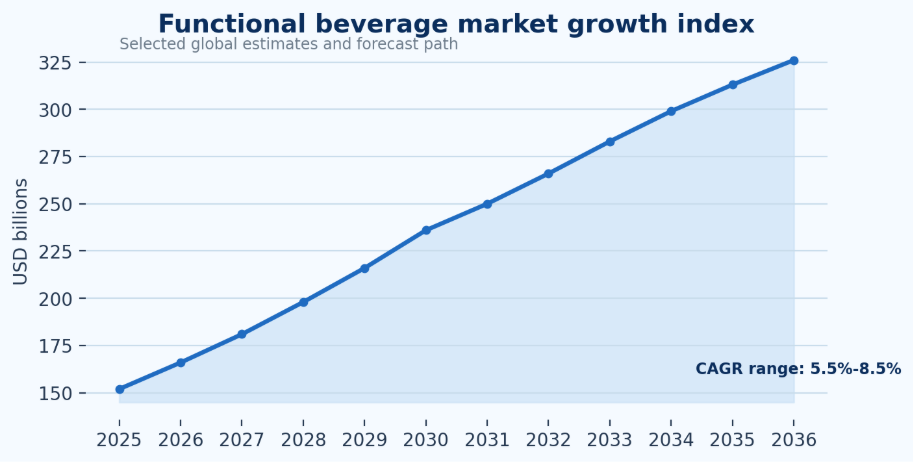
Figure 1. Functional beverage market growth should be read alongside consumer wellness demand because the category is expanding through energy, hydration, gut health, immunity, and focus use cases.
Market interpretation
The market context changes the business case. Functional beverages are not just a new flavor trend. They are a way for beverage companies to move into higher-value occasions, such as morning energy, workout recovery, digestive wellness, immune routines, and premium hydration.
Product Category Statistics
Functional beverages should not be discussed as one block. A shopper buying an energy drink is solving a different problem from a shopper buying a probiotic yogurt drink, a vitamin water, an electrolyte drink, or an adaptogen beverage. Product category data matters because it explains the consumer job behind each number.
Energy drink benchmarks
• Energy drinks are one of the most visible functional beverage categories, with the global market estimated at USD 85.25 billion in 2025.
• Energy drinks are also expected to remain a dominant functional beverage segment, with one outlook assigning them about 39% of product share.
• The U.S. remains a key energy drink market because convenience stores, gyms, ecommerce, and workplace consumption all support repeat purchase.
• Sugar-free and low-calorie energy drinks matter because consumers want stimulation without feeling that the drink conflicts with wellness goals.
Sports drink and hydration benchmarks
• Fortune Business Insights values the sports drink market at USD 46.49 billion in 2025, showing that hydration and recovery are mainstream beverage occasions.
• Sports drinks are expanding beyond team sports and endurance athletes into everyday fitness, walking, heat exposure, travel, and general hydration routines.
• Electrolytes have become a bridge between sports nutrition and daily wellness, allowing brands to position hydration as both performance support and routine self-care.
• Convenience stores remain important for immediate-consumption sports drinks, while online channels help powders, tablets, and premium hydration brands build repeat orders.
Functional water and probiotic beverage benchmarks
• Functional water is valued at about USD 17.2 billion in 2025, making it smaller than energy or sports drinks but important for low-calorie daily wellness.
• Functional water formats include vitamin water, electrolyte water, alkaline water, mineral-enhanced water, and sometimes botanical or oxygen-positioned waters.
• Probiotic drinks are valued at USD 49.5 billion in 2024, supported by consumer interest in gut health, digestion, immunity, and fermented foods.
• Gut-health drinks can include probiotic dairy beverages, kombucha, kefir, drinking yogurt, fermented teas, and newer prebiotic sodas or tonics.
| Product type | Core function | Main growth driver |
|---|---|---|
| Energy drinks | Energy, alertness, focus | Convenient stimulation, sugar-free formats, work and gaming occasions |
| Sports drinks | Hydration, electrolytes, recovery | Fitness routines, heat, active lifestyles, and daily hydration |
| Functional water | Hydration plus vitamins, minerals, or electrolytes | Low-calorie wellness and premium everyday drinking |
| Probiotic drinks | Gut health and digestive support | Microbiome awareness, fermented foods, and repeat routines |
| Relaxation drinks | Calm, sleep, stress support | Mental wellness, evening rituals, and caffeine alternatives |
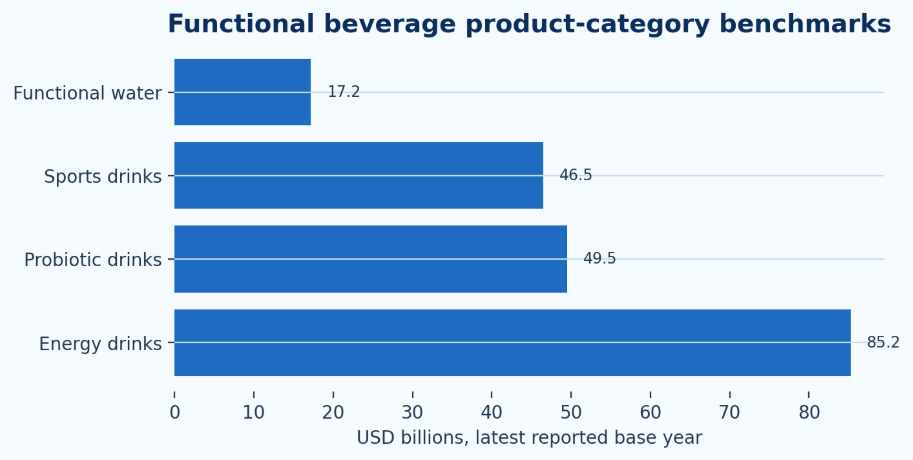
Figure 2. Product category comparisons are most useful when they connect each drink type to a clear consumer job, such as energy, recovery, digestion, or daily hydration.
Product-category readout
Functional beverage growth is strongest when a product has a clear consumer job. A drink that promises general wellness is harder to explain than one built around hydration, energy, digestion, focus, recovery, or relaxation.
Consumer Health and Wellness Demand
The demand side of the functional beverage market is built around everyday health behavior. Many consumers are not looking for a medical solution. They are looking for small, convenient improvements that fit into a normal day. That is why a drink can compete with snacks, supplements, coffee, sports nutrition, and ordinary soft drinks at the same time.
Health-driven demand benchmarks
• EY reports that about 80% of Gen Z consumers and 75% of millennials consume functional beverages regularly, making younger consumers central to category momentum.
• Glanbia describes the U.S. functional beverage market as around USD 50 billion and forecasts it to reach USD 62 billion by 2027.
• Low-sugar positioning matters because many shoppers want energy, flavor, and function without returning to high-sugar soft drink habits.
• Gut health is a durable need because it connects digestion, immunity, microbiome awareness, and daily routine in one beverage promise.
• Hydration demand is widening because consumers now use electrolytes for workouts, travel, hot weather, illness recovery, and normal daily performance.
• Mental focus and calm are emerging benefit areas, especially in drinks using caffeine blends, nootropics, magnesium, L-theanine, or adaptogen positioning.
| Consumer need | Beverage response | What to measure |
|---|---|---|
| More energy | Caffeine, B vitamins, taurine, green tea, guarana, or natural energy blends | Repeat purchase, sugar-free share, convenience-store velocity |
| Better hydration | Electrolytes, minerals, coconut water, functional waters | Daily-use adoption, sports use, seasonal demand |
| Gut health | Probiotics, prebiotics, fiber, fermented drinks | Household penetration, repeat purchase, claim trust |
| Immune support | Vitamin C, zinc, botanicals, fermented bases | Seasonal spikes, claim clarity, retail placement |
| Calm or focus | Adaptogens, nootropics, magnesium, L-theanine | Premium pricing, education burden, repeat usage |
Consumer demand interpretation
The functional beverage buyer is no longer only an athlete or wellness enthusiast. The category is widening because ordinary consumers are using drinks as daily tools for energy, hydration, digestion, and better-for-you routines.
Ingredient and Formulation Trends
Ingredient statistics are useful only when they explain a consumer benefit. A long list of ingredients can quickly become mechanical. The better approach is to connect each ingredient to the job it performs, the claim it supports, and the risk it creates for the brand.
The strongest functional beverage formulas usually combine three things: a familiar benefit, a credible ingredient, and a taste profile that encourages repeat purchase. Even an exciting ingredient can fail if the drink tastes medicinal, costs too much, or makes a claim consumers do not understand.
Ingredient benchmarks worth separating
• Future Market Insights expects probiotics to lead the ingredient category with around 30% share, which shows how important gut-health positioning has become.
• Electrolytes have moved beyond sports drinks into everyday hydration, giving brands a functional reason to compete against plain water.
• Caffeine remains central to energy drinks, but many newer products combine it with B vitamins, green tea, guarana, L-theanine, or nootropic positioning.
• Vitamins and minerals still matter because they are easy for consumers to understand, especially in immunity, hydration, and daily wellness drinks.
• Adaptogens and botanicals support premium positioning, but they require clearer education because not every shopper knows what each ingredient is supposed to do.
• Natural sweeteners and low-calorie formulas help functional beverages compete with both diet soft drinks and traditional sugar-sweetened drinks.
| Ingredient trend | Functional role | Market implication |
|---|---|---|
| Electrolytes | Hydration and recovery | Expands sports drinks into everyday hydration |
| Probiotics | Gut health and digestion | Supports dairy, fermented, kombucha, and prebiotic formats |
| Adaptogens | Stress balance and relaxation positioning | Creates premium value but needs education |
| Nootropics | Focus, cognition, alertness | Helps energy drinks move beyond caffeine alone |
| Natural sweeteners | Sugar reduction and better-for-you positioning | Supports reformulation and health-conscious buyers |
| Protein | Satiety and recovery | Connects drinks with fitness, meal replacement, and active nutrition |
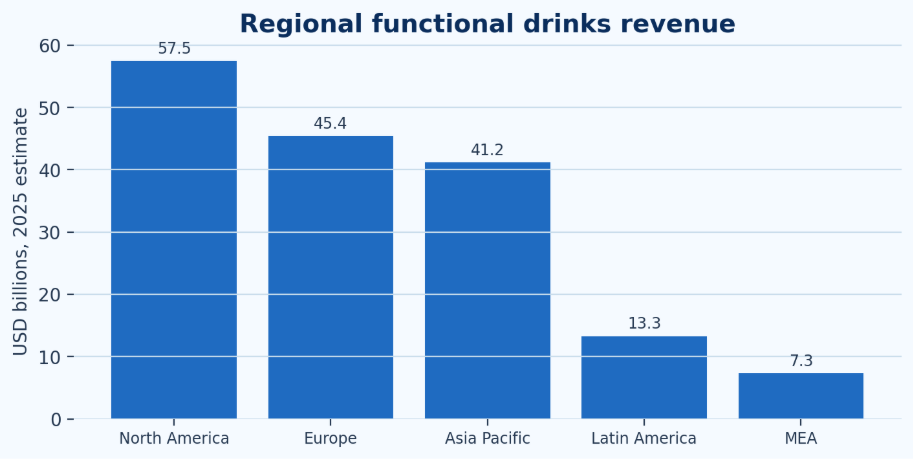
Figure 4. Functional beverage benefit clusters show why brands should separate durable consumer needs from short-term ingredient hype.
Ingredient rule
A functional ingredient should not be treated as decoration. It needs to support a clear claim, fit the beverage occasion, taste good enough for repeat purchase, and avoid creating regulatory or trust problems.
Regional Functional Beverage Intelligence
Regional analysis is one of the highest-value parts of functional beverage market sizing. Global averages can hide major differences in taste, regulation, retail channels, income levels, climate, health traditions, and product formats. A hydration drink that wins in the United States may not use the same formula, price point, pack size, or claim language that works in India, Germany, Brazil, or Japan.
North America
North America is a large and mature functional beverage market. The region benefits from high consumer spending, strong convenience retail, established energy drink consumption, sports hydration habits, premium wellness brands, and growing online beverage discovery. IMARC assigns North America 38.2% of the functional beverage market in 2025, and Grand View Research places North American functional drinks revenue at USD 57,536.2 million in 2025.
The United States drives much of the regional story. Functional drinks revenue in the U.S. is estimated at USD 52,480.3 million in 2025, while Canada is estimated at USD 5,055.9 million. The size gap matters because U.S. category behavior can heavily influence product development, ingredient messaging, and retail shelf strategy.
Europe
Europe is attractive but more complex. Health-conscious consumers support sugar reduction, clean label, functional water, probiotic drinks, and premium wellness formats. At the same time, health-claim rules can make wording and evidence more important than in markets where functional claims are less tightly controlled.
Germany, the United Kingdom, France, Italy, and Spain should be treated separately rather than as one uniform European market. Germany often rewards credible wellness and clean-label positioning. The U.K. has strong better-for-you beverage momentum and sugar reduction pressure. Southern European markets can be more taste- and occasion-led, especially where functional drinks compete with strong food and beverage traditions.
Asia Pacific
Asia Pacific is one of the most important growth regions because it combines large populations, fast urbanization, convenience retail, ecommerce, and long-standing functional food traditions. Grand View Research places Asia Pacific functional drinks revenue at USD 41,167.2 million in 2025.
China alone is estimated at USD 15,118.1 million in functional drinks revenue in 2025, while India is estimated at USD 4,247.3 million. India’s growth rate is especially important, with one country outlook placing its CAGR at 10.8%. Japan is different again because it already has a mature functional food and beverage culture, which makes innovation and claim credibility more important than basic category education.
Latin America
Latin America’s functional beverage opportunity is tied to youth demographics, urban retail, sports culture, affordability, and energy drink demand. Brazil and Mexico are the countries most likely to shape the regional story, while Argentina, Chile, Colombia, and Peru require more localized pricing and channel strategies.
Middle East and Africa
Middle East and Africa demand is shaped by climate, youth population, modern retail, premium beverage adoption, and hydration occasions. Saudi Arabia, the UAE, and South Africa are useful country anchors because each has a different mix of income, retail development, fitness culture, and beverage preference.
| Region | Functional beverage implication |
|---|---|
| North America | Large premium base with strong energy, hydration, functional water, and sugar-free demand |
| Europe | Clean label, health-claim discipline, sugar reduction, probiotic drinks, and functional water shape strategy |
| Asia Pacific | Large population, functional food traditions, urbanization, and convenience channels support high growth |
| Latin America | Energy drinks, hydration, sports occasions, affordability, and modern retail drive expansion |
| Middle East & Africa | Heat, youth demographics, sports culture, and premium retail support hydration and energy demand |
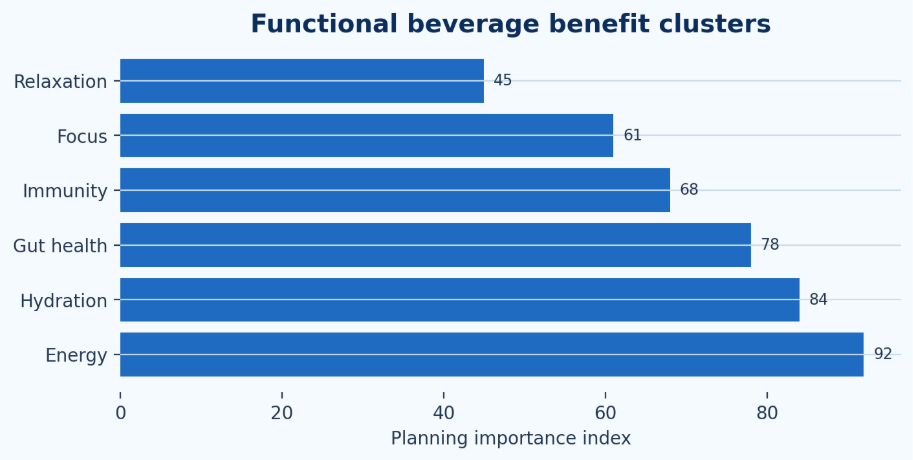
Figure 3. Regional functional beverage growth should be measured by country because payment power, taste, health claims, and retail channels differ sharply across markets.
Regional interpretation
Functional beverage localization should not stop at language or packaging. The best regional analysis connects product function, taste preference, price point, retail channel, and regulatory claim environment.
Country-Level Functional Beverage Statistics
Country-level statistics are useful because functional beverage behavior is highly local. The United States and China deserve clear attention because both represent large revenue pools, while India is important for growth because urbanization, fitness routines, and young consumers are widening demand. Mature markets such as Japan, Germany, and the United Kingdom need a different reading because claim credibility, clean labels, taste expectations, and sugar reduction may matter as much as market size.
| Country | Functional beverage market readout |
|---|---|
| United States | Large premium market across energy, sports hydration, functional water, and sugar-free beverages. |
| China | Scale market where functional teas, dairy drinks, and localized wellness formats matter. |
| India | Urbanization, fitness, young consumers, and convenience are widening functional drink demand. |
| Japan | Mature functional food and beverage culture makes claim credibility especially important. |
| Germany | Clean-label expectations, credible benefits, and functional water support the market. |
| Brazil | Youth, fitness, sports occasions, and modern retail support Latin American expansion. |
Country-level rule
Functional beverage strategy should not be based on global averages alone. The winning benefit changes by country: one market may favor probiotic dairy drinks, another may favor electrolyte water, and another may reward energy drinks or functional tea.
Distribution Channel and Retail Statistics
Functional beverage sales depend on matching the product promise to the channel. Energy drinks often perform well in convenience stores because the occasion is immediate. Probiotic drinks may need refrigerated retail, health stores, or supermarket credibility. Premium wellness drinks may build awareness online before scaling into grocery.
Retail and channel benchmarks
• NielsenIQ reports online CPG beverage sales reached USD 11.9 billion, showing that digital shelves matter even in a category still heavily influenced by physical retail.
• Grand View Research values online functional drinks at USD 23,182.9 million in 2024, with a forecast 11.4% CAGR through 2033.
• Supermarkets and hypermarkets remain important because they support household beverage purchasing, multipacks, refrigerated visibility, and brand comparison.
• Convenience stores are especially important for energy drinks, sports drinks, hydration drinks, and single-serve immediate-consumption formats.
• Health stores and gyms can help functional products explain premium ingredients, especially probiotics, adaptogens, protein, and recovery beverages.
| Channel | Why it matters |
|---|---|
| Supermarkets and hypermarkets | High visibility, multipacks, household purchasing, and refrigerated functional beverage sets |
| Convenience stores | Strong fit for energy, hydration, sports drinks, and immediate consumption |
| Online retail | Supports discovery, repeat purchase, subscriptions, niche benefits, and premium bundles |
| Health stores | Useful for probiotics, adaptogens, protein drinks, and education-heavy products |
| Gyms and fitness centers | Natural fit for hydration, recovery, protein, and performance beverages |
Channel interpretation
Functional beverage sales improve when the use case and channel match. A fast energy drink belongs close to immediate need, while a probiotic or adaptogen drink may need more education, trust, and repeat-routine messaging.
Brand, Innovation, and Competitive Landscape
Functional beverage innovation is active because large beverage companies and smaller wellness brands are attacking the same consumer shift from different angles. Large brands bring distribution, manufacturing, and retail power. Startups often bring sharper benefit claims, modern packaging, ingredient experimentation, and digital communities.
Innovation is strongest where the beverage has a clear occasion. A sugar-free energy drink can target work, gaming, studying, or fitness. An electrolyte drink can target workouts, travel, heat, or recovery. A probiotic drink can target morning routines and digestive comfort. A relaxation drink can target evening use, stress, or sleep support.
| Innovation area | Market impact |
|---|---|
| Sugar-free energy | Expands energy drinks among health-conscious consumers |
| Electrolyte hydration | Moves sports drinks into daily hydration and heat-related use |
| Probiotic beverages | Connects drinks with digestive wellness and repeat routines |
| Adaptogen drinks | Creates premium mental wellness positioning but needs education |
| Functional shots | Concentrates immunity, energy, gut health, or focus into a small format |
| Plant-based functional drinks | Links dairy alternatives with protein, vitamins, minerals, or gut-health claims |
Innovation readout
The best innovation is not the longest ingredient list. It is the clearest match between benefit, occasion, taste, channel, and price.
Functional Beverage Market Challenges
Functional beverages face a different set of risks from ordinary soft drinks. The stronger the health promise, the more important it becomes to prove the claim, manage sugar, protect taste, and avoid confusing the consumer. A product can look innovative on shelf and still fail if the benefit is unclear or the repeat-purchase habit is weak.
Risks and constraints worth tracking
• Sugar content remains a major issue because consumers may reject a wellness-positioned drink if it feels too close to a traditional sugary soft drink.
• Health-claim regulation can limit what brands are allowed to say, especially in markets with stricter rules around functional and nutritional claims.
• Ingredient credibility matters because consumers are becoming more aware of probiotics, adaptogens, electrolytes, vitamins, caffeine, sweeteners, and artificial additives.
• Premium pricing can limit repeat purchase if the drink does not deliver a clear benefit or fit a regular routine.
• Crowded shelves make functional clarity important. Products that try to communicate too many benefits can become harder to understand.
• Taste remains non-negotiable. A functional drink may earn trial through a health claim, but repeat purchase usually depends on flavor, mouthfeel, and convenience.
| Challenge | Business risk |
|---|---|
| Sugar and calories | Weakens better-for-you positioning and may limit health-conscious adoption |
| Regulatory claims | Can restrict marketing language and require stronger substantiation |
| Ingredient trust | Consumers may question unfamiliar ingredients or exaggerated promises |
| Premium pricing | Can reduce repeat purchase if the benefit is not obvious |
| Shelf competition | Makes benefit clarity, packaging, and channel fit more important |
| Taste tradeoff | Poor flavor can stop repeat purchase even when the claim is attractive |
Risk interpretation
Functional claims can support premium pricing, but weak claims can damage trust. The strongest brands connect formulation, taste, evidence, and repeat purchase instead of relying only on trend ingredients.
Functional Beverage Use-Case Map
Functional beverage demand becomes easier to read when the market is organized by consumer occasion rather than by beverage label alone. The same shopper may buy an energy drink on a workday morning, an electrolyte drink after exercise, a probiotic dairy drink with breakfast, and a low-sugar functional water during travel. That is why category statistics should be connected to the moment of use. A product that wins in an immediate-consumption occasion usually needs strong retail visibility, fast taste appeal, and simple claims. A product that wins in a daily wellness routine usually needs trust, repeatability, and a benefit that feels credible after several purchases.
The useful market question is not simply which functional beverage category is largest. The better question is which function has the clearest job to perform for the consumer. Energy and focus products solve fatigue. Hydration products solve sweat, heat, recovery, and daily water fatigue. Gut-health beverages solve digestive routine needs. Immunity drinks often rise during seasonal health moments. Relaxation and sleep drinks depend on evening use, stress management, and believable formulation. When this use-case lens is applied, the statistics feel less like a spreadsheet and more like a market map.
Everyday energy and focus
Energy remains one of the most familiar functional beverage promises because the consumer problem is easy to understand. People recognize tiredness, long working hours, study sessions, commuting fatigue, gaming, travel, and early-morning routines. The strongest brands in this area do not only sell caffeine. They package energy with flavor, portability, brand identity, sugar-free choices, and sometimes focus or performance language. This is why energy drink statistics should be interpreted with caution: growth may come from stimulation, but repeat purchase often comes from taste, identity, price, and availability.
Energy-focused drinks should be discussed through use occasions such as work, study, travel, gaming, fitness, and late-day fatigue.
Sugar-free and low-calorie formats matter because many buyers want energy without feeling that the drink conflicts with their health goals.
Focus-oriented positioning can help brands move beyond basic caffeine, but the claim needs to feel simple enough for mainstream shoppers.
Hydration, recovery, and daily wellness
Hydration is now broader than traditional sports drinks. Electrolytes, minerals, coconut water, vitamin-enhanced water, functional water, and hydration powders all compete for the same consumer logic: a drink should do more than reduce thirst. The category has expanded because hydration is not limited to athletes. Hot weather, commuting, desk work, wellness routines, travel, outdoor recreation, and everyday fatigue all create reasons to buy a hydration beverage. For market clarity, hydration statistics should be connected to lifestyle behavior instead of being treated only as a sports-performance number.
Sports drinks still matter in athletic and recovery occasions, but electrolyte positioning has moved into daily wellness.
Functional water works best when the added benefit is easy to understand, such as electrolytes, vitamins, minerals, or low-calorie hydration.
Hydration claims are especially relevant in warm climates, fitness-heavy markets, and convenience retail channels.
Gut health and digestive routines
Gut-health beverages create a different kind of demand. They are less impulsive than energy drinks and more connected with routine, trust, and habit. Probiotic drinks, fermented beverages, kombucha, kefir, yogurt drinks, and prebiotic sodas can all sit under this wider digestive-health story. Growth depends on both science and familiarity. Consumers may like the idea of probiotics, but they still need the product to taste good, fit breakfast or snack routines, and feel credible enough to buy repeatedly.
Probiotic and fermented drinks should be positioned as routine-driven products rather than only trend-driven launches.
Digestive-health beverages need clearer education than energy drinks because the benefit is less immediate.
Country context matters because dairy-based drinks, fermented tea, and plant-based gut-health beverages do not carry the same familiarity everywhere.
Immunity, relaxation, and premium wellness
Immunity and relaxation beverages often create premium opportunities, but they also require careful messaging. Vitamin-based immunity drinks can benefit from seasonal demand and preventive-health thinking, while relaxation beverages depend on trust in ingredients such as magnesium, botanicals, adaptogens, or calming blends. These categories can sound attractive in market reports, but the commercial test is whether shoppers understand the promise quickly and believe the drink can become part of a repeat routine. This is where taste, packaging, channel, and claim discipline become as important as the ingredient list.
Functional Beverage Market Diagnostic
A useful market view connects each figure to a business question: which function is growing, which region is accelerating, which consumer need is strongest, and which product format can turn interest into repeat purchase?
Reading Functional Beverage Signals Clearly
Functional beverage data becomes difficult to use when every number is given the same weight. A market-size number explains scale, a CAGR explains speed, a regional number explains where growth is moving, and a product-category number explains what consumers are actually buying. These statistics should be connected to interpretation, not stacked as unrelated claims.
A large global market value confirms that the category is commercially important, but it does not identify the strongest product opportunity. A fast-growing regional forecast shows where demand may be building, but it does not reveal whether shoppers are buying for energy, hydration, gut health, dairy-based wellness, or functional water. Country-level figures become more useful when tied to local beverage habits, retail channels, climate, health priorities, and price sensitivity.
Turn market size into context
Market-size figures should be used as anchors, not as filler. The global market value belongs early in the discussion, then becomes useful again when product categories, regions, or channels need context. This prevents repetition and keeps attention on meaning. When two market estimates differ, the difference usually reflects category definitions such as whether the source includes energy drinks, sports drinks, functional water, dairy-based drinks, probiotic drinks, and wellness shots.
Turn regional data into localization
Regional statistics should support localization. North America should not be written the same way as Asia Pacific or Europe. In North America, premium energy, sports hydration, functional water, and sugar-free choices are central. In Europe, clean label, sugar reduction, and health-claim credibility matter more strongly. In Asia Pacific, functional traditions, dairy drinks, tea-based wellness, urbanization, and large youth populations shape demand. Latin America needs more attention to affordability and retail access, while the Middle East and Africa often require hydration, heat, youth, and modern retail context.
Turn ingredient numbers into trust signals
Ingredient statistics should be connected to trust. Electrolytes, probiotics, caffeine, vitamins, adaptogens, fiber, protein, botanicals, and nootropics all carry different levels of consumer understanding. A mainstream shopper may understand electrolytes and vitamins quickly, while adaptogens and nootropics often need more explanation. Strong market interpretation separates familiar ingredients from emerging claims and higher-education benefit areas. A statistic earns its place when it changes the understanding of market size, speed, category mix, regional demand, or consumer behaviour. Related numbers work best when they are grouped around one market question instead of spread across unrelated paragraphs.
| Problem area | Core signals to measure | Useful benchmark angle |
|---|---|---|
| Market growth | Market size, forecast value, CAGR, category definition | whether the category is expanding and how estimates differ |
| Product category | Energy, sports, functional water, probiotics, relaxation, protein | where demand is concentrated |
| Consumer demand | Energy, hydration, gut health, immunity, low sugar, focus | why consumers buy |
| Regional fit | Region, country, climate, income, taste, regulation | why localization matters |
| Channel strategy | Supermarket, convenience, online, health stores, gyms | where consumers discover and repeat |
| Formulation risk | Sugar, claims, ingredient trust, taste, evidence | long-term brand defensibility |
90-Day Functional Beverage Benchmark Plan
Statistics become more useful when they are translated into a practical review cycle. A 90-day plan can turn category data into a repeatable market scorecard rather than a long list of unrelated numbers.
| Timing | What to do | Output |
|---|---|---|
| Days 1-30 | Capture the baseline by product type, region, country, claim, price point, channel, and consumer segment. | A clear map of where functional beverage demand is strongest. |
| Days 31-60 | Compare category opportunities across energy, hydration, gut health, immunity, focus, relaxation, and low sugar. | A shortlist of high-potential product and market angles. |
| Days 61-90 | Review country-level signals, ingredient risk, competitive claims, channel strategy, and repeat-purchase potential. | A repeatable scorecard for updates, content planning, and brand analysis. |
Planning principle
The best functional beverage analysis does not chase every wellness trend. It separates durable demand from short-term ingredient hype, then compares growth against consumer need, regional fit, regulatory risk, and repeat-purchase potential.
Metrics Beverage Leaders Should Track
A useful scorecard should be detailed enough to locate the growth signal without becoming a vanity dashboard. These metrics help separate category momentum from weak, short-lived claims.
| Metric | Why it matters |
|---|---|
| Market size | the total commercial opportunity and helps compare category definitions |
| CAGR | expected growth speed and market maturity |
| Segment share | Identifies which product categories dominate the market |
| Regional growth | where expansion is strongest |
| Country-level demand | Helps localize product positioning and market angles |
| Repeat purchase | whether the product works beyond trial |
| Sugar-free share | Tracks health-conscious reformulation |
| Functional claim adoption | which benefits consumers value most |
| Channel performance | where products are discovered and bought |
| Premium price tolerance | Measures whether the function supports higher pricing |
Pricing, Repeat Purchase, and Premium Positioning
Functional beverages often depend on premium pricing, but premium pricing only works when the benefit is clear enough to justify the shelf price. A shopper may accept a higher price for a drink that offers electrolytes after exercise, probiotics as part of a morning routine, or sugar-free energy during work. The same shopper may reject a premium drink if the claim feels vague or the flavor does not support repeat purchase. This is why market statistics should be read alongside consumer behavior. Trial is useful, but repeat purchase is the real test of functional beverage demand.
Premium positioning is especially important because functional drinks compete against both ordinary beverages and supplement-like products. A functional water competes with bottled water, sports drinks, powders, and sometimes vitamin supplements. A probiotic beverage competes with yogurt, capsules, fermented foods, kombucha, and dairy alternatives. An energy drink competes with coffee, tea, caffeine shots, and soft drinks. These overlapping alternatives explain why category boundaries can blur.
What premium pricing needs to prove
The most durable premium products usually prove three things at once: the drink tastes good, the function is easy to understand, and the product fits a repeated occasion. Without taste, the consumer may try once and leave. Without a clear function, the drink becomes another expensive beverage. Without an occasion, the purchase becomes random instead of habitual. This is why functional beverage growth should be measured with repeat purchase, purchase frequency, and channel performance, not only with launch activity or forecast CAGR.
A hydration drink can justify premium pricing when it clearly solves heat, sweat, travel, recovery, or daily electrolyte needs.
A gut-health drink can justify premium pricing when the brand builds routine, taste familiarity, and claim credibility.
An energy drink can justify premium pricing when flavor, function, brand identity, and convenience all work together.
This pricing view keeps the statistics grounded. The market may be growing, but growth is not evenly distributed across every claim or product launch. The strongest functional beverage opportunities are usually found where a clear consumer need, believable formulation, suitable channel, and repeatable occasion meet.
Functional Beverage Market Statistics FAQ
Common questions
• What is the size of the functional beverage market?
The market is commonly estimated above USD 150 billion in 2025. One estimate places it at USD 151.80 billion, while another places functional drinks at USD 164.68 billion. The difference comes from how each source defines functional beverages.
• Why are functional beverages growing?
They are growing because consumers want drinks that do more than refresh. Energy, hydration, gut health, immunity, focus, recovery, relaxation, and low-sugar nutrition are all helping the category move into daily routines.
• Which functional beverage category is largest?
Energy drinks are one of the largest and most visible categories. The global energy drinks market is estimated at USD 85.25 billion in 2025, and one functional beverage outlook expects energy drinks to hold about 39% product share.
• Are sports drinks part of the functional beverage market?
Yes. Sports drinks are functional because they are usually positioned around hydration, electrolytes, recovery, and performance. The sports drink market is valued at USD 46.49 billion in 2025.
• Are probiotic drinks growing?
Yes. Probiotic drinks are supported by gut-health and microbiome awareness. One estimate values probiotic drinks at USD 49.5 billion in 2024.
• Which region is most important for functional beverages?
North America remains a major revenue base, with IMARC assigning it 38.2% of the market in 2025. Asia Pacific is also critical because China, India, Japan, South Korea, and Southeast Asia combine scale, wellness traditions, and convenience demand.
• What ingredients are common in functional beverages?
Common ingredients include caffeine, electrolytes, vitamins, minerals, probiotics, prebiotics, fiber, protein, adaptogens, nootropics, botanicals, and natural sweeteners.
• What are the main challenges in the functional beverage market?
The main challenges are sugar content, unclear claims, regulation, ingredient trust, premium pricing, crowded shelves, and taste. A drink may win trial with a claim, but repeat purchase usually depends on taste and routine fit.
Final Takeaway
Functional beverage performance depends on five systems working together: a clear consumer benefit, a credible formulation, regional fit, channel availability, and trustworthy health positioning. The statistics show that growth is not coming from one drink type alone. Energy drinks, sports hydration, functional water, probiotic beverages, and wellness drinks are all expanding because consumers are using beverages as small daily health tools.
The most useful analysis does not ask only whether the market is growing. It asks which benefit is creating the growth. If consumers are buying for energy, the relevant questions are sugar-free share, caffeine positioning, convenience retail, and repeat usage. If they are buying for hydration, the questions shift to electrolytes, climate, fitness routines, and daily consumption. If they are buying for gut health, the questions become probiotics, prebiotics, fermented formats, trust, and habit formation.
For beverage leaders, the practical goal is to separate durable consumer needs from short-term ingredient hype. Hydration, energy, digestion, recovery, low sugar, and everyday wellness are durable demand areas. Individual ingredients may rise and fall, but the strongest functional beverage brands will keep the benefit simple, the taste strong, the claims credible, and the channel matched to the occasion.