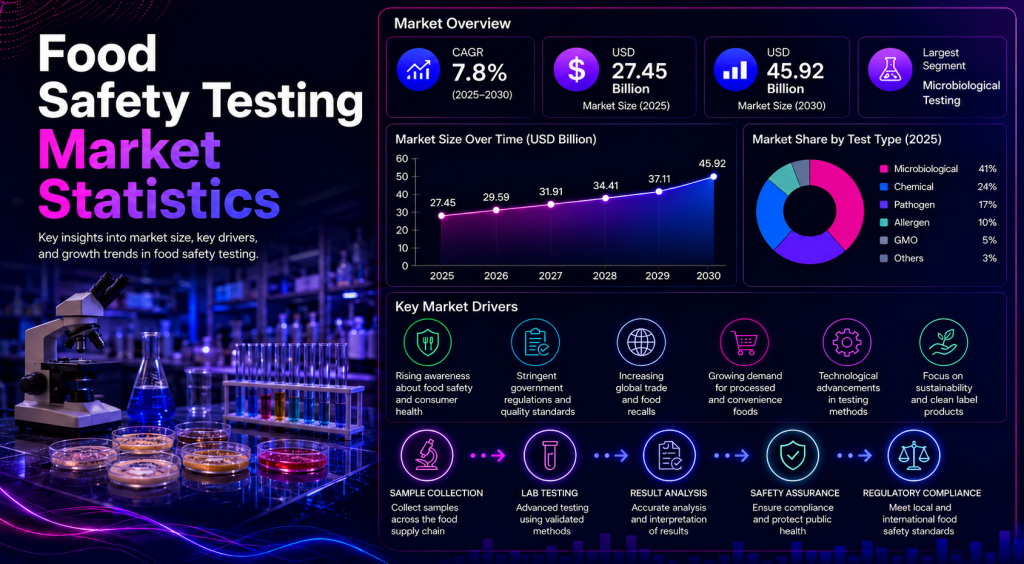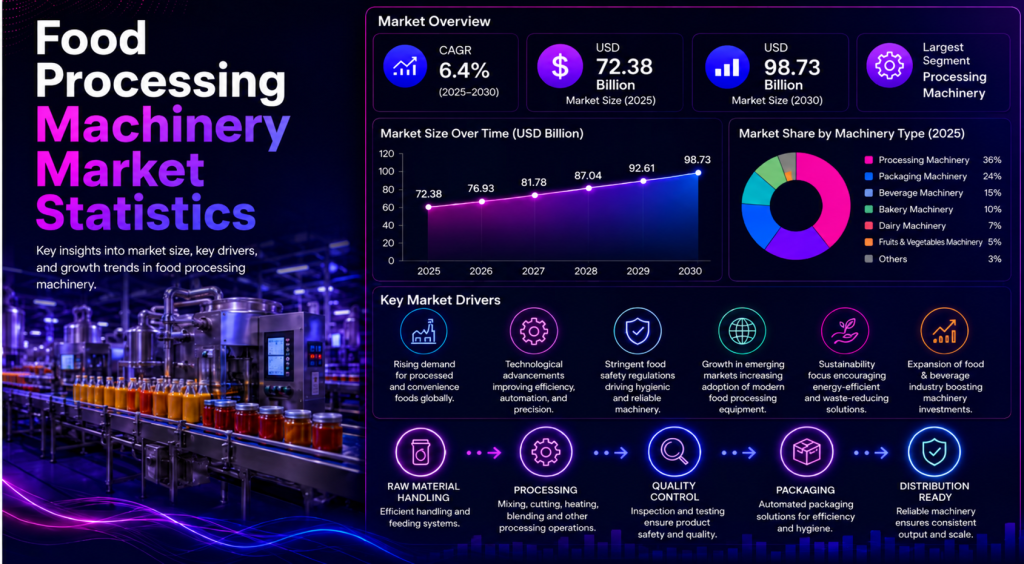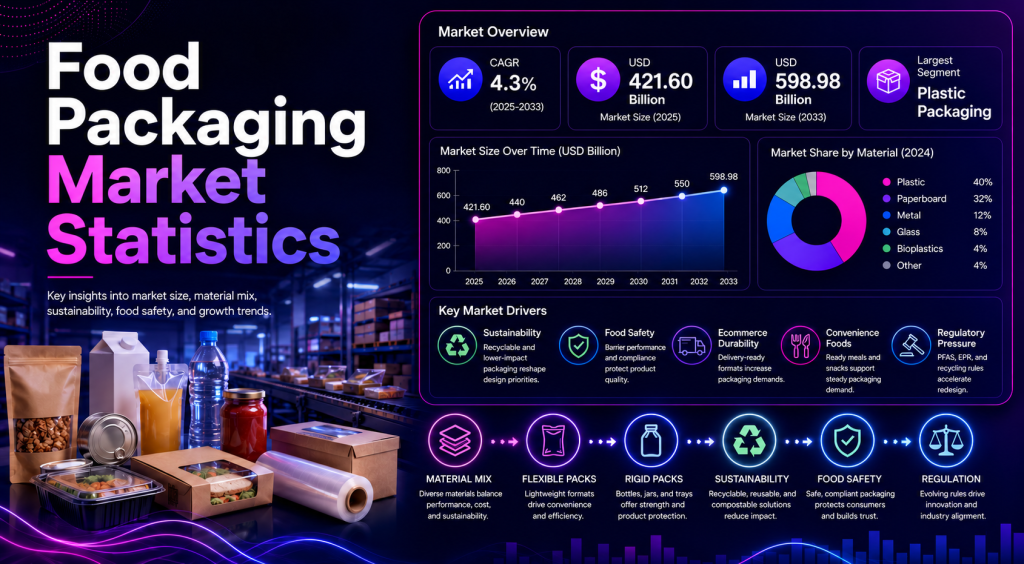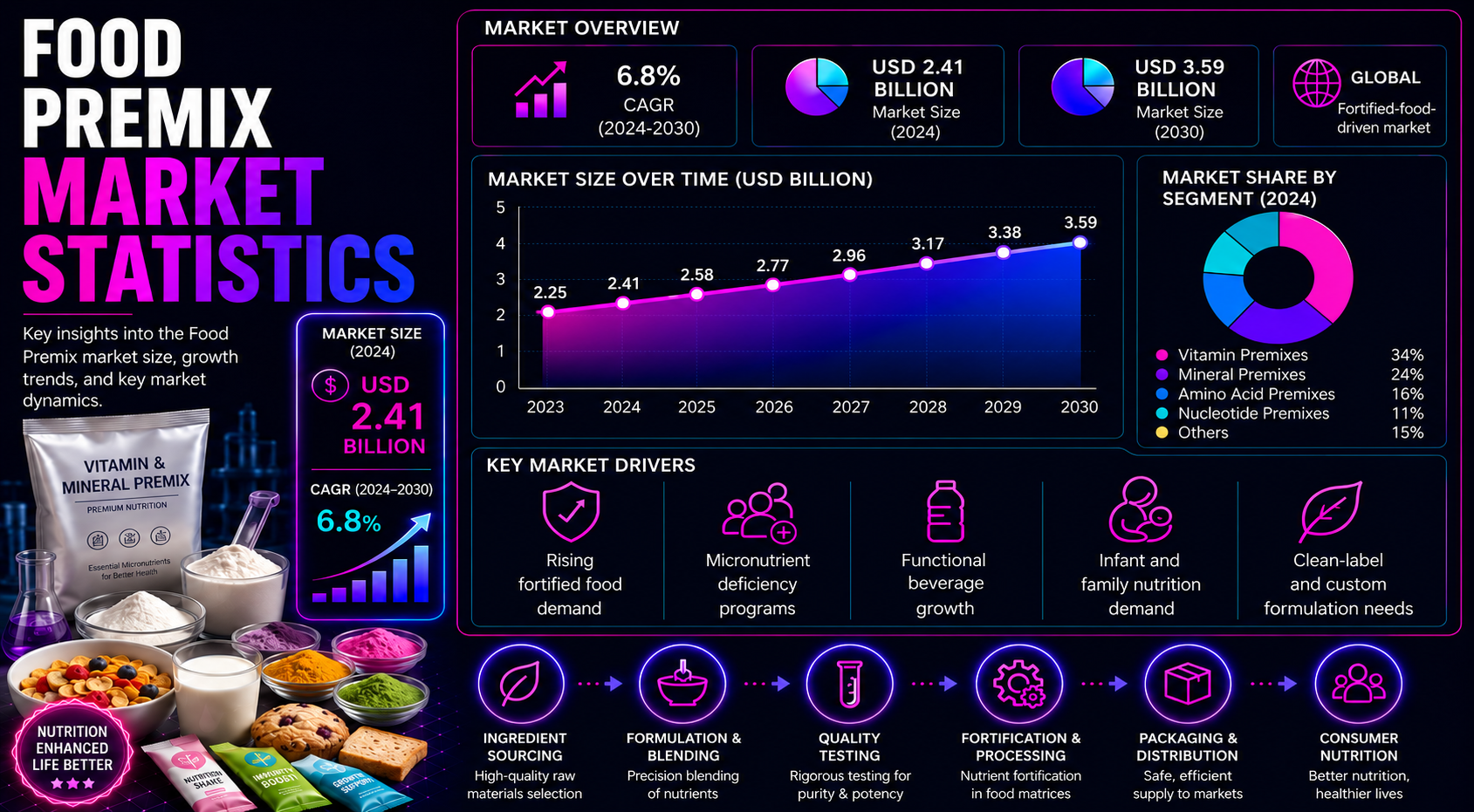
Food premixes are becoming one of the most important ingredient systems behind fortified foods, functional beverages, supplements, infant nutrition, clinical nutrition, and better-for-you packaged products. The market is no longer only about adding a vitamin or mineral into a finished product. It now depends on stable nutrient delivery, clean-label expectations, country-level fortification rules, accurate label claims, and supply chains that can handle customized blends at industrial scale.
The global food premix market is valued at USD 8.11 billion in 2025 and is projected to reach USD 15.45 billion by 2034, expanding at a CAGR of 7.47% during 2026 to 2034. Asia Pacific leads with a 36.93% share in 2025, while North America and Europe remain major premium formulation markets. The U.S. market is projected to reach USD 2.98 billion by 2032, reflecting demand from functional foods, nutraceuticals, and health-positioned consumer products.
Food premix demand now cuts across fortified staples, functional beverages, infant nutrition, dietary supplements, bakery, dairy, cereals, and clinical nutrition. The clearest market signals come from market size, ingredient mix, application growth, regional fortification policy, supplier capability, and the cost of delivering stable nutrients at commercial scale.
Executive Food Premix Benchmarks
The food premix market is shaped by a mix of commercial demand and public-health nutrition demand. The numbers below define the category from five angles: market value, ingredient demand, application demand, regional growth, and fortification policy.
• The global food premix market reached USD 8.11 billion in 2025, giving the category a large enough revenue base to support specialized blending, formulation, and technical-service providers.
• The market is projected to grow to USD 15.45 billion by 2034, which means the category is expected to add more than USD 7 billion in incremental value over the forecast period.
• Food premixes are forecast to expand at a CAGR of 7.47% from 2026 to 2034, a growth rate that reflects sustained demand for fortified foods, dietary supplements, and functional nutrition formats.
• Asia Pacific represented 36.93% of global food premix revenue in 2025, making it the largest regional market and a major growth engine for ingredient suppliers.
• Asia Pacific generated about USD 2.99 billion in 2025 food premix revenue, supported by nutraceutical adoption, packaged-food growth, and nutrition awareness in China, Japan, India, and Southeast Asia.
• North America generated about USD 2.32 billion in 2025 revenue, showing the strength of functional food, sports nutrition, dairy fortification, and custom premix demand.
• Europe generated about USD 1.94 billion in 2025 revenue, supported by clean-label expectations, aging-population nutrition, and a complex but high-value regulatory environment.
• The U.S. food premix market is projected to reach USD 2.98 billion by 2032, making it one of the strongest country-level opportunities for custom blends and premium nutrition products.
• Dietary supplements are identified as the leading application segment, showing how premixes connect closely with consumer health, immunity, energy, and wellness positioning.
• Beverages, dairy, bakery, and infant nutrition remain major end-use channels because premixes allow brands to deliver nutrients in products consumers already buy frequently.
• GFDx tracks fortification data across 196 countries and five commonly fortified foods, including maize flour, oil, rice, salt, and wheat flour.
• WHO recommends large-scale food fortification as a cost-effective intervention for vitamin and mineral deficiencies, including iodine deficiency disorders, anaemia, and iron deficiency.
• Universal salt iodization and fortification of maize flour, corn meal, wheat flour, and rice are among the food fortification approaches recommended by WHO.
• Mandatory fortification creates recurring structural demand, while voluntary fortification creates brand-led demand through wellness, immunity, sports, gut-health, and family-nutrition claims.
• Custom premix demand is rising because food and beverage brands increasingly need blends tailored by ingredient form, dosage, processing method, shelf life, country regulation, and label claim.
Editorial readout
The food premix market should not be measured only by ingredient revenue. The stronger benchmark is whether a premix can deliver a consistent nutrition claim through processing, storage, distribution, and country-level compliance. A segment with strong CAGR can still be difficult to commercialize if nutrients degrade, cost per serving rises, or labeling rules vary across regions.
Why Food Premix Now Matters in Global Nutrition
Food premix demand has expanded because nutrition is becoming a design requirement for everyday foods. Consumers expect more from beverages, dairy, cereals, snacks, infant products, and supplements, while regulators and public-health agencies continue to promote fortification of staples such as salt, wheat flour, maize flour, rice, and edible oil. This dual demand makes premixes both a commercial ingredient category and a nutrition-delivery tool.
Fortification also creates a bridge between public-health goals and industrial manufacturing. A flour mill, dairy processor, beverage company, or supplement brand cannot simply add individual micronutrients casually. It needs controlled blending, stability testing, overage calculation, homogeneity, documentation, and traceability. Premixes are valuable because they bring those requirements into one formulation system.
The market is also benefiting from health-positioned consumer trends. Immunity, energy, digestive health, women’s health, kids’ nutrition, healthy aging, and sports performance all depend on nutrient systems that can be repeatedly produced at scale. This is why the premix category increasingly overlaps with nutraceuticals, functional foods, and clean-label reformulation.
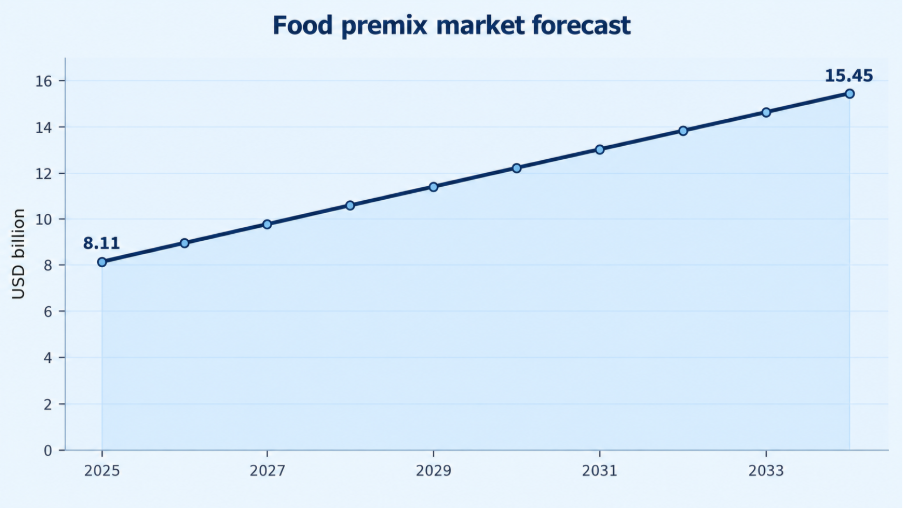
Figure 1. Global food premix market growth should be read with fortification demand because the category is driven by both commercial wellness products and staple-food nutrition programs.
Global Food Premix Market Size and Forecast
The global market outlook shows a category with steady growth rather than short-term trend volatility. The move from USD 8.11 billion in 2025 to USD 15.45 billion by 2034 indicates that premixes are becoming a standard input in many food and nutrition product systems. The forecast CAGR of 7.47% also suggests that demand is being pulled from multiple end markets rather than a single application.
Food premixes are used in dietary supplements, beverages, dairy products, bakery products, cereals, infant nutrition, sports nutrition, and clinical nutrition. Each application has different formulation requirements. A powder blend for a supplement tablet is different from a heat-stable vitamin system for bakery or a mineral blend for a ready-to-drink beverage. This variety supports customized premix demand.
Market growth is also linked to manufacturing efficiency. A premix reduces the operational burden of buying, testing, dosing, and blending many micronutrients separately. For large food manufacturers, the value is not only in the nutrient itself but in reduced complexity, improved batch consistency, and faster product development.
• The 2025 value of USD 8.11 billion gives the food premix market a sizable base across supplements, beverages, dairy, bakery, and other fortified products.
• The 2034 forecast of USD 15.45 billion shows that demand is expected to nearly double over the forecast window.
• The CAGR of 7.47% indicates strong category momentum compared with many mature packaged-food inputs.
• Asia Pacific leads the market with a 36.93% share, making regional strategy essential for suppliers and food companies.
• North America and Europe remain high-value markets because custom blends, clean-label demands, and premium nutrition claims are more developed.
| Market signal | What to measure | Why it matters |
|---|---|---|
| Market size | Global food premix revenue | Commercial scale and supplier opportunity |
| CAGR | Forecast growth rate | How quickly the category is expanding |
| Ingredient mix | Vitamin, mineral, amino acid, hydrocolloid, and custom blend demand | Formulation priorities |
| Application mix | Supplements, beverages, dairy, bakery, infant nutrition | Where premixes convert into finished products |
| Policy demand | Mandatory and voluntary fortification rules | Recurring structural demand |
Market readout
The market is attractive because growth comes from both premium consumer products and staple-food fortification. Premium formats create higher-margin innovation, while mandatory fortification creates repeat demand and long procurement cycles.
Fortification and Micronutrient Demand
Fortification is one of the clearest long-term demand anchors for food premixes. WHO describes fortification as deliberately increasing the content of one or more micronutrients in a food or condiment to improve the nutritional quality of the food supply and provide a public-health benefit with minimal risk. That definition explains why premixes are central to flour, rice, salt, oil, dairy, and cereal programs.
Micronutrient gaps are not solved by market growth alone. They require foods that can carry vitamins and minerals consistently, affordably, and safely. Premixes help by combining ingredients such as iron, zinc, folic acid, vitamin A, vitamin D, iodine, calcium, magnesium, selenium, B vitamins, and other nutrients into a format that can be dosed during manufacturing.
Large-scale fortification creates a different business logic from trend-led functional foods. A fortified flour or salt program may be driven by regulation, procurement, mill compliance, inspection, and public-health targets. A fortified beverage or supplement may be driven by brand positioning, consumer claims, flavor, convenience, and retail channel demand. Food premix suppliers must serve both systems.
Fortification programs also depend on quality assurance. If a premix is not evenly distributed, if nutrients degrade during storage, or if the finished product fails label-claim testing, the entire program can underperform. This is why technical service, analytical testing, and process knowledge are part of the premix value proposition.
• GFDx provides fortification datasets across 196 countries, giving manufacturers and policymakers a country-level view of legislation and food vehicles.
• WHO highlights universal salt iodization as a major fortification approach, making iodine premixes and related quality systems important in salt markets.
• Fortification of wheat flour, maize flour, corn meal, and rice creates recurring demand for vitamin and mineral premix systems.
• Iron, folic acid, vitamin A, vitamin D, iodine, zinc, calcium, and B vitamins are among the nutrients most commonly connected with fortification strategies.
• Premix demand is strongest when a nutrient gap, a widely consumed food vehicle, and a reliable manufacturing channel align.
| Fortification vehicle | Common premix role | Market implication |
|---|---|---|
| Salt | Iodine delivery | Supports long-term public-health programs |
| Wheat/maize flour | Iron, folic acid, zinc, B vitamins | Links premixes to staple-food consumption |
| Rice | Iron, zinc, folic acid, B vitamins | Supports programs in high-rice-consumption countries |
| Edible oil | Vitamin A and D systems | Connects premixes with household staples |
| Dairy/cereals | Vitamins, minerals, and functional nutrients | Supports family nutrition and retail products |
Fortification readout
The largest food premix opportunity is not only rising packaged-food output. It is the need to deliver accurate nutrient levels through foods people already consume every day, including salt, flour, rice, oils, dairy, cereals, and beverages.
Ingredient-Type Food Premix Statistics
Ingredient type determines both market opportunity and formulation complexity. Vitamins and minerals remain the backbone of the food premix category because they support fortification, supplements, infant nutrition, family nutrition, and functional product claims. Hydrocolloids, amino acids, fibers, prebiotics, and custom blends add more specialized positioning.
Vitamin premixes are widely used because vitamins support broad claims related to immunity, energy metabolism, bone health, maternal nutrition, children’s nutrition, and healthy aging. Mineral premixes are equally important because iron, zinc, calcium, magnesium, iodine, and selenium are tied to deficiency concerns and functional benefits.
Amino acid premixes are more linked to sports nutrition, clinical nutrition, protein beverages, recovery products, and specialized supplements. Fiber and prebiotic premixes are tied to gut-health positioning. Custom blends increasingly matter because brands want proprietary nutrient systems instead of generic ingredient addition.
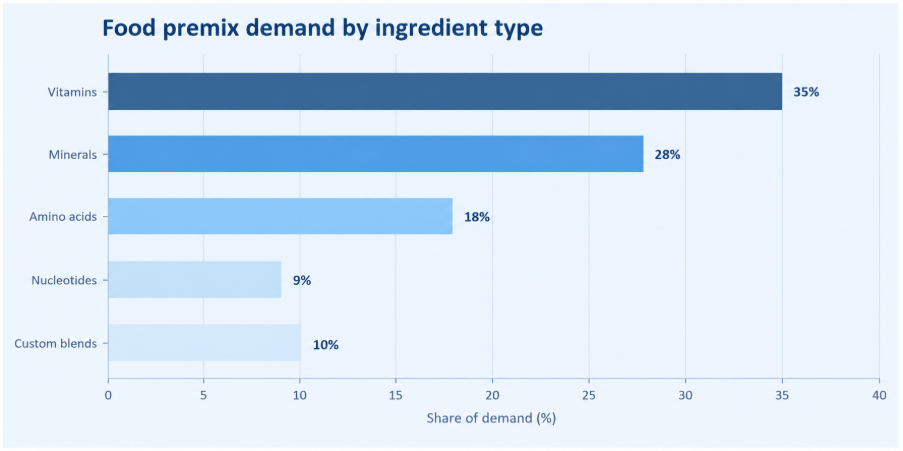
Figure 2. Ingredient demand is broad, but vitamins and minerals remain core because they support both public-health fortification and consumer-facing nutrition claims.
| Ingredient type | Market signal | Why it matters |
|---|---|---|
| Vitamin premix | High use in fortified foods and supplements | Supports broad nutrition and immunity claims |
| Mineral premix | Iron, zinc, calcium, magnesium, iodine demand | Supports deficiency, bone-health, and staple fortification |
| Amino acid premix | Sports, active, and clinical nutrition demand | Supports protein, recovery, and performance formats |
| Hydrocolloids | Clean-label and functional texture demand | Connects nutrition with formulation performance |
| Custom blends | Brand-specific nutrient systems | Supports differentiated product launches |
Ingredient readout
Ingredient selection is not only a nutrition decision. It affects flavor, color, solubility, heat tolerance, shelf life, regulatory status, labeling, allergen control, and cost per serving. That is why custom formulation support is increasingly important.
Application-Level Food Premix Statistics
Application demand explains where premixes turn into finished products. Dietary supplements are the largest application signal in many market reports because tablets, capsules, powders, gummies, and sachets can carry multi-nutrient blends directly. However, food and beverage applications are also important because they place nutrients into repeat-consumption products.
Beverages are one of the most dynamic channels. Functional waters, hydration drinks, energy drinks, dairy drinks, plant-based beverages, meal replacements, and powdered drink mixes all use vitamins, minerals, electrolytes, amino acids, and botanicals. In beverages, solubility and flavor masking are often as important as nutrient choice.
Bakery and flour applications are closely connected with staple fortification. Dairy and cereals support family nutrition and breakfast occasions. Infant nutrition and clinical nutrition require stricter dosage accuracy and quality control. Each application needs a different balance between regulatory compliance, sensory acceptance, and nutrient stability.
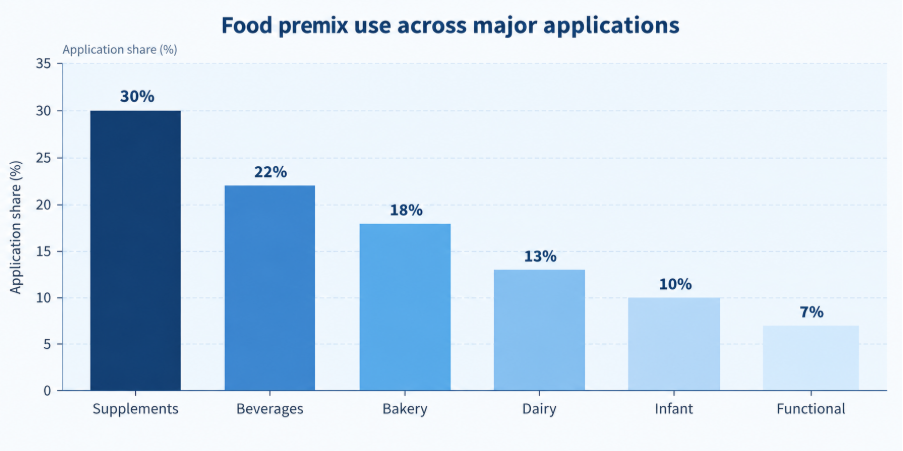
Figure 3. Food premix applications are diverse, with supplements leading while beverages, dairy, bakery, and infant nutrition provide recurring formulation demand.
| Application | Premix role | Market implication |
|---|---|---|
| Dietary supplements | Multi-nutrient blends for tablets, powders, gummies, and sachets | High-value demand with strong wellness positioning |
| Beverages | Vitamins, minerals, electrolytes, amino acids, botanicals | Supports functional drink innovation |
| Dairy products | Vitamin D, calcium, minerals, and family nutrition blends | Supports bone-health and household nutrition |
| Bakery/flour | Iron, folic acid, zinc, B vitamins | Strong link to staple fortification |
| Infant nutrition | Highly controlled vitamin and mineral systems | Requires strict quality, safety, and accuracy |
Application readout
The strongest applications are not always the largest by volume. Infant nutrition and clinical nutrition may require more technical control, while beverages and supplements can carry faster innovation cycles and more consumer-facing claims.
Regional Food Premix Intelligence
Regional analysis is essential because food premix demand changes by regulation, diet, manufacturing maturity, income, health awareness, and staple-food policy. A global CAGR does not explain how premixes are bought, formulated, tested, or commercialized in each region.
North America
North America is a mature market for food premixes because it combines high consumer interest in supplements, functional foods, sports nutrition, dairy fortification, and convenient health-positioned products. The region generated about USD 2.32 billion in 2025 revenue, supported by established food processing and strong product innovation.
The United States is particularly important because it supports premium nutrition formats, custom blends, clean-label reformulation, and functional beverage launches. The projected U.S. value of USD 2.98 billion by 2032 makes the country a key target for premix suppliers with technical services and regulatory support.
Europe
Europe is shaped by premium nutrition, clean-label expectations, aging-population needs, and complex food regulations. The region generated about USD 1.94 billion in 2025 revenue, with demand coming from supplements, functional foods, dairy, cereals, and products positioned around healthy aging and digestive health.
Germany and the United Kingdom are important country signals. Germany’s demand is linked with micronutrient supplements and healthy-aging awareness, while the UK market is tied to reformulation, fortified foods, and health-positioned packaged products. European buyers also require strong documentation, traceability, and compliance discipline.
Asia-Pacific
Asia Pacific is the largest regional food premix market, accounting for 36.93% of global revenue in 2025 and about USD 2.99 billion in value. The region combines population scale, packaged-food growth, nutraceutical adoption, traditional medicine influence, infant nutrition demand, and rising middle-class health awareness.
China and Japan are important for herbal supplements and nutritionally rich products, while India is important because urbanization, policy support, and nutrition awareness are creating long-term demand. Asia-Pacific’s scale makes it a high-growth region, but supplier success depends on local regulation, cost structure, and manufacturing partnerships.
Latin America
Latin America is driven by fortified staples, beverages, dairy, and affordability-sensitive nutrition products. Brazil and Mexico are the most important country signals because they have large food-processing sectors, substantial packaged-food consumption, and established channels for fortified products.
The region needs cost-effective premixes that can work in flour, beverages, dairy, and supplements. Price sensitivity can limit premium claims, but the size of staple-food and beverage categories makes Latin America a steady market for suppliers with local formulation support.
Middle East & Africa
Middle East and Africa generated about USD 0.20 billion in 2025 food premix revenue in the Fortune Business Insights framework, but the region remains important because of staple fortification, nutrition programs, GCC premium consumption, and imported ingredient dependence.
Wheat flour, salt, and other staple-food programs shape structural demand in many markets, while GCC countries support premium functional foods and supplements. The region’s main constraints include uneven manufacturing capacity, regulatory differences, affordability, and supply-chain reliability.
| Region | Food premix implication |
|---|---|
| North America | Mature demand for supplements, functional foods, sports nutrition, and custom premixes |
| Europe | Clean-label pressure, aging-population demand, and regulatory complexity |
| Asia-Pacific | Largest share and strong growth from population scale and packaged-food expansion |
| Latin America | Fortified staples, beverages, dairy, and price-sensitive nutrition demand |
| Middle East & Africa | Staple fortification and nutrition policy shape long-term opportunity |
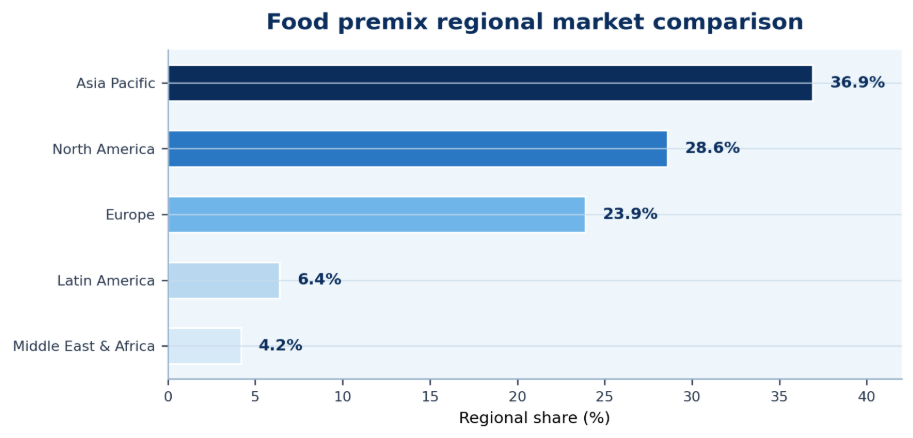
Figure 4. Asia Pacific leads by market value, while North America and Europe remain important premium and custom formulation regions.
Regional readout
Regional demand should be compared through both market value and execution conditions. Asia Pacific brings scale, North America brings premium innovation, Europe brings compliance intensity, Latin America brings staple and beverage demand, and Middle East & Africa brings fortification and access-driven opportunity.
Country-Level Food Premix Statistics
Country-level analysis turns regional averages into action. The same premix strategy cannot be used in the U.S., Germany, India, China, Brazil, and the GCC without adapting to diet patterns, regulations, manufacturing capabilities, label rules, consumer claims, and cost expectations.
• The United States is projected to reach USD 2.98 billion by 2032, making it a priority market for premium premixes and custom formulation.
• China is supported by functional food demand, infant nutrition, traditional medicine influence, and nutritionally rich products.
• India is supported by urbanization, packaged-food growth, fortification policy, and rising awareness of functional nutrition.
• Japan is important because consumer interest in herbal supplements and healthy aging supports premium nutrition formats.
• Germany is supported by demand for micronutrient supplements related to digestive health and aging.
• The United Kingdom is projected around USD 0.35 billion by 2026 in the Fortune Business Insights regional breakdown.
• Brazil is the largest Latin American country opportunity because of its food-processing base and beverage market.
• Mexico supports demand through packaged beverages, dairy products, bakery categories, and fortified foods.
• Saudi Arabia and the UAE support premium nutrition demand in the GCC, while broader MEA demand remains more tied to staple fortification and affordability.
| Country | Market signal | Why it matters |
|---|---|---|
| United States | Large premium and custom premix market | Advanced functional nutrition opportunity |
| Germany | Healthy-aging and digestive-health nutrition demand | European premium formulation potential |
| United Kingdom | Fortified and health-positioned packaged foods | Reformulation and retail opportunity |
| China | Large functional food and infant nutrition base | Scale opportunity |
| India | Population scale and fortification need | Long-term structural demand |
| Japan | Healthy-aging and herbal nutrition culture | Premium and specialized demand |
| Brazil | Large food-processing and beverage market | Latin American scale |
| Mexico | Fortified foods and packaged beverage demand | Regional growth potential |
Country readout
The strongest country strategy starts with use case. The U.S. and Europe may reward premium claims and documentation, China and India may reward scale and adaptation, while Brazil, Mexico, and MEA markets often require a sharper balance of cost, compliance, and local distribution.
Consumer and Product Trend Statistics
Consumer trends are changing what food premix buyers ask suppliers to deliver. Products are increasingly positioned around immunity, energy, digestive health, women’s health, kids’ nutrition, senior nutrition, sports performance, plant-based nutrition, and clean label. Each claim requires a formulation that can survive processing and remain credible at label level.
Immunity and wellness products gained attention during and after the pandemic, but the category has moved beyond short-term immune support. Brands now combine vitamins, minerals, botanicals, probiotics, prebiotic fibers, electrolytes, and protein-support ingredients in product systems that are easier to consume daily.
The growth of functional beverages is especially important. Consumers want nutrients in convenient drink formats, but beverages create challenges around solubility, taste, mineral interaction, cloudiness, sediment, and stability. Premix suppliers that can solve those issues can become development partners rather than commodity ingredient sellers.
• Immunity-positioned products often use vitamin C, vitamin D, zinc, selenium, and botanical ingredients in premix systems.
• Energy and performance products often use B vitamins, electrolytes, amino acids, caffeine systems, and mineral blends.
• Kids’ nutrition products depend on taste, dosage control, safety, and parent-friendly claims.
• Senior nutrition creates demand for vitamin D, calcium, magnesium, protein support, and healthy-aging blends.
• Plant-based products often require fortification because dairy alternatives, meat alternatives, and vegan formats may need additional vitamins and minerals.
Consumer trend readout
Trend demand becomes real premix demand only when the ingredient system can be manufactured repeatedly, taste acceptable, remain stable, meet label claims, and fit the target serving cost.
Manufacturing, Supply Chain, and Formulation Trends
Manufacturing is one of the most important reasons food companies buy premixes instead of handling every nutrient separately. Premixes reduce complexity, improve accuracy, and help manufacturers control dosage. However, they also require strong supplier systems because small formulation mistakes can affect label claims, sensory quality, and regulatory compliance.
Nutrient stability is a central concern. Vitamins can degrade with heat, light, oxygen, moisture, and storage time. Minerals can interact with other ingredients and affect flavor, color, or solubility. Some nutrients require encapsulation or overages so the finished product still contains the claimed amount at the end of shelf life.
Supply-chain resilience also matters. A brand may need the same premix across several factories or countries. That requires ingredient traceability, allergen controls, documentation, regional regulatory knowledge, and backup sourcing. As companies launch more products across borders, supplier qualification becomes a strategic decision.
| Manufacturing factor | Why it matters | Market implication |
|---|---|---|
| Stability | Nutrients can degrade during processing and storage | Drives demand for technical formulation support |
| Homogeneity | Nutrients must distribute evenly across batches | Supports specialized blending suppliers |
| Overages | Extra nutrient may be needed to meet label claim | Affects cost and compliance |
| Encapsulation | Protects sensitive ingredients and masks taste | Supports premium premix formats |
| Traceability | Required for audits, recalls, and customer qualification | Trusted supplier relationships |
Manufacturing readout
Premix quality is measured after processing, not only at ingredient intake. The real test is whether the nutrient level, taste, texture, label claim, and shelf life remain acceptable in the finished product.
Regulatory and Fortification Policy Landscape
Regulation has a direct effect on food premix demand. Some premixes are used because regulations require nutrients in staple foods. Others are used because brands voluntarily fortify products for wellness positioning. Both models require compliance, but mandatory fortification usually creates more structured demand and more formal quality oversight.
WHO distinguishes mandatory fortification from voluntary fortification. Mandatory fortification occurs when governments legally oblige producers to fortify particular foods with specified micronutrients. Voluntary fortification occurs when a manufacturer chooses to fortify foods in response to permission in food law and to increase brand value.
This distinction matters for suppliers. Mandatory programs require alignment with national standards, food vehicles, inspection, mill or processor compliance, and sometimes public procurement. Voluntary programs require label-claim management, consumer relevance, serving-size calculation, and differentiation from competitors.
- According to the World Health Organization (WHO), over 140 countries have implemented at least one mandatory food-fortification program targeting staple foods such as wheat flour, maize flour, rice, or salt.
- More than 85% of the global population consumes iodized salt, making salt iodization one of the most successful mandatory fortification initiatives worldwide.
- Over 90 countries mandate wheat flour fortification with iron and folic acid to help reduce micronutrient deficiencies.
- The Food Fortification Initiative estimates that more than 1 billion people consume industrially fortified wheat flour every day.
- Countries with mandatory folic acid fortification have reported reductions of up to 50% in neural tube defects among newborns.
- Vitamin A fortification programs reach hundreds of millions of consumers through fortified edible oils, sugar, and staple foods in multiple regions.
- Nearly 50 countries have mandatory edible-oil fortification regulations that include vitamin A requirements.
- The global prevalence of anemia affects approximately 30% of women aged 15–49 years, supporting continued demand for iron fortification programs.
- Voluntary fortification is particularly common in breakfast cereals, dairy products, beverages, and nutrition bars, where added vitamins and minerals support premium product positioning.
- Surveys show that more than 60% of consumers in several developed markets actively look for foods with added vitamins, minerals, or functional nutrition benefits.
- Regulatory compliance costs can account for 5–15% of total fortification-program budgets, depending on testing, monitoring, and certification requirements.
- National fortification programs often require routine quality-control testing, with some countries mandating inspections of 100% of participating industrial mills.
- Fortified staple foods are considered one of the most cost-effective nutrition interventions, with implementation costs often below US$0.20 per person annually.
- Food manufacturers increasingly use voluntary fortification to support nutrient-content claims, immune-health positioning, and wellness-focused branding strategies.
- Demand for customized premix formulations continues to rise as manufacturers adapt products to meet country-specific fortification standards and labeling regulations.
| Policy area | Market effect | Supplier implication |
|---|---|---|
| Mandatory fortification | Creates recurring structural demand | Requires compliance and audit-ready documentation |
| Voluntary fortification | Supports premium claims and brand differentiation | Formulation and label-claim support |
| Nutrient upper limits | Limits dosage flexibility | Requires country-specific regulatory checks |
| Infant nutrition rules | Raises quality and safety requirements | Requires tighter controls and testing |
| Import/export compliance | Affects cross-border scaling | Requires documentation and local market expertise |
Policy interpretation
Food premix demand is partly discretionary and partly structural. Functional beverages and premium nutrition products are trend-led, but flour, salt, rice, oil, and dairy fortification programs create repeat demand because nutrient delivery is tied to public-health policy.
Competitive Landscape and Company Statistics
The competitive landscape includes global ingredient companies, nutrition specialists, premix blenders, distributors, and regional formulation partners. Supplier strength is not measured only by ingredient catalogue size. It also depends on customization, quality systems, technical support, documentation, regulatory knowledge, and the ability to support multi-country product launches.
Companies often cited in the premix and nutrition ingredient ecosystem include DSM-Firmenich, Glanbia Nutritionals, Prin ova, Jubilant Ing Revia, Hexagon Nutrition, Stern Vitamin, Vita blend, Far best Brands, Watson Inc., Berentz, and other regional specialists. Large food companies may also work with integrated suppliers that provide both ingredients and application support.
Competitive advantage is shifting toward solutions. Brands increasingly want supplier help with nutrient selection, dosage, stability, sensory performance, overage calculation, allergen documentation, country compliance, and claim language. This gives technical-service suppliers a stronger role in product development.
| Company area | What to compare | Why it matters |
|---|---|---|
| Ingredient portfolio | Vitamins, minerals, amino acids, botanicals, blends | Formulation breadth |
| Custom premix capability | Brand-specific nutrient systems | Differentiated products |
| Regional facilities | Blending and distribution location | Supports supply reliability |
| Quality systems | Traceability, audits, documentation | Regulated applications |
| Technical support | Stability, dosage, overage, sensory guidance | Supports faster launches |
Competitive readout
The strongest suppliers are not only ingredient sellers. They operate as formulation partners, compliance partners, and supply-chain partners for brands that need reliable nutrition claims in multiple markets.
Market Drivers and Barriers
Food premix growth is strong, but execution decides which opportunities scale. Brands need functional claims, stable nutrients, acceptable taste, compliant labels, and cost targets that work together.
| Growth driver | Market effect |
|---|---|
| Functional food and beverage demand | Supports vitamin, mineral, amino acid, and botanical launches |
| Micronutrient deficiency programs | Creates structural demand for fortified staples |
| Infant and family nutrition | Requires high-accuracy, quality-controlled blends |
| Sports and active nutrition | Lifts amino acid, electrolyte, vitamin, and mineral systems |
| Packaged-food and clean-label reformulation | Expands scalable, compliant premix applications |
Barrier readout
Growth is real, but commercialization is technical. The strongest segments align nutrient need, regulation, stability, sensory fit, and cost per serving.
Food Premix Commercialization and Access Funnel
Food premix growth is easiest to understand when it is viewed as a commercialization funnel, not just a market-size forecast. A premix supplier may see demand across bakery, beverages, dairy, supplements, infant nutrition, and fortified staples, but the opportunity only becomes revenue when the formulation is stable, the nutrient claim is legal, the cost per serving is acceptable, and the manufacturer can scale the blend consistently across batches.
Food premix is both a nutrition market and an execution market. The strongest opportunities are not always the segments with the highest headline CAGR. They are the segments where consumer demand, fortification policy, processing conditions, label rules, and supplier capability all point in the same direction.
Commercialization benchmarks to watch
• A premix program usually needs alignment across at least 4 decision layers: nutrition target, application format, regulatory claim, and manufacturing tolerance.
• Large food companies often evaluate more than 1 supplier because vitamin, mineral, amino acid, and botanical inputs can vary in lead time, stability, country approval, and documentation quality.
• Functional beverages, powdered nutrition, bakery fortification, dairy enrichment, and infant nutrition each require different stability assumptions even when the same vitamin or mineral appears on the label.
• A 90-day formulation review is useful because brands need enough time to compare nutrient overages, processing losses, label-claim rules, sensory changes, and cost per serving before a commercial launch.
• The strongest food premix suppliers are those that can support more than 1 region, more than 1 application, and more than 1 regulatory pathway without forcing the customer to rebuild the entire formulation.
• A single premix may support 5 or more commercial goals at once: deficiency reduction, health-positioned marketing, label compliance, product differentiation, and manufacturing simplification.
| Funnel stage | What to check | Why it matters |
|---|---|---|
| Nutrition need | Deficiency data, wellness trend, product claim | Whether demand is structural or trend-led |
| Application fit | Bakery, beverage, dairy, infant, supplement | Whether the nutrient can survive processing |
| Formulation test | Stability, taste, texture, overage | Whether the product can meet label claims |
| Regulatory check | Country rules, limits, permitted claims | Whether the product can scale regionally |
| Supplier validation | Traceability, lead time, audit documents | Whether production can stay reliable |
| Launch tracking | Cost per serving, returns, claim performance | Whether the premix works commercially |
Editorial readout
Food premix buyers do not only purchase ingredients. They purchase certainty. They need nutrient accuracy, predictable blending, shelf-life protection, documentation, claim support, and regional compliance. This makes technical service, quality systems, and application knowledge almost as important as the nutrient blend itself.
Food Premix Market Diagnostic
A diagnostic view converts statistics into planning decisions by showing where demand is real, where formulation is feasible, and where execution risks may reduce the size of the opportunity.
| Problem area | Core signals to measure | Useful benchmark |
|---|---|---|
| Market demand | Market size, CAGR, application growth | Commercial opportunity |
| Fortification need | Deficiency burden and policy coverage | Structural demand |
| Product fit | Ingredient type, dosage, stability | Formulation feasibility |
| Application fit | Bakery, beverage, dairy, infant nutrition, supplements | End-use demand |
| Regional access | Country regulation and local manufacturing | Entry complexity |
| Supplier strength | Quality systems, technical support, traceability | Shows execution reliability |
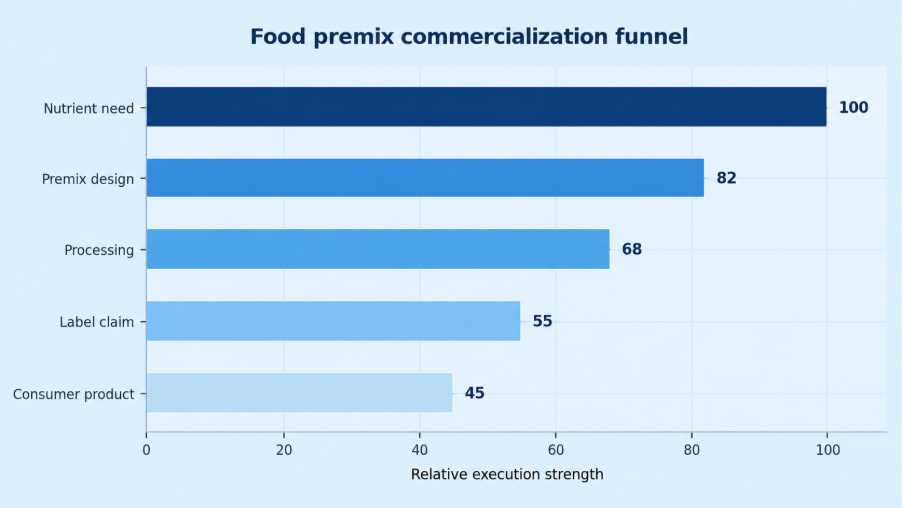
Figure 5. The food premix funnel shows that a nutrient opportunity must pass through formulation, processing, labeling, and consumer-product execution before it becomes market revenue.
Diagnostic readout
The best diagnostic question is not only whether the market is growing. It is whether a specific nutrient blend can be made stable, compliant, cost-effective, sensory acceptable, and scalable in the target food vehicle.
90-Day Food Premix Benchmark Plan
| Timing | What to do | Output |
|---|---|---|
| Days 1-30 | Build baseline by market size, ingredient type, application, region, and country | Clear map of food premix opportunity |
| Days 31-60 | Compare fortification policy, functional food demand, formulation complexity, and supplier capacity | Segment-level opportunity map |
| Days 61-90 | Review regulatory fit, product claims, supply chain, cost, and launch feasibility | Practical food premix market scorecard |
Planning principle
The strongest food premix analysis compares market revenue with formulation reality. A segment may look attractive by CAGR, but it becomes harder to commercialize if nutrients are unstable, regulations differ by country, label claims are difficult, or supplier quality systems are weak.
Metrics Food and Nutrition Leaders Should Track
Food manufacturers, ingredient suppliers, and nutrition teams should track metrics that connect market growth with execution quality. A high-growth category is only useful if it can be converted into compliant products with repeatable manufacturing outcomes.
| Metric | Why it matters |
|---|---|
| Global market size | Commercial scale |
| CAGR | Growth momentum |
| Ingredient-type share | Which nutrients carry demand |
| Application share | Where premixes are used most |
| Country fortification coverage | Structural policy demand |
| Functional food launches | Innovation momentum |
| Custom premix adoption | Demand for differentiated blends |
| Supplier lead time | Supply-chain reliability |
| Nutrient stability loss | Formulation risk |
| Label-claim compliance | Regulatory risk |
| Cost per serving | Commercial feasibility |
| Regional manufacturing capacity | Shows scalability |
Food Premix Market Statistics FAQ
How big is the food premix market?
The global food premix market was valued at USD 8.11 billion in 2025 and is projected to reach USD 15.45 billion by 2034. This makes food premixes a sizable nutrition ingredient category across supplements, beverages, dairy, bakery, infant nutrition, and fortified staple foods.
What is the forecast CAGR for food premixes?
The market is projected to grow at a CAGR of 7.47% from 2026 to 2034. That growth reflects demand from functional foods, dietary supplements, fortified beverages, public-health fortification programs, and custom nutrient blends designed for specific applications.
Which region leads the food premix market?
Asia Pacific led the market with a 36.93% share in 2025 and about USD 2.99 billion in regional value. The region benefits from population scale, packaged-food expansion, nutraceutical adoption, infant nutrition demand, and rising health awareness in China, Japan, India, and other markets.
Which applications use food premixes the most?
Dietary supplements are a leading application, but beverages, dairy, bakery products, infant nutrition, cereals, and functional foods are also major demand channels. Each application needs a different formulation approach because processing conditions, taste, solubility, shelf life, and claim requirements vary.
Why are food premixes important in fortification?
Food premixes allow manufacturers to add vitamins and minerals to widely consumed foods such as flour, rice, salt, edible oil, dairy, and cereals. They help deliver controlled nutrient levels, improve batch consistency, reduce ingredient-handling complexity, and support public-health fortification goals.
What are the biggest formulation barriers?
The main barriers are nutrient degradation, taste impact, mineral interactions, solubility problems, regulatory differences, raw-material volatility, and label-claim risk. These issues explain why technical support, stability testing, encapsulation, and overage calculation are important parts of the premix value proposition.
How does regulation affect food premix demand?
Regulation affects both mandatory and voluntary fortification. Mandatory rules create recurring demand for staple-food premixes, while voluntary fortification allows brands to add nutrients for health positioning. In both cases, suppliers must support compliance, documentation, dosage accuracy, and country-specific labeling requirements.
Which companies are active in the food premix ecosystem?
The ecosystem includes DSM-Firmenich, Glanbia Nutritionals, Prinova, Jubilant Ingrevia, Hexagon Nutrition, SternVitamin, Vitablend, Farbest Brands, Barentz, Watson Inc., and regional ingredient partners. Competitive strength depends on formulation support, quality systems, technical service, and supply reliability.
Why is Asia-Pacific important for growth?
Asia-Pacific is important because it combines the largest regional share, population scale, packaged-food growth, rising health awareness, infant nutrition demand, and expanding nutraceutical adoption. The region also includes major country opportunities such as China, India, Japan, South Korea, and Australia.
What metrics should food manufacturers track?
Manufacturers should track market size, CAGR, ingredient-type share, application demand, country fortification rules, supplier lead time, nutrient stability loss, cost per serving, label-claim compliance, and regional manufacturing capacity. These metrics connect market opportunity with real product execution.
Final Takeaway
The food premix market is growing because food manufacturers, supplement brands, beverage companies, and public-health programs need reliable ways to add vitamins, minerals, amino acids, fibers, hydrocolloids, and functional ingredients into everyday products. With the market moving from USD 8.11 billion in 2025 to a projected USD 15.45 billion by 2034, the category has become a meaningful part of the global nutrition supply chain.
The largest opportunity is not only selling more nutrient blends. It is delivering accurate, stable, compliant, and cost-effective nutrition through products people already consume, including flour, rice, salt, edible oil, dairy, beverages, cereals, supplements, infant nutrition, and functional foods. Fortification policy creates structural demand, while wellness trends create innovation-led demand.
The best market reading comes from tracking market size, CAGR, ingredient mix, application mix, regional regulation, fortification coverage, product launches, supplier capability, nutrient stability, label-claim compliance, lead time, and cost per serving. The companies that win will be those that connect nutrition science, formulation execution, regulatory discipline, and scalable manufacturing.