Functional foods are foods and beverages designed to deliver benefits beyond basic nutrition. The market includes dairy, beverages, cereals, snacks, bars, fortified staples, plant-based foods, infant nutrition, protein products, probiotic foods, and wellness-led packaged foods that connect everyday consumption with digestive health, immunity, energy, heart health, healthy aging, weight management, bone health, and cognitive wellness.
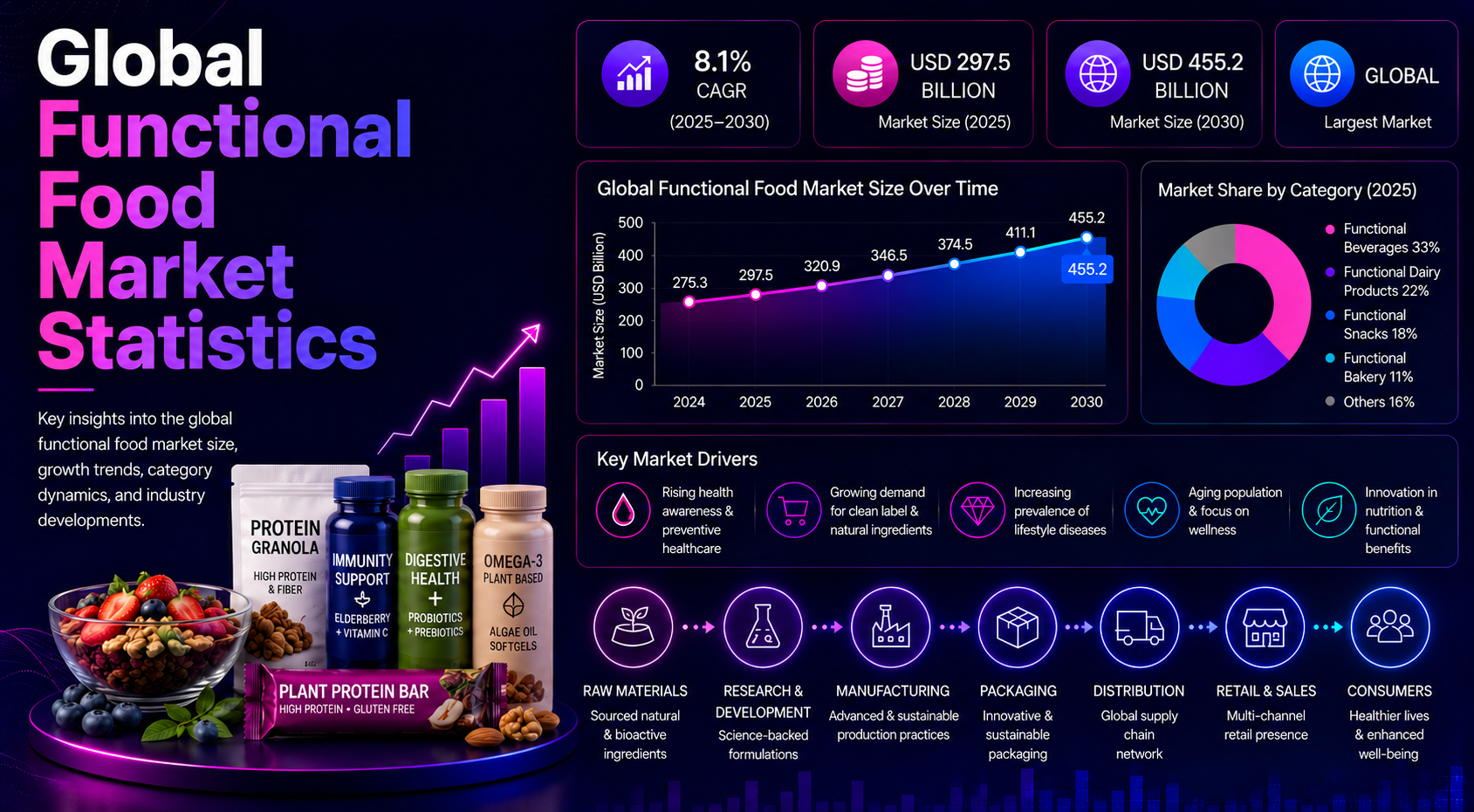
The market is large enough to sit at the center of global food innovation. Grand View Research estimates functional foods at USD 329.65 billion in 2023 and projects USD 586.06 billion by 2030 at 8.6% CAGR. Global Market Insights estimates USD 332.2 billion in 2024, USD 350 billion in 2025, and USD 638 billion by 2034 at 6.9% CAGR.
The strongest way to read functional food statistics is to separate market size, product type, ingredient, benefit claim, consumer group, retail channel, region, country, regulation, and repeat-purchase behavior. A probiotic yogurt, protein bar, fortified cereal, omega-3 milk, and vitamin beverage all belong to the same market story, but each one wins through a different consumer habit.
Executive Functional Food Benchmarks
These benchmarks define the market at a glance. They show how functional foods combine large-scale packaged food demand with wellness claims, benefit-driven ingredients, and daily-use categories.
The numbers that define the functional food market
The benchmark picture is strongest when the numbers are read as a short market signal rather than a long data list.
• Grand View Research places the global functional foods market at USD 329.65 billion in 2023.
• Grand View Research projects the market to reach USD 586.06 billion by 2030.
• The same forecast implies 8.6% CAGR from 2024 to 2030.
• Global Market Insights estimates the market at USD 332.2 billion in 2024 and USD 350 billion in 2025.
• Global Market Insights projects USD 638 billion by 2034 at 6.9% CAGR.
• Fortune Business Insights places the broader functional food and beverage market at USD 398.81 billion in 2025.
• Fortune Business Insights expects that broader market to reach USD 793.60 billion by 2032.
• Grand View Research reports the U.S. functional foods market at USD 72.37 billion in 2023.
• Grand View Research expects the U.S. market to reach USD 131.45 billion by 2030.
• Prebiotics and probiotics generated USD 109.99 billion globally in 2023.
• Future Market Insights places prebiotics and probiotics at 28.6% share and dairy products at 32.1% product share.
• Europe accounted for about 29% of the functional foods market in 2024.
These benchmarks point to a market built around daily-use formats, clear health claims, and ingredients consumers already connect with wellness.
Editorial readout
Functional food growth is not only a health-food trend. It is driven by consumers replacing ordinary food occasions with foods that promise digestive support, immunity, protein, energy, heart health, healthy aging, and everyday wellness.
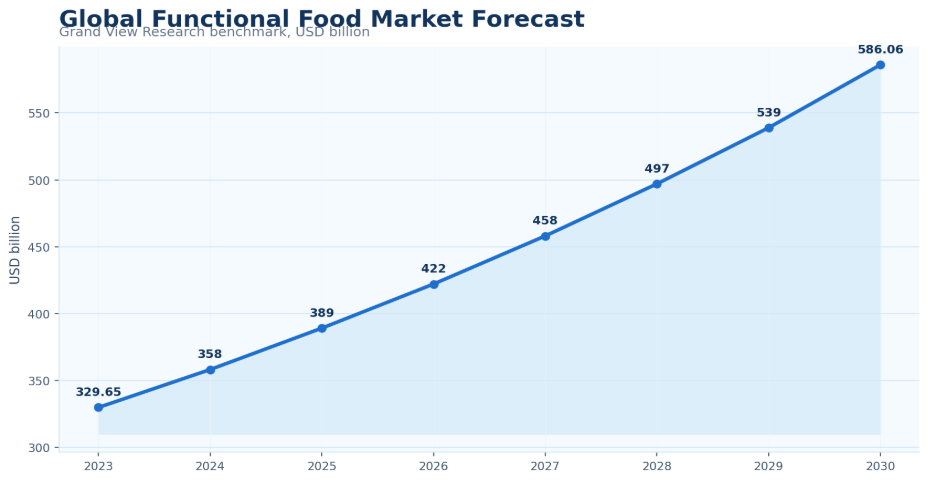
Figure 1. Functional food market forecasts show how wellness, preventive nutrition, and ingredient fortification are becoming mainstream food and beverage growth engines.
Why Functional Foods Carry Consumer Health Value
Functional foods sit between everyday foods and dietary supplements. They work because consumers can attach a benefit to an existing eating occasion instead of building an entirely new routine. A yogurt can carry probiotics, a cereal can carry fiber and vitamins, a beverage can carry electrolytes or immunity nutrients, and a snack bar can carry protein, satiety, or energy positioning.
That makes the category practical for both consumers and manufacturers. Consumers want healthier choices that are still easy to buy, easy to understand, and pleasant to eat. Manufacturers want products that can command a premium, build repeat purchase, and connect a familiar format with a benefit claim that shoppers recognize quickly.
Functional foods also require trust. A claim can create interest, but repeat purchase depends on taste, price, convenience, label clarity, ingredient credibility, and whether the product fits the shopper’s lifestyle. The strongest products do not feel like medicine; they feel like better versions of foods people already use.
| Value area | What to compare | Action logic |
|---|---|---|
| Daily-use fit | Does the product fit breakfast, snack, drink, or dairy routines? | Prioritize formats that can repeat weekly. |
| Benefit clarity | Can shoppers understand the claim in seconds? | Use simple claims like gut, immunity, protein, energy, or heart. |
| Taste and texture | Does the functional ingredient change enjoyment? | Do not scale before sensory acceptance is proven. |
| Trust signal | Is the ingredient familiar, credible, or evidence-backed? | Support claims with clear label language. |
| Price premium | How much more will shoppers pay for the benefit? | Match price to perceived wellness value. |
| Channel fit | Where will shoppers learn the benefit? | Use retail for scale and online/specialty for education. |
Editorial readout
Functional food demand grows when a health benefit fits a normal eating occasion. Consumers are more likely to repeat a product when it tastes familiar, is easy to buy, and gives a simple wellness reason to choose it again.
Functional Food Market Size and Forecast Statistics
Market-size statistics should be read by scope. Some forecasts track functional foods only, while others include beverages, nutraceutical foods, fortified foods, health-and-wellness products, or functional ingredients. That is why the market appears in different sizes across sources even when the growth story is consistent.
Market-size and forecast benchmarks
Market-size statistics should be read by definition because each forecast uses a slightly different boundary for food, beverages, fortified products, and wellness foods.
• The core functional foods benchmark moves from USD 329.65 billion in 2023 to USD 586.06 billion by 2030.
• The 2024–2030 forecast equals 8.6% CAGR, showing steady expansion beyond mature packaged-food growth.
• Global Market Insights starts at USD 332.2 billion in 2024 and rises to USD 350 billion in 2025.
• Its long-term forecast reaches USD 638 billion by 2034 at 6.9% CAGR.
• Straits Research places the market at USD 337.85 billion in 2024 and USD 595.49 billion by 2033.
• The wider functional food and beverage scope reaches USD 398.81 billion in 2025 and USD 793.60 billion by 2032.
• The U.S. benchmark rises from USD 72.37 billion in 2023 to USD 131.45 billion by 2030.
The practical takeaway is that every forecast confirms growth, while the final value depends on how broadly the functional food category is defined.
| Market scope | What it includes | Use this logic |
|---|---|---|
| Core functional foods | Foods with added or inherent health benefits | Best for headline market sizing. |
| Food and beverage scope | Functional foods plus drinks | Use when comparing broader wellness categories. |
| Fortified foods | Vitamins, minerals, protein, fiber, or omega-3 added | Use for mainstream packaged food demand. |
| Ingredient-led scope | Probiotics, prebiotics, vitamins, fiber, protein | Use for supplier and formulation analysis. |
| Claim-led scope | Digestive, immunity, heart, energy, weight, aging | Use for consumer benefit segmentation. |
| Channel-led scope | Retail, online, specialty, DTC, pharmacy | Use for go-to-market planning. |
Editorial readout
Functional food market estimates should be read by scope. A food-only market is not the same as a broader functional food and beverage market, nutraceuticals market, or health-and-wellness foods market.
Product Type Statistics
Product type matters because functional food growth follows habits. Daily-use categories such as dairy, beverages, cereals, snacks, and bars have stronger repeat-purchase potential than occasional categories. The strongest formats make the benefit easy to consume without changing the shopper’s routine.
Functional food category benchmarks
Product-type data is strongest when it is read through habit. Dairy products matter because yogurt, fermented dairy, probiotic drinks, fortified milk, and lactose-friendly products already sit inside daily routines. Functional beverages work for a similar reason: hydration, energy, immunity, gut health, and vitamin benefits can be added to a drink without asking the consumer to change the day.
Bakery, cereals, snacks, and bars show how functional foods become part of breakfast and convenience occasions. Fiber, vitamins, minerals, protein, digestive-health ingredients, and satiety claims can all be built into products that shoppers already recognize. Infant nutrition, plant-based foods, functional oils, and ready meals add more specialized use cases, but the same rule applies: the benefit must fit the occasion.
| Product group | Market signal | Market implication |
|---|---|---|
| Dairy and fermented foods | High repeat use and probiotic familiarity | Strong fit for gut health and family wellness. |
| Functional beverages | Easy trial and clear occasion fit | Good for energy, hydration, vitamins, immunity, and mood. |
| Cereals and bakery | Breakfast habit plus fortification | Works for fiber, vitamins, minerals, and heart health. |
| Snacks and bars | Convenience plus protein or satiety | Strong for active consumers and busy households. |
| Infant and family nutrition | Parent trust and safety expectations | Requires clear evidence and reliable labeling. |
| Plant-based foods | Protein, fiber, and sustainability positioning | Needs strong taste and nutrition balance. |
| Ready meals and staples | Fortified convenience or balanced nutrition | Best when benefit does not feel forced. |
Editorial readout
Product type matters because functional food demand is built into habits. Categories used daily, such as dairy, beverages, breakfast foods, snacks, and bars, have stronger repeat-purchase potential.
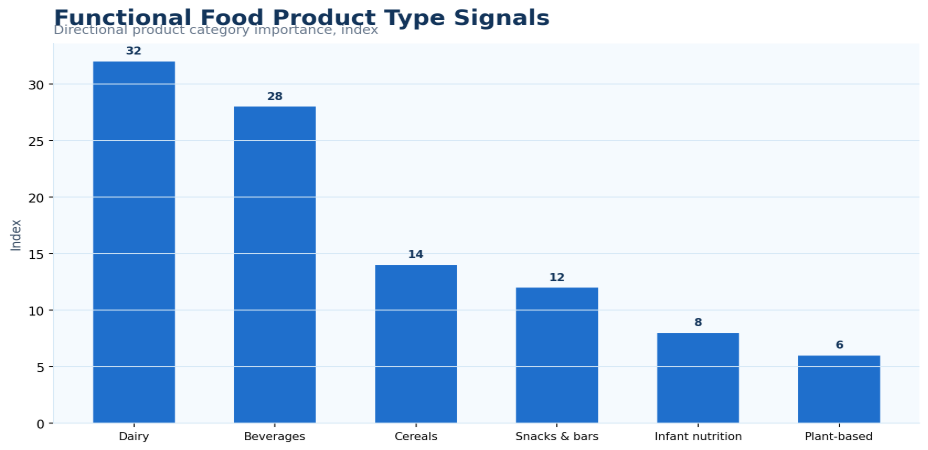
Figure 2. Product type mix shows why functional food growth follows daily eating and drinking occasions.
Ingredient Statistics
Ingredient data explains why functional foods earn health positioning. Consumers may shop for a yogurt, drink, cereal, or snack, but the claim is often built around probiotics, prebiotics, vitamins, minerals, protein, fiber, omega-3, botanicals, collagen, polyphenols, plant sterols, or adaptogens.
Functional ingredient benchmarks
Ingredient statistics are most useful when they explain why a product earns its health position.
• Prebiotics and probiotics generated USD 109.99 billion globally in 2023.
• Prebiotics and probiotics accounted for 28.6% of the market, confirming the strength of gut-health positioning.
• Dairy products accounted for 32.1% product share, helped by yogurt, fermented dairy, and fortified milk routines.
• Vitamins and minerals remain broad because they support immunity, energy, bone health, family nutrition, and general wellness.
• Protein, fiber, omega-3, collagen, botanicals, and plant sterols add growth signals when the benefit is easy to understand.
The strongest ingredient story connects credibility, benefit clarity, taste, and a familiar food format.
| Ingredient group | Benefit logic | Commercial implication |
|---|---|---|
| Probiotics and prebiotics | Gut health, digestion, and microbiome support | Strong when strain, dose, and benefit are clear. |
| Vitamins and minerals | Immunity, energy, bone, and general wellness | Broadest mainstream fortification signal. |
| Protein | Satiety, active lifestyles, aging, and meal support | Works across dairy, bars, snacks, and beverages. |
| Fiber | Digestive health, fullness, and cleaner nutrition | Strong fit for cereals, bars, bakery, and drinks. |
| Omega-3 and plant sterols | Heart, brain, eye, and cholesterol positioning | Best in targeted heart-health products. |
| Collagen and beauty nutrients | Skin, joints, and healthy aging | Premium opportunity where claims remain credible. |
| Botanicals and adaptogens | Stress, energy, sleep, mood, and focus | Needs careful claims and strong taste management. |
Health Benefit and Claim Statistics
Functional food claims work when shoppers understand the benefit quickly. Digestive health, immunity, protein support, energy, heart health, weight management, bone health, healthy aging, and cognitive wellness are easier to communicate than vague wellness language because they connect to common consumer needs.
• Digestive health is one of the strongest functional food claim areas because probiotics, prebiotics, fiber, fermented foods, and gut-health beverages fit daily routines.
• Immune support remains important because vitamins, minerals, probiotics, botanicals, and fortified beverages are easy for consumers to understand.
• Heart-health positioning is supported by fiber, plant sterols, omega-3, whole grains, and low-sugar or low-sodium reformulation.
• Weight management and satiety positioning benefit from protein, fiber, low-sugar products, and portion-controlled formats.
• Bone and joint health claims connect calcium, vitamin D, protein, collagen, and minerals to healthy aging.
• Cognitive health is supported by omega-3, botanicals, vitamins, and emerging nootropic-positioned foods.
• Energy and performance products connect functional beverages, bars, protein snacks, electrolytes, caffeine, B vitamins, and sports nutrition foods.
| Benefit area | Strong product fit | Action logic |
|---|---|---|
| Digestive health | Yogurt, fermented drinks, cereals, bars, fiber snacks | Use simple gut-health language and credible ingredients. |
| Immunity support | Vitamin drinks, dairy, fortified snacks, family foods | Keep claims clean and regulation-safe. |
| Protein and satiety | Bars, shakes, dairy drinks, snacks, breakfast formats | Connect to fullness, active lifestyles, and aging. |
| Heart health | Cereals, spreads, dairy, omega-3 foods, whole grains | Use evidence-backed and familiar ingredients. |
| Energy and hydration | Functional drinks, bars, sports foods, convenience formats | Win through occasion fit and quick benefit recognition. |
| Healthy aging | Dairy, fortified meals, collagen, omega-3, protein foods | Make the benefit practical rather than clinical. |
| Mood, sleep, and cognition | Beverages, snacks, premium wellness foods | Use cautious claims and clear ingredient education. |
Editorial readout:
Functional food claims work best when the consumer understands the benefit quickly. Digestive health, immunity, protein, energy, and heart health remain strong because they are easy to connect with everyday food choices.
Consumer Demographics and Behavior
Functional food demand is not driven by one shopper group. Younger consumers are often more open to functional beverages, protein snacks, gut-health foods, plant-based foods, mood products, and energy positioning. Older consumers may focus more on heart health, bone health, joint health, cognitive support, digestive health, and healthy aging.
Parents are important because family nutrition creates demand for fortified cereals, dairy, children’s snacks, immune-support products, and nutrition-forward beverages. Active consumers drive demand for protein, electrolytes, energy, hydration, recovery, and sports nutrition foods. Women’s wellness shoppers often shape demand for iron, calcium, collagen, botanicals, gut health, and healthy-aging products.
Trust matters across every group. A claim can attract trial, but repeat purchase depends on whether the product tastes good, is priced reasonably, and uses benefit language that shoppers believe.
- Studies indicate that nearly 70% of consumers consider health benefits when purchasing food and beverage products.
- More than 60% of Millennials and Gen Z consumers report actively seeking foods with functional ingredients such as probiotics, protein, vitamins, and botanicals.
- Around 55% of consumers are willing to pay a premium for products that provide clear health and wellness benefits.
- Approximately 50% of shoppers regularly purchase products marketed for digestive or gut health support.
- Over 45% of consumers aged 55+ prioritize foods that support heart health, cognitive function, and healthy aging.
- Sports and active-lifestyle consumers account for a significant share of the market, with more than 40% purchasing protein-enriched foods and beverages weekly.
- Surveys show that nearly 65% of parents look for fortified or nutrient-enhanced foods when shopping for their families.
- About 60% of women consumers report interest in products supporting beauty, healthy aging, bone health, and hormonal wellness.
- Nearly 75% of consumers say they are more likely to trust functional food products backed by scientific evidence and transparent labelling.
- Research suggests that taste remains the top purchase driver, with over 80% of consumers stating they will not repurchase a functional product if flavor expectations are not met.
| Consumer group | Most useful benefit | Product logic |
|---|---|---|
| Gen Z | Energy, mood, hydration, plant-based, gut health | Trial works when formats feel modern and convenient. |
| Millennials | Protein, clean label, gut health, convenience | Use everyday wellness and lifestyle positioning. |
| Parents | Immunity, vitamins, growth, family nutrition | Trust, safety, and value matter most. |
| Older adults | Heart, bone, cognition, digestion, healthy aging | Benefit clarity and evidence improve confidence. |
| Active consumers | Protein, electrolytes, energy, recovery | Sports nutrition can move into mainstream snacks. |
| Women’s wellness shoppers | Iron, calcium, collagen, gut health, mood | Targeted claims can build loyalty. |
| Price-sensitive households | Fortified staples and family formats | Value must be clear before premium pricing. |
Editorial readout:
Functional food demand grows when brands match the benefit to the shopper: gut health for daily wellness, protein for active lifestyles, bone health for aging, and fortified foods for family nutrition.
Channel and Retail Statistics
Channel strategy affects whether a functional food becomes a niche wellness product or a mainstream repeat-purchase item. Supermarkets build scale because they place functional foods beside conventional alternatives. Online channels help explain benefits, support subscriptions, and carry long-tail products. Specialty and health retailers build credibility for premium ingredients.
Convenience stores are especially important for functional beverages, protein bars, energy products, hydration products, and grab-and-go wellness formats. Pharmacies and drugstores are useful for digestive health, immunity, fortified nutrition, and products that sit close to health needs. Direct-to-consumer brands use content, community, and subscriptions to educate shoppers before purchase.
• Supermarkets remain important because functional foods need mainstream shelf visibility and repeat purchase.
• Online grocery supports discovery, subscription, bundles, personalized nutrition, and specialty products.
• Pharmacies and drugstores are important for fortified foods, digestive health, immune support, and health-positioned beverages.
• Health food stores and specialty retailers support premium, clean-label, plant-based, probiotic, and botanical products.
• Convenience stores are important for functional beverages, protein bars, energy products, and grab-and-go wellness formats.
• Direct-to-consumer brands use content, subscriptions, sampling, and health communities to build trust.
| Channel | What it does best | Action logic |
|---|---|---|
| Supermarkets | Mainstream visibility and repeat purchase | Use for scale once the benefit is easy to understand. |
| Convenience stores | Grab-and-go beverages, bars, and energy formats | Best for quick occasions and impulse trial. |
| Pharmacies | Health-positioned foods and digestive/immunity products | Useful when credibility matters. |
| Health food stores | Premium, natural, clean-label, probiotic products | Use for discovery and shopper education. |
| Online grocery and DTC | Subscriptions, education, reviews, bundles | Best for explaining complex benefits. |
| Fitness and specialty retail | Protein, hydration, recovery, active nutrition | Use where consumer intent is already strong. |
Editorial readout:
Mainstream retail builds scale, while online and specialty channels help explain benefits, educate consumers, and support premium positioning.
Regional Functional Food Market Intelligence
Regional functional food data should be read through food culture, retail maturity, health-claim systems, income, preventive-health awareness, and daily eating habits. A probiotic dairy product may scale quickly in one country, while a vitamin beverage, protein snack, or fortified staple leads in another.
North America
North America is a scale market for functional foods because the category already connects with protein products, digestive health, sports nutrition, functional beverages, and clean-label wellness. In the United States, Grand View Research reports USD 72.37 billion in 2023 and projects USD 131.45 billion by 2030, with expected growth of 8.9% CAGR from 2024 to 2030.
Canada adds demand through health-conscious households, fortified foods, dairy, cereals, beverages, and natural food retail. Mexico adds a different kind of growth, where fortified foods, dairy, beverages, and urban retail expansion support mainstream adoption.
Europe
Europe is shaped by clean-label expectations, aging consumers, digestive health, dairy, cereals, organic foods, and stricter claim scrutiny. Global Market Insights reports Europe at about 29% of functional food market share in 2024, making it a major region even when growth is more regulated and trust-led.
Germany, France, the United Kingdom, Italy, Spain, and the Netherlands each support the category through different strengths, including dairy innovation, heart-health positioning, gut-health products, clean-label demand, and premium nutrition.
Asia Pacific
Asia Pacific is one of the strongest long-term growth regions because urbanization, income growth, preventive-health awareness, fortified foods, dairy, beverages, and aging populations all support demand. Japan is important because functional food culture and health-claim systems are mature, while China adds scale through wellness, e-commerce, dairy, beverages, fortified products, and aging demographics.
India adds a different growth pathway through fortified staples, dairy, child nutrition, nutrition gaps, urban health awareness, and protein demand. South Korea and Australia support premium wellness, probiotics, functional beverages, clean-label products, and beauty-from-within trends.
Latin America and Middle East & Africa
Latin America’s functional food opportunity is strongest in Brazil, Mexico, Argentina, Chile, Colombia, and Peru, where dairy, beverages, cereals, fortified foods, family nutrition, and retail expansion shape demand. Affordability and daily-use product formats are especially important in this region.
The Middle East and Africa region is more uneven but still important. Saudi Arabia, the UAE, South Africa, Egypt, and Turkey are shaped by packaged foods, fortified foods, dairy, beverages, child nutrition, urban wellness retail, and premium imported products in higher-income markets.
| Region | Functional food signal | Market implication |
|---|---|---|
| North America | Protein, functional beverages, gut health, sports nutrition | Scale and innovation matter. |
| Europe | Clean label, aging, dairy, digestive health, regulation | Trust and claim discipline matter. |
| Asia Pacific | Urbanization, fortified foods, dairy, beverages, e-commerce | Long-term growth potential is strong. |
| Latin America | Dairy, cereals, beverages, family nutrition | Affordability and retail reach matter. |
| Middle East & Africa | Fortified foods, dairy, beverages, child nutrition | Urban retail and premium wellness support growth. |
Editorial readout
Regional functional food statistics should be read through food culture, retail maturity, preventive-health awareness, regulation, income, and daily consumption habits.
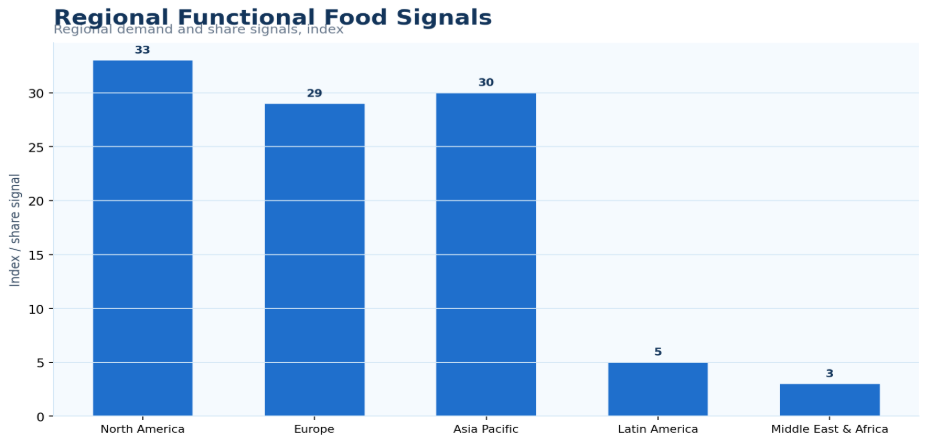
Figure 3. Regional functional food demand differs by consumer trust, health-claim systems, retail channels, daily eating habits, and income growth.
Country-Level Functional Food Statistics
Country-level statistics turn global forecasts into go-to-market decisions. The same probiotic drink, protein snack, vitamin cereal, or fortified dairy product may require a different claim, price point, channel, package size, and label strategy in each market.
| Country cluster | What to watch | Go-to-market logic |
|---|---|---|
| United States and Canada | Protein, probiotics, functional beverages, clean label | Use innovation, retail scale, and benefit clarity. |
| Mexico and Brazil | Dairy, fortified foods, cereals, beverages | Balance value, family nutrition, and retail access. |
| Germany, France, and Netherlands | Dairy, clean label, digestive health, strict claims | Prioritize credibility, quality, and compliance. |
| United Kingdom, Italy, and Spain | Functional beverages, dairy, cereals, healthy aging | Use everyday formats with simple benefit wording. |
| China and Japan | E-commerce, dairy, beverages, aging, health-claim culture | Localize claims and build trust through evidence. |
| India and Indonesia | Fortified staples, dairy, protein, child nutrition | Affordability and nutrition gaps shape growth. |
| South Korea and Australia | Premium wellness, gut health, beauty, clean label | Use trend-led and premium positioning carefully. |
| Saudi Arabia and UAE | Premium wellness, dairy, beverages, imported foods | Retail-led demand and certification matter. |
| South Africa, Turkey, and Egypt | Fortified foods, family nutrition, dairy, beverages | Value and accessible benefits matter. |
Editorial readout:
Country-level functional food statistics turn global forecasts into go-to-market decisions. The same product may need a different claim, price point, channel, and label strategy by country.
Competitive Landscape and Brand Statistics
Functional food competition is shaped by large food companies, beverage companies, dairy and probiotic specialists, sports nutrition brands, plant-based brands, ingredient suppliers, private label retailers, and direct-to-consumer wellness brands. The market is not only about adding a nutrient; it is about making a benefit believable and repeatable.
Large food and beverage companies can scale functional claims through existing brands, supply chains, and retail distribution. Dairy and probiotic specialists compete through digestive-health credibility. Beverage companies compete through hydration, energy, immunity, mood, and vitamin positioning. Ingredient companies influence the market by supplying probiotics, prebiotics, vitamins, minerals, proteins, fibers, botanicals, and omega-3 systems.
| Company group | Market strength | Strategic signal |
|---|---|---|
| Global food companies | Scale, trusted brands, retail power | Can mainstream fortified products quickly. |
| Beverage companies | Fast benefit communication and trial | Strong for energy, hydration, immunity, and mood. |
| Dairy and probiotic specialists | Gut-health credibility | Can defend probiotic and fermented claims. |
| Ingredient suppliers | Science, formulation, and documentation | Enable claims behind consumer brands. |
| Sports nutrition brands | Protein and performance trust | Move active nutrition into everyday food. |
| Plant-based brands | Protein, fiber, sustainability | Need taste and nutrition balance. |
| Private label and retailers | Value, access, shelf control | Expand functional foods into mainstream baskets. |
Editorial readout:
Functional food competition is not only about adding a nutrient. Winning products need benefit clarity, taste, trust, price fit, channel visibility, and repeat-purchase behavior.
Regulation, Claims, and Labeling Statistics
Regulation is a growth filter for functional foods. A product can have a strong ingredient and still struggle if the claim is unclear, unsupported, restricted, or different across markets. Health claims, structure-function claims, nutrient content claims, fortification rules, novel food rules, probiotic labeling, and supplement-boundary issues shape how products are marketed.
The claims environment is especially important because functional foods sit close to consumer health. Brands must explain the benefit without making unsupported disease claims. The stronger commercial approach is to connect clear ingredients with allowable, understandable, and credible benefit language.
| Regulatory area | What it controls | Market action |
|---|---|---|
| Health claims | Specific benefit wording | Substantiate before packaging and campaigns. |
| Nutrient content claims | Vitamin, mineral, protein, fiber, sugar, calorie language | Use clear and measurable label support. |
| Probiotic claims | Culture naming, dose, benefit, and evidence | Avoid vague or unsupported microbiome language. |
| Fortification rules | Where and how nutrients can be added | Check market rules before reformulation. |
| Novel ingredients | New botanicals, strains, or specialty inputs | Plan approval timelines early. |
| Regional systems | FDA, EFSA, FOSHU, China health food rules | Localize claims by country. |
| Clean-label and allergen rules | Ingredient transparency and shopper trust | Make trust part of launch readiness. |
Editorial readout:
Functional food regulation is a growth filter. A product can have a strong ingredient and still struggle if the claim is unclear, unsupported, restricted, or different across markets.
Functional Food Growth-Leak Diagnostic
A functional food benchmark should show where growth leaks before launch or scale-up. Products often fail not because the market is weak, but because the claim is unclear, the taste is poor, the price premium is too high, the channel does not educate the shopper, or the benefit does not fit the eating occasion.
| Problem area | Signal to measure | Reference-style fix |
|---|---|---|
| Market scope | Forecast, category definition, and product coverage | Compare like-for-like market definitions. |
| Product fit | Does the claim fit the eating occasion? | Prioritize daily-use categories. |
| Ingredient trust | Evidence, familiarity, source, dose | Use claims shoppers understand. |
| Taste risk | Texture, sweetness, aftertaste, repeat intent | Do not scale before sensory proof. |
| Price friction | Premium versus perceived benefit | Match price to category and household budget. |
| Channel weakness | Shelf visibility and online education | Use the channel that can explain the benefit. |
| Regulatory risk | Allowed claims and labeling differences | Clear local rules before launch. |
| Repeat gap | Second purchase, reviews, loyalty | Treat repeat behavior as proof of market fit. |
Editorial readout
Functional food growth leaks when a product has a promising ingredient but weak taste, unclear claim, high price, limited distribution, poor trust, or a benefit that does not fit the eating occasion.
90-Day Functional Food Benchmark Plan
Market statistics become more useful when they are turned into a practical planning cycle. Functional food teams need to compare market size with product category, ingredient credibility, claim clarity, consumer fit, channel access, country rules, and repeat-purchase economics.
| Timing | What to do | Output |
|---|---|---|
| Days 1-30 | Map product type, ingredient, claim, consumer group, country, channel, and price point. | Functional food benchmark map |
| Days 31-60 | Compare growth, claim clarity, taste risk, regulatory exposure, ingredient cost, and retail fit. | Opportunity and risk matrix |
| Days 61-90 | Prioritize products, benefits, countries, and channels using evidence, price, trust, and repeat potential. | Functional food scorecard |
Planning principle
Functional food teams should compare market growth with consumer behavior. A product wins when the benefit is clear, the taste works, the price fits, and the claim can survive regulatory and trust checks.
Metrics Functional Food Leaders Should Track
The strongest functional food scorecard connects market growth with product behavior. Market value and CAGR show category direction, but claim comprehension, repeat purchase, taste acceptance, price premium, channel mix, and regulatory fit decide whether a product can scale.
| Metric | Why it matters |
|---|---|
| Market value and CAGR | category scale and growth rhythm. |
| Product type share | which daily-use formats can scale. |
| Ingredient share | which inputs carry benefit demand. |
| Benefit claim clarity | Shows whether shoppers understand the promise. |
| Taste acceptance | whether the product can repeat. |
| Price premium | whether consumers will pay for the benefit. |
| Channel mix | where education and repeat purchase happen. |
| Regional and country growth | where launch priority should sit. |
| Regulatory fit | whether claims can survive local rules. |
| Repeat purchase | whether market interest becomes revenue. |
Editorial readout:
The strongest functional food scorecard connects market growth with product behavior: benefit clarity, taste, price, trust, repeat purchase, regulatory fit, and daily-use category relevance.
Commercial Readiness and Adoption Signals
Commercial readiness is the final layer of functional food statistics. A market may be growing quickly, but a product still needs to pass practical tests before it becomes a repeat-purchase item. The claim must be easy to understand, the product must taste familiar enough to repeat, the price must feel reasonable, and the label must support trust.
Ingredient credibility also matters. Probiotics need strain and benefit clarity. Vitamins and minerals need dosage and nutrient positioning. Fiber needs tolerability and sensory fit. Protein needs texture and taste management. Botanicals and adaptogens need careful language because their benefits can be harder to explain inside mainstream food.
Retail execution is just as important as formulation. Functional foods often need a few seconds to explain why they are different. If the package, shelf placement, online content, and claim wording do not communicate the benefit quickly, trial can be weak even when the ingredient is strong.
| Adoption area | What to compare | Action logic |
|---|---|---|
| Claim clarity | Benefit wording and consumer understanding | Scale only when shoppers can explain the benefit simply. |
| Taste fit | Flavor, texture, sweetness, aftertaste | Do not rely on health claims to rescue weak taste. |
| Price fit | Premium versus mainstream alternatives | Compare benefit value against household budgets. |
| Ingredient credibility | Evidence, dose, source, and label language | Use ingredients shoppers trust or can understand. |
| Retail execution | Shelf placement, pack design, online education | Make the benefit visible before trial. |
| Regulatory fit | Allowed claims and country-level rules | Clear claim risk before launch. |
| Repeat purchase | Second purchase, loyalty, reviews, usage occasion | Treat repeat behavior as the strongest proof. |
Editorial readout:
Functional food adoption should be measured as a readiness path. The best opportunities combine measurable consumer need, clear benefit wording, credible ingredients, good taste, retail visibility, and repeat purchase.
Functional Food Market Signal Flow
Functional food statistics move from market size into consumer behavior. Market value shows the size of the opportunity. Product type shows where the benefit fits into daily habits. Ingredient data shows what carries the claim. Benefit data shows why shoppers care. Regional and country data shows where the product can scale.
It helps the market team understand why USD 329.65 billion in 2023, USD 586.06 billion by 2030, 8.6% CAGR, 29% Europe share, 28.6% prebiotic and probiotic share, and 32.1% dairy product share matter together.
For manufacturers, the story is practical. If the product tastes good, explains the benefit clearly, fits a daily occasion, meets regulatory expectations, and earns a repeat purchase, it can turn market growth into real revenue.
• Market size shows opportunity, but repeat purchase decides scale.
• Product type shows where the benefit fits into daily routines.
• Ingredient share shows what supports the claim, but trust decides trial.
• Regional share shows where adoption is mature, but country rules shape launch timing.
• Channel mix shows where education and visibility can convert interest into purchase.
Editorial readout:
The final benchmark is not only whether the functional food market is growing. The stronger benchmark is whether the right product can deliver the right benefit in the right channel at the right price with enough trust to repeat.
Functional Food Planning Signals
Planning a functional food launch requires a tighter link between market data and product reality. A brand may see strong growth in digestive health, protein, immunity, or functional beverages, but that does not automatically mean the concept will scale. The product still has to fit a real eating or drinking occasion, explain its benefit quickly, and deliver a taste profile that encourages repeat purchase.
One useful planning signal is whether the benefit is visible in the category. Probiotic claims fit yogurt, kefir, and fermented beverages because consumers already connect those foods with digestion. Protein claims fit bars, dairy drinks, shakes, snacks, and breakfast formats because shoppers understand satiety and active-lifestyle benefits. Vitamin and mineral claims fit beverages, cereals, dairy, and family foods because fortification is already familiar.
The risk is highest when the ingredient is interesting but the eating occasion is weak. A complex botanical claim may attract attention online, but it can struggle in mainstream retail if shoppers cannot understand the benefit or if the flavor profile is difficult. Functional food success depends on a simple triangle: credible ingredient, familiar format, and clear benefit.
Practical checkpoints
• Use daily-use categories first when the goal is repeat purchase and mainstream scale.
• Match the ingredient to a claim shoppers already understand, such as gut health, immunity, protein, energy, or heart health.
• Test taste and texture early because health claims cannot rescue a product that consumers do not want to repeat.
• Compare price premium against the strength of the benefit and the household’s willingness to pay.
• Check claim rules by country before building packaging, advertising, and retail education around a benefit statement.
Editorial readout:
Functional food growth is strongest when market demand, ingredient credibility, product format, and consumer routine all point in the same direction. The best products do not ask shoppers to change behavior; they make a normal food occasion feel healthier and easier to justify.
Global Functional Food Market Statistics FAQ
Common questions
• What is the functional food market?
The market includes foods and beverages that provide health benefits beyond basic nutrition, such as digestive health, immunity, heart health, protein support, weight management, and healthy aging.
• How large is the global functional food market?
Major forecasts place the market in the several-hundred-billion-dollar range. Grand View Research estimates USD 329.65 billion in 2023 and USD 586.06 billion by 2030, while Global Market Insights expects USD 638 billion by 2034.
• Is the functional food market growing?
Yes. Growth is driven by preventive health, aging populations, gut health, immunity, protein demand, fortified foods, clean-label nutrition, and convenient wellness products.
• Which product type leads functional foods?
Dairy, beverages, cereals, snacks, and bars are major functional food categories because they fit daily routines and support repeat consumption.
• Which ingredients are important in functional foods?
Important ingredients include probiotics, prebiotics, vitamins, minerals, protein, fiber, omega-3, botanicals, plant sterols, collagen, polyphenols, and adaptogens.
• Which health benefits drive demand?
Digestive health, immune support, heart health, weight management, energy, bone health, cognitive wellness, protein support, and healthy aging are important benefit areas.
• Which region leads functional food growth?
North America and Europe are mature markets, while Asia Pacific is a major long-term growth engine because of urbanization, income growth, preventive health, dairy, beverages, and fortified foods.
• What metrics should functional food companies track?
Useful metrics include market value, CAGR, product type share, ingredient share, benefit claim clarity, repeat purchase, channel mix, regional growth, regulatory fit, price premium, and taste acceptance.
Final Takeaway
Functional food market growth depends on five systems working together: consumer health demand, daily-use product categories, credible ingredients, clear benefit claims, and market-specific regulation. A forecast can show that the category is expanding, but product success still depends on whether shoppers understand the benefit and want to buy the product again.
The best functional food opportunities connect a familiar format with a benefit that feels useful. Gut-health dairy, protein snacks, vitamin beverages, fiber cereals, fortified family foods, and heart-health products all work when the product fits a routine and the claim feels credible.
The practical goal is not only to know that the functional food market is growing. The stronger benchmark is readiness: whether a product can deliver a clear health benefit, taste good, fit the shopper’s routine, earn trust, meet regulatory expectations, and repeat at retail.