Food enzymes are no longer a small technical input hidden inside processing lines. They have become a measurable food manufacturing market shaped by clean-label reformulation, bakery performance, dairy innovation, beverage clarification, brewing consistency, starch conversion, plant-based foods, and more efficient production.
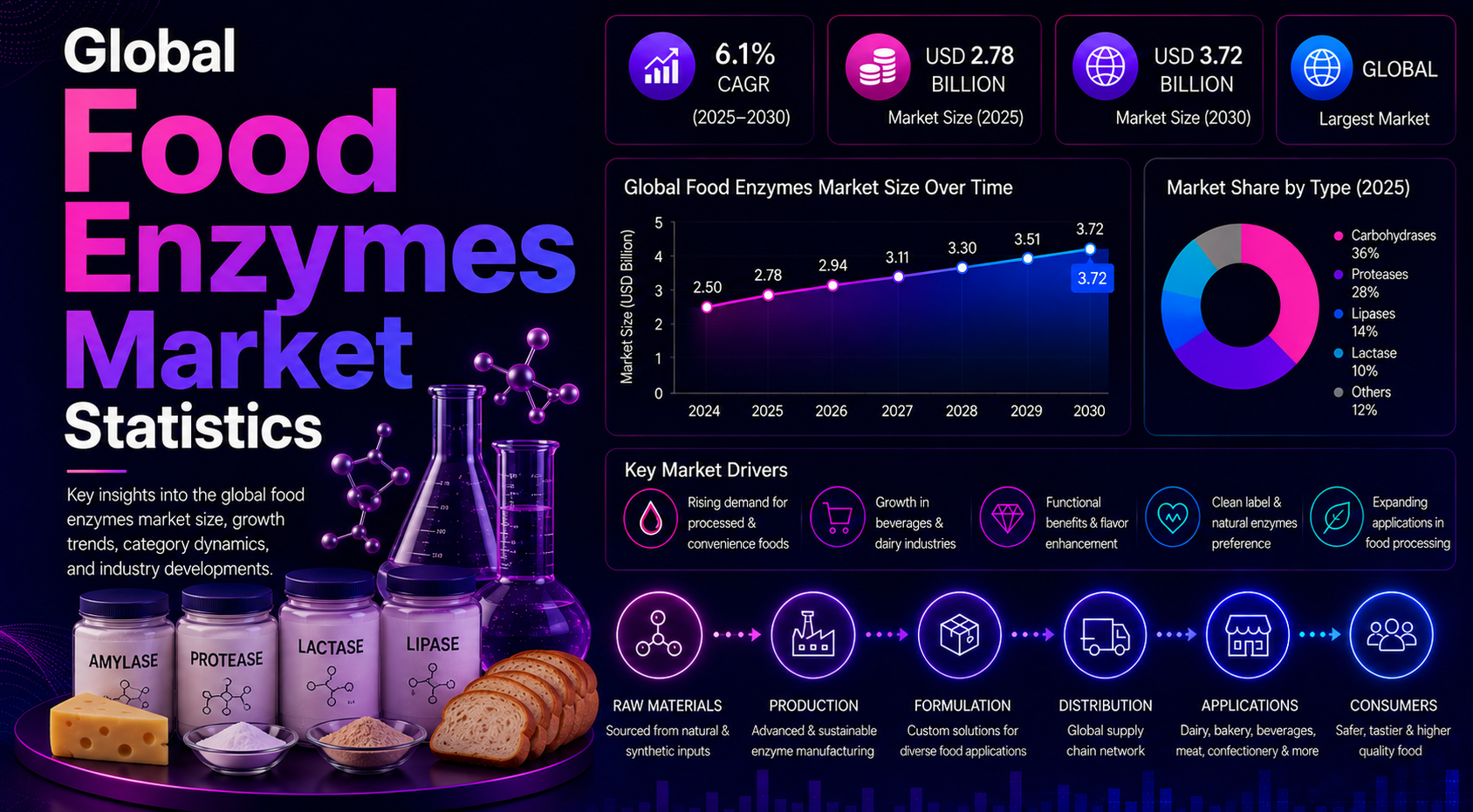
The strongest statistics show why food enzymes deserve their own market scorecard. Markets and Markets estimates the food enzymes market at USD 2.98 billion in 2025 and projects USD 4.20 billion by 2030. Grand View Research uses a broader benchmark of USD 3.6681 billion in 2025 and USD 5.6187 billion by 2033, while Global Market Insights places the market at USD 3.4 billion in 2024 and expects USD 5.8 billion by 2034.
The useful way to read food enzyme statistics is to separate market size, enzyme type, source, formulation, application, regional demand, regulatory exposure, and manufacturer adoption. A carbohydrase used in bakery, a lactase used in dairy, and a pectinase used in juice processing all belong to the same market, but they solve different technical and commercial problems.
Executive Food Enzymes Benchmarks
These benchmarks frame the article at a glance. They show the scale of the market, the difference between forecast definitions, the importance of enzyme type and source, and the applications where demand is strongest.
The numbers that define the food enzymes market
• Markets and Markets estimates the global food enzymes market at USD 2.98 billion in 2025.
• The same forecast expects the market to reach USD 4.20 billion by 2030.
• Markets and Markets places food enzymes CAGR at 7.2% from 2025 to 2030.
• Grand View Research estimates the market at USD 3.6681 billion in 2025.
• Grand View Research projects the market to reach USD 5.6187 billion by 2033.
• Grand View Research places CAGR at 5.6% from 2026 to 2033.
• Global Market Insights estimates the market at USD 3.4 billion in 2024 and USD 5.8 billion by 2034.
• IMARC estimates the food enzymes market at USD 4.1 billion in 2025 and USD 6.7 billion by 2034.
• Markets and Markets reports North America held 35.42% of the food enzymes market in 2024.
• Carbohydrases accounted for the largest food enzyme type in 2024 in the Markets and Markets segmentation.
• Plant-based enzymes are identified as the fastest-growing source segment during the forecast period.
• Beverage applications are expected to grow at 8.1% CAGR from 2025 to 2030.
• Global Market Insights reports proteases held about 40% of the food enzymes market in 2024.
• Global Market Insights reports microbial enzymes held about 75% market share in 2024.
Editorial readout
Food enzyme growth is not only a food ingredient story. It is driven by processing efficiency, clean-label reformulation, fermentation, bakery performance, dairy innovation, beverage processing, and manufacturers trying to improve yield, quality, consistency, and sustainability.
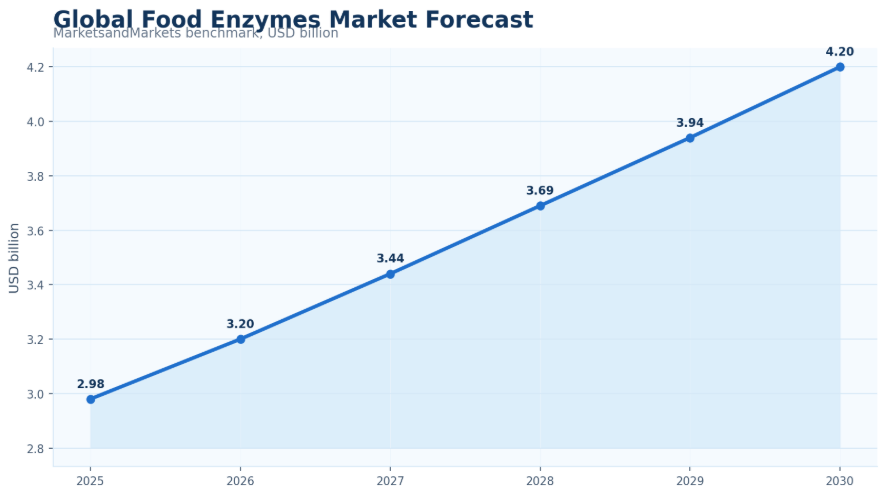
Figure 1. Food enzymes market size and forecast benchmarks show how enzyme adoption is becoming a measurable processing and formulation priority across global food manufacturing.
Why Food Enzymes Carry Food Manufacturing Value
Food enzymes create value because they solve processing problems that are expensive to solve through ingredients, heat, time, or mechanical treatment alone. They can improve dough handling, soften crumb, clarify beverages, reduce lactose, tenderize proteins, speed starch conversion, stabilize flavor development, and improve extraction yields.
That makes the market broader than a list of enzyme names. A food manufacturer may buy enzymes to reduce waste, improve product consistency, replace a processing aid, support a clean-label claim, or shorten a production step. The same enzyme family can also behave differently depending on substrate, temperature, pH, dosage, contact time, and downstream processing.
Food enzymes also sit at the intersection of formulation and operations. The commercial value is not simply whether an enzyme works in a lab. The stronger test is whether it performs in a plant, stays stable in storage, fits the production line, meets labeling expectations, and improves cost-in-use without creating regulatory or quality risk.
| Leak area | Signal to measure | Action logic |
|---|---|---|
| Processing value | Yield, time, texture, clarity, or shelf-life change | Keep enzyme use tied to a measurable plant outcome. |
| Clean-label fit | Whether enzyme replaces a harsher aid or simplifies formulation | Use only when the benefit can be explained clearly. |
| Application fit | Bakery, dairy, beverage, brewing, starch, or plant-based use | Compare enzymes by food category, not just type. |
| Source fit | Microbial, plant, animal, or recombinant source | Match performance with certification and customer expectations. |
| Regulatory fit | Safety status, labeling, source, and documentation | Validate market access before scaling. |
Editorial readout
Food enzymes create value when they solve a process problem. The most useful benchmark is not only market size; it is whether enzymes reduce cost, improve quality, speed processing, stabilize output, or enable a product claim.
Food Enzymes Market Size and Forecast Statistics
Market-size statistics need careful interpretation because the food enzymes market can be defined narrowly as food and beverage enzymes or broadly as industrial enzymes used in food-related applications. Some forecasts focus on enzyme sales into food manufacturing, while others include processing aids, enzyme blends, industrial enzyme platforms, or adjacent biotechnology categories.
Market-size and forecast benchmarks
• The global food enzymes market is estimated at USD 2.98 billion in 2025 by Markets and Markets.
• The market is projected to reach USD 4.20 billion by 2030 in the same forecast.
• That implies 7.2% CAGR from 2025 to 2030.
• Grand View Research estimates the market at USD 3.6681 billion in 2025.
• Grand View Research projects the market to reach USD 5.6187 billion by 2033.
• Grand View Research estimates 5.6% CAGR from 2026 to 2033.
• IMARC estimates the market at USD 4.1 billion in 2025 and USD 6.7 billion by 2034.
• Persistence Market Research places the market at USD 3.62 billion in 2025 and USD 5.71 billion by 2032.
• Technavio estimates the food enzymes market will increase by USD 1.04 billion from 2024 to 2029.
• Forecast differences reflect definition gaps across enzyme type, food and beverage application scope, processing-aid treatment, and regional coverage.
| Market scope | Best use | Caution |
|---|---|---|
| Food enzymes | Top-line market sizing | Check whether beverages and processing aids are included. |
| Food and beverage enzymes | Application-level demand | Useful for bakery, dairy, brewing, juice, and beverages. |
| Bakery enzymes | Dough, volume, softness, and shelf-life analysis | Do not compare directly with total market forecasts. |
| Dairy enzymes | Lactose-free, cheese, flavor, and texture analysis | Separate lactase from specialty dairy enzymes. |
| Starch and beverage enzymes | Conversion, clarity, extraction, and fermentation | Often overlaps with industrial enzyme definitions. |
Editorial readout
Market-size estimates should be used by scope. A food enzymes total is not the same as a broader industrial enzymes forecast or a single application such as bakery, dairy, or beverage enzymes.
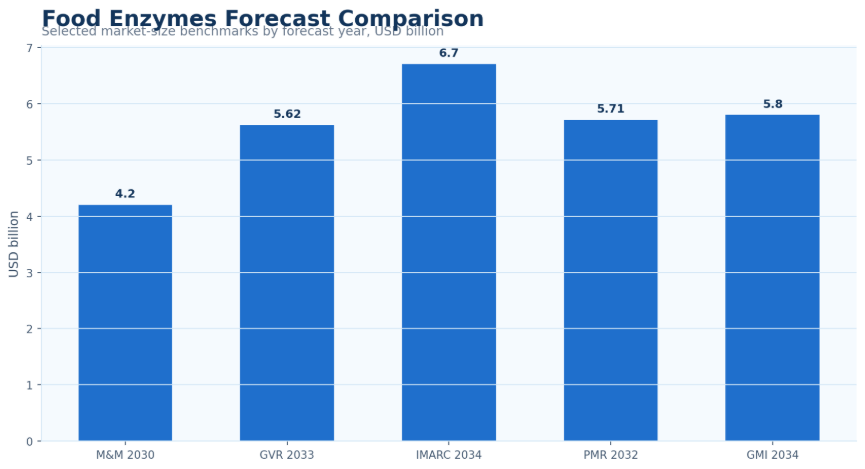
Figure 2. Forecast comparisons show why food enzyme market statistics should be read by scope, source definition, application coverage, and forecast year.
Enzyme Type Statistics
Enzyme type is one of the highest-value ways to segment the market because each type performs a different job. Carbohydrases support carbohydrate breakdown and are important in bakery, starch, beverages, and brewing. Proteases modify proteins and support meat, dairy, brewing, bakery, and savory applications. Lipases influence fat modification and flavor development, while pectinases and cellulases support juice extraction, clarity, and plant material processing.
Food enzyme type benchmarks
• Carbohydrases are identified by Markets and Markets as the largest food enzyme type in 2024.
• Proteases held about 40% of the food enzymes market in 2024 according to Global Market Insights.
• Proteases are used for protein hydrolysis, meat tenderization, flavor development, brewing, dairy, and bakery applications.
• Amylases support starch breakdown, bakery performance, brewing, sweetener production, and fermentation.
• Lactase supports lactose-free dairy and digestive-friendly product positioning.
• Pectinases support fruit juice clarification, extraction, and processing efficiency.
• Lipases are used for flavor development, dairy modification, bakery functionality, and fat processing.
• Cellulases support extraction, texture modification, plant-based processing, and fiber breakdown.
| Enzyme decision | What to compare | Why it matters |
|---|---|---|
| Carbohydrases | Bakery, starch, brewing, beverages, and sweeteners | Largest functional family across many applications. |
| Proteases | Protein hydrolysis, tenderness, flavor, dairy, brewing | Important where protein modification creates value. |
| Lactases | Lactose-free dairy and digestive-friendly products | Connects enzyme demand to consumer-facing claims. |
| Pectinases and cellulases | Juice clarification, extraction, and plant processing | Measure yield, clarity, and processing time. |
| Lipases | Flavor development, dairy, bakery, oils, and fats | Works best where fat modification has a clear product effect. |
Editorial readout
Enzyme type should be read by function, not only by market share. Each enzyme group solves a different processing problem, so growth depends on food category, substrate, temperature, dosage, and product claim.
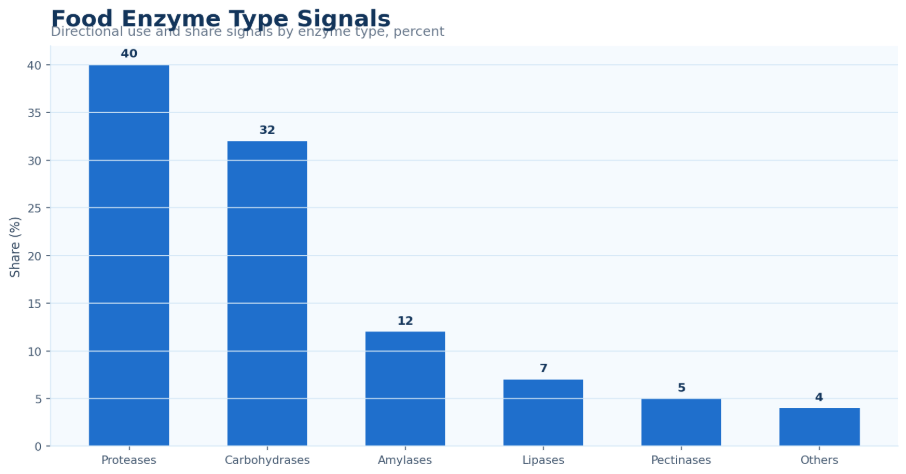
Figure 3. Enzyme type mix shows why food enzyme demand is shaped by processing function rather than one universal formulation trend.
Source Statistics: Microbial, Plant, and Animal Enzymes
Source matters because it affects scalability, cost, certification, dietary suitability, regulatory documentation, and production consistency. Microbial enzymes dominate many commercial applications because bacteria and fungi can be used in controlled fermentation systems that deliver consistent activity at industrial scale.
Source and production benchmarks
• Microbial enzymes held about 75% share of the food enzymes market in 2024 according to Global Market Insights.
• Markets and Markets identifies plant-based enzymes as the fastest-growing source segment during the forecast period.
• Microbial sources are common because they support scalable production, consistent activity, and process control.
• Fungal and bacterial production systems are widely used for commercial enzyme manufacturing.
• Plant-based enzymes benefit from clean-label, natural-positioning, vegetarian, and consumer perception advantages.
• Animal-derived enzymes may face dietary, religious, sustainability, and labeling constraints in some markets.
• Source selection affects cost, scalability, allergen considerations, certification, documentation, and regulatory acceptance.
| Source decision | Where it works best | Risk to manage |
|---|---|---|
| Microbial | Scalable production and consistent activity | Production-strain and safety documentation. |
| Plant-based | Natural-positioning and dietary compatibility | Supply consistency and activity level. |
| Animal-derived | Traditional dairy and specialty uses | Dietary, religious, and labeling constraints. |
| Recombinant | Precision performance and scale | Customer acceptance and regulatory clarity. |
Editorial readout
Source strategy matters because food manufacturers need performance, scalability, certification, dietary compatibility, and regulatory clarity. Microbial enzymes dominate volume, while plant-based options carry growth and positioning advantages.
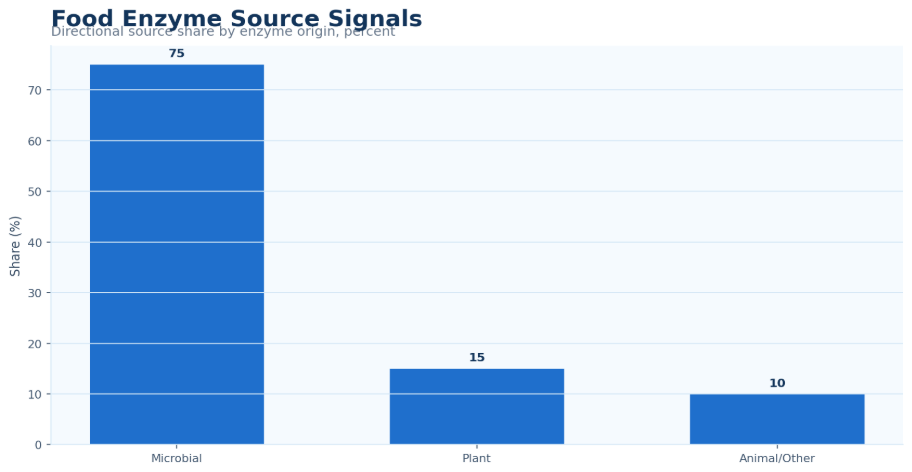
Figure 4. Source-share signals show why microbial enzymes dominate commercial food manufacturing while plant-based sources remain important for growth and positioning.
Formulation and Format Statistics
Formulation determines whether an enzyme is easy to store, dose, transport, and integrate into production. A strong enzyme can underperform commercially if the form is unstable, difficult to meter, sensitive to humidity, or hard to blend into the existing process.
• Lyophilized powder is reported as a dominant formulation because of stability and extended shelf life.
• Liquid enzymes support easier dosing in selected beverage, dairy, and industrial food processes.
• Powder and granulated formats can improve storage, transport, and dry-blend convenience.
• Immobilized enzymes can support reuse and process efficiency in selected industrial applications.
• Encapsulation can protect enzyme activity under harsher processing or storage conditions.
• Custom enzyme blends are often used when manufacturers need multiple functional outcomes in one process.
| Format decision | What to measure | Best use case |
|---|---|---|
| Liquid | Dosing accuracy, storage temperature, pumpability | Beverage, dairy, and process-line dosing. |
| Powder | Moisture sensitivity, dispersibility, activity retention | Dry blends and stable storage. |
| Lyophilized powder | Shelf life and activity protection | Higher-stability enzyme systems. |
| Granulated or encapsulated | Handling, release timing, and protection | Processes needing better stability or lower dust. |
Editorial readout
The best enzyme on paper can fail commercially if stability, handling, or dosing does not fit the process. Formulation should be measured as part of performance, not as a separate packaging choice.
Application Statistics by Food Category
Application data is where food enzyme statistics become most practical. Bakery, dairy, beverages, brewing, juice, starch processing, meat, confectionery, oils, and plant-based foods do not use enzymes for the same reason. Each category has its own quality target, processing constraint, shelf-life issue, and consumer claim.
Food and beverage application benchmarks
• Beverage applications are expected to grow at 8.1% CAGR from 2025 to 2030 according to Markets and Markets.
• Bakery uses enzymes for dough handling, crumb softness, volume, shelf life, and consistent baking performance.
• Dairy uses lactase, proteases, lipases, and other enzymes for lactose-free products, flavor, texture, and processing efficiency.
• Brewing uses enzymes to support starch conversion, fermentation performance, filtration, and product consistency.
• Juice processing uses pectinases and cellulases for clarification, yield, and extraction.
• Meat applications use proteases for tenderization and protein modification.
• Plant-based foods use enzymes for texture, protein functionality, extraction, and processing efficiency.
• Starch processing uses amylases and related enzymes for sweeteners, fermentation inputs, and viscosity control.
| Application | Primary enzyme job | Operating implication |
|---|---|---|
| Bakery | Dough handling, volume, softness, shelf life | Track crumb softness, waste, and consistency. |
| Dairy | Lactose reduction, coagulation, flavor, texture | Track claim value, taste, and processing efficiency. |
| Beverages and juice | Clarification, extraction, viscosity control | Track yield, clarity, filtration, and speed. |
| Brewing and fermentation | Conversion, filtration, fermentation support | Track consistency, time, and output quality. |
| Starch and sweeteners | Conversion and viscosity control | Track yield, sugar profile, and process efficiency. |
| Plant-based foods | Protein and fiber functionality | Track texture, mouthfeel, and sensory acceptance. |
Editorial readout
Application data should be read by food category. Bakery enzymes solve texture and shelf-life problems, dairy enzymes solve lactose and flavor problems, beverage enzymes solve clarification and yield problems, and plant-based enzymes solve texture and protein-functionality problems.
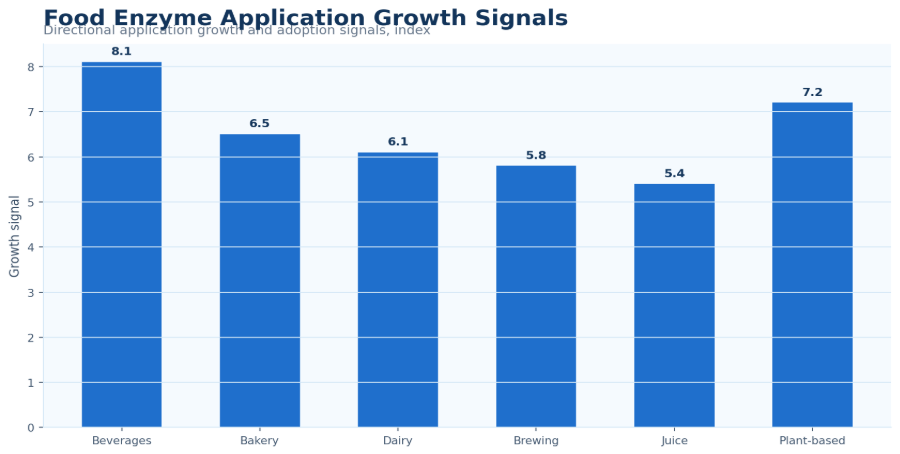
Figure 5. Food enzyme application data shows why growth is strongest where enzymes improve processing efficiency, sensory quality, shelf life, or product claims.
Clean Label, Sustainability, and Processing Efficiency
Clean-label demand has made enzymes more strategically important because manufacturers are looking for ways to simplify formulations, improve processing, and reduce reliance on harsher processing aids. Enzymes can help achieve functional changes through targeted biological activity rather than simply adding more ingredients.
The sustainability case is practical rather than decorative. Enzymes can improve extraction, reduce waste, shorten processing time, support lower-temperature conditions, or improve consistency so fewer batches require rework. Those benefits must be measured in the production system rather than assumed from the presence of an enzyme.
Enzymes also support consumer-facing product directions such as lactose-free dairy, softer baked goods, clearer juices, improved plant-based textures, and more consistent fermented products. The strongest growth stories connect processing value with a consumer benefit.
| Sustainability signal | What it reveals | Useful action |
|---|---|---|
| Yield improvement | More output from the same input | Model raw-material savings. |
| Energy or time reduction | Lower temperature or faster process | Track production time and energy use. |
| Waste reduction | Less rework, loss, or spoilage | Connect enzyme use to margin and sustainability. |
| Shelf-life extension | Freshness or stability gains | Track waste and repeat purchase. |
| Clean-label reformulation | Simpler ingredient or processing story | Validate claim language and documentation. |
Editorial readout
Food enzymes are strongest when they connect process efficiency with product quality. Sustainability claims should be tied to measurable outcomes such as yield, energy use, waste reduction, or shelf-life improvement.
Regional Food Enzymes Market Intelligence
Regional food enzyme data is valuable because global averages hide differences in food processing structure, dietary habits, bakery and dairy demand, beverage output, clean-label adoption, regulatory systems, and biotechnology capacity.
North America
• Markets and Markets reports North America held 35.42% of the food enzymes market in 2024.
• The U.S. market benefits from processed food, bakery, dairy, brewing, beverages, plant-based foods, and clean-label innovation.
• Canada supports enzyme demand through bakery, dairy, packaged food, beverages, and health-oriented food manufacturing.
• Mexico adds demand through bakery, dairy, beverages, processed food expansion, and regional food manufacturing.
Europe
• IMARC estimates the Europe food enzymes market reached USD 783.0 million in 2025.
• IMARC expects Europe to reach USD 1,224.2 million by 2034.
• Europe is expected to grow at 4.94% CAGR from 2026 to 2034.
• Europe is shaped by bakery, dairy, beverage, clean-label, sustainability, and regulatory expectations.
Asia Pacific
• China and India are important growth markets because of food processing expansion, bakery growth, dairy innovation, and beverage demand.
• Japan and South Korea are quality-led markets with strong processed food, fermentation, convenience, and specialty ingredient cultures.
• Southeast Asia supports enzyme demand through beverages, bakery, packaged foods, starch processing, and food manufacturing investment.
Latin America and Middle East & Africa
• Brazil and Mexico are important Latin American markets because of bakery, beverages, dairy, meat, processed foods, and starch processing.
• Argentina, Chile, Colombia, and Peru add food enzyme demand through packaged foods, beverages, bakery, and regional processing capacity.
• Saudi Arabia, UAE, South Africa, Egypt, and Turkey are shaped by packaged foods, bakery, dairy, beverages, imports, and food processing capacity.
| Region | Food enzyme implication |
|---|---|
| North America | Scale and innovation matter; processed foods, bakery, dairy, brewing, beverages, and clean-label launches support demand. |
| Europe | Regulation, documentation, bakery, dairy, beverages, and sustainability influence adoption. |
| Asia Pacific | Food processing expansion, beverages, starch, bakery, and dairy make this a growth-led region. |
| Latin America | Bakery, beverages, dairy, meat, and packaged foods make cost-in-use central. |
| Middle East & Africa | Processing capacity, imports, dairy, bakery, beverages, and shelf-life needs shape demand. |
Editorial readout
Regional food enzyme statistics should be read through food manufacturing structure. North America is scale and innovation-led, Europe is clean-label and regulation-led, Asia Pacific is processing-growth-led, Latin America is packaged-food and beverage-led, and Middle East and Africa are shaped by food processing capacity and import dependence.
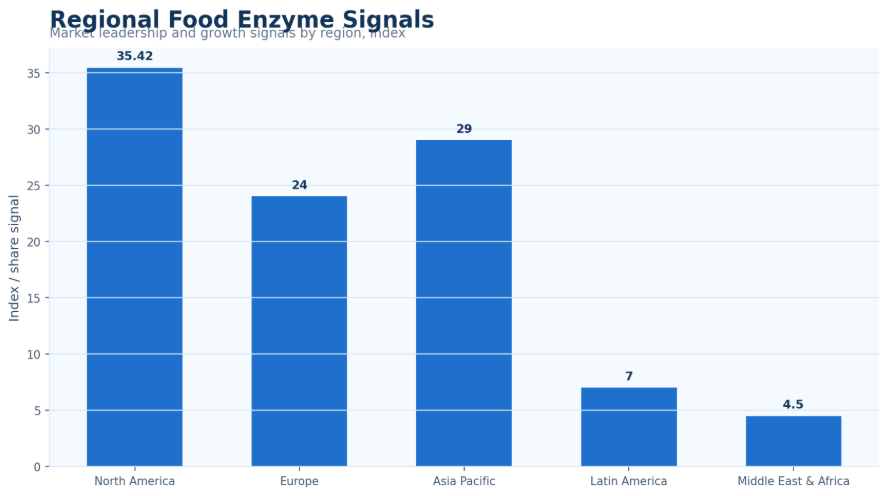
Figure 6. Regional food enzyme demand differs by food processing maturity, bakery and dairy demand, beverage output, clean-label adoption, and regulatory expectations.
Country-Level Food Enzymes Statistics
Country-level statistics turn a global enzyme forecast into operating decisions. Food enzyme adoption depends on the size of the food processing base, local product categories, regulation, dietary preferences, clean-label demand, and whether manufacturers have the technical support needed to validate enzymes in production.
| Country group | What to watch | Market logic |
|---|---|---|
| United States and Canada | Bakery, dairy, beverages, brewing, plant-based foods | Large-scale innovation and clean-label reformulation. |
| Germany, France, UK, Italy | Bakery, dairy, beverages, specialty foods | Quality, documentation, and regulatory readiness. |
| China and India | Food processing scale, dairy, bakery, beverages, starch | Growth depends on affordability and manufacturing expansion. |
| Japan and South Korea | Premium processed foods and fermentation culture | Precision and specialty enzyme performance matter. |
| Brazil and Mexico | Bakery, beverages, dairy, meat, processed foods | Scale applications and cost-in-use matter. |
| Saudi Arabia, UAE, South Africa, Turkey | Packaged foods, dairy, bakery, beverages, imports | Shelf life, certification, and supplier support matter. |
Editorial readout
Country-level data turns global enzyme growth into operating decisions. Food enzyme adoption depends on local food categories, processing capacity, regulations, dietary preferences, and demand for clean-label or functional foods.
Competitive Landscape and Manufacturer Statistics
Food enzyme competition is technical. Suppliers are not only selling enzyme names; they are selling activity, specificity, formulation, application support, regulatory documentation, production reliability, and proof that the enzyme performs inside the customer’s process.
• Global enzyme suppliers compete on activity, stability, dosage efficiency, technical service, and regulatory documentation.
• Food manufacturers often need application support because performance depends on process conditions.
• Custom enzyme blends can create stronger customer retention when they solve multiple processing problems.
• Halal, kosher, vegetarian, vegan, allergen, and source documentation can influence supplier selection.
• Biotechnology capability and fermentation scale are strategic advantages for leading enzyme manufacturers.
| Supplier decision | What to compare | Why it matters |
|---|---|---|
| Global enzyme supplier | Activity, scale, documentation, application labs | Best fit for multinational food manufacturers. |
| Specialty enzyme company | Niche activity profile and focused use case | Best fit for high-value process problems. |
| Ingredient platform company | Enzyme plus broader formulation support | Useful when enzyme is part of a system. |
| Regional supplier | Local service, price, and market knowledge | Useful when local approvals and support matter. |
| Application lab support | Trials, dosage, validation, and troubleshooting | Turns benchmark claims into production results. |
Editorial readout
Suppliers win when they can prove activity, stability, dosage efficiency, regulatory fit, and application performance in real manufacturing conditions.
Regulation, Safety, and Labelling Statistics
Regulation is a market variable for food enzymes because products are used in food manufacturing and may be treated differently depending on whether they are considered ingredients, additives, or processing aids. Source, residual activity, production organism, purity, and intended use all matter.
• Food enzyme safety evaluation varies by region and intended use.
• Processing-aid treatment can affect whether enzymes appear on labels.
• GRAS status and food-use documentation are important in the United States.
• EU food enzyme authorization and safety evaluation frameworks shape European access.
• Halal, kosher, vegetarian, vegan, and allergen documentation can affect adoption by food category.
• Genetically modified production organisms require careful documentation and customer communication.
• Residual enzyme activity and process inactivation can matter for product safety and quality.
| Regulatory checkpoint | What it affects | Market impact |
|---|---|---|
| Safety status | Allowed use, purity, and intended application | Controls whether a product can be commercialized. |
| Processing-aid treatment | Labeling and declaration expectations | Influences clean-label positioning. |
| Source and production organism | Dietary, GM, allergen, and documentation needs | Can change customer acceptance. |
| Halal, kosher, vegan suitability | Certification and export requirements | Important for dairy, bakery, and global brands. |
| Regional authorization | U.S., EU, and local market access | Prevents launch delays and reformulation risk. |
Editorial readout
A formulation that performs well technically may still face hurdles if documentation, labeling, source, processing-aid treatment, or certification does not match the target market.
Food Enzymes Growth-Leak Diagnostic
A food enzyme benchmark should help teams identify where growth is leaking. A market can grow steadily while an individual enzyme system fails because it lacks stability, application proof, cost-in-use value, regulatory fit, supplier documentation, or customer production support.
| Problem area | Core signals to measure | Useful benchmark logic |
|---|---|---|
| Market scale | Value, CAGR, region share | Use forecasts as direction, not as one exact number. |
| Enzyme type | Carbohydrases, proteases, lactases, lipases | Compare by function and food category. |
| Source | Microbial, plant, animal, recombinant | Balance scale, certification, and customer acceptance. |
| Application | Bakery, dairy, beverage, brewing, starch | Tie enzyme use to a measurable processing job. |
| Regulation | Safety, labeling, certification, source | Validate market access before launch. |
| Supplier support | Technical service, documents, trials | Use support quality as a growth-leak signal. |
Editorial readout
This diagnostic keeps food enzyme statistics practical. Market growth does not guarantee adoption if the enzyme lacks stability, documentation, application proof, regulatory fit, or measurable processing value.
90-Day Food Enzymes Benchmark Plan
Statistics become useful when they are translated into a measurement plan. Food enzyme teams can organize a benchmark cycle around market scope, process fit, cost-in-use, supplier readiness, and regulatory exposure.
| Timing | What to do | Output |
|---|---|---|
| Days 1-30 | Map enzyme types, applications, sources, formulations, suppliers, regions, and regulatory exposure. | Baseline benchmark map. |
| Days 31-60 | Compare yield, dosage, cost-in-use, processing time, shelf-life impact, and documentation. | Opportunity and risk matrix. |
| Days 61-90 | Prioritize enzyme trials, supplier validation, and application targets by measurable value. | Repeatable enzyme scorecard. |
Planning principle
Food enzyme teams should compare external market statistics against internal processing performance. The best benchmark is not only forecast growth; it is whether an enzyme improves quality, cost, yield, compliance, or speed in a real production line.
Metrics Food Enzyme Leaders Should Track
The final scorecard should connect market growth with real production outcomes. Market value and CAGR show category direction, but dosage efficiency, cost-in-use, shelf-life effect, regulatory status, and supplier documentation show whether adoption is practical.
| Metric | Why it matters |
|---|---|
| Market value | category scale and investment direction. |
| CAGR | forecast rhythm across definitions. |
| Enzyme type share | where functional demand is concentrated. |
| Source share | microbial, plant, and animal positioning. |
| Application share | where bakery, dairy, beverages, and starch drive use. |
| Regional and country fit | where adoption depends on local food manufacturing. |
| Cost-in-use | the real economic impact beyond price per kilogram. |
| Yield improvement | Connects enzyme use to margin and sustainability. |
| Shelf-life and quality effect | consumer and waste-reduction value. |
| Regulatory readiness | whether the enzyme can be approved and scaled. |
Editorial readout
The strongest food enzyme scorecard connects market growth with real production outcomes: yield, stability, dosage, shelf life, quality, compliance, cost-in-use, and country-level adoption.
Additional Market Interpretation
Food enzyme statistics become more useful when they are linked to the way food manufacturers actually approve and scale ingredients. A market forecast can show demand growth, but enzyme adoption normally moves through trials, validation batches, sensory checks, cost-in-use modeling, quality assurance review, regulatory review, and customer approval. That makes the sales cycle more technical than many other food ingredient categories.
Another reason the market needs careful interpretation is that enzymes are often measured by value, not only by volume. A small quantity of enzyme can create a large process effect, so market value may grow through higher-value specialty systems, custom blends, improved stabilization, or application support rather than simple tonnage expansion. This is especially true in beverage processing, dairy innovation, plant-based foods, and specialty bakery.
Food enzyme demand is also shaped by the tension between standardization and customization. Large manufacturers want predictable activity, stable supply, and documentation that can support global launches. At the same time, individual plants may need enzyme systems adjusted to local flour quality, milk composition, fruit varieties, water chemistry, temperature profiles, or equipment conditions. Suppliers that combine global documentation with local application support are better positioned.
Operational Signals Behind Food Enzyme Adoption
• Food enzyme trials usually need clear before-and-after measurements such as yield, viscosity, texture, clarity, fermentation time, or shelf-life improvement.
• Cost-in-use is more important than price per kilogram because dosage and activity determine the real economic result.
• Application support matters because enzyme performance can change with substrate, pH, temperature, time, and processing sequence.
• Manufacturer adoption is stronger when enzymes solve a repeatable production problem instead of only supporting a broad marketing claim.
• Documentation quality can shorten approval cycles by answering safety, source, allergen, certification, and regulatory questions early.
• Global suppliers gain an advantage when they can support the same product across several regions without creating new compliance risk.
Editorial readout:
Food enzyme market growth should be read through adoption readiness. The best opportunities combine measurable process value, clear documentation, stable supply, and a food category where the enzyme benefit is visible to the manufacturer or consumer.
Future Outlook for Food Enzymes
The next phase of the food enzymes market will likely be shaped by biotechnology, precision fermentation, plant-based product development, sugar and starch optimization, dairy reformulation, and more demanding sustainability targets. Food manufacturers want tools that help them improve process efficiency while keeping labels acceptable and product quality consistent.
Bakery will remain important because dough quality, shelf life, softness, and flour variability continue to create demand for enzyme systems. Dairy will remain important because lactose-free products, cheese yield, texture optimization, and flavor development are durable use cases. Beverages will remain one of the most attractive growth areas because clarification, extraction, filtration, brewing, and fermentation can all benefit from enzyme activity.
Plant-based foods may create a more specialized opportunity. Plant proteins, fibers, starches, and fats often require modification to deliver familiar texture, mouthfeel, flavor release, and process stability. Enzymes are not the only solution, but they can help manufacturers improve plant-based products without relying only on additives or heavy mechanical processing.
Regulatory readiness will become more important as food companies globalize formulations. A product developed for one market may need additional documentation before it can be used in another. Source, production organism, allergen status, halal or kosher status, vegan suitability, and processing-aid treatment can influence whether a technically strong enzyme can be used commercially.
Outlook benchmarks to watch
• Specialty enzyme systems are likely to gain value where they reduce waste, improve yield, or support premium product claims.
• Microbial production will remain central because it supports scale, consistency, and controlled activity.
• Plant-based enzyme positioning will benefit from natural, vegetarian, vegan, and clean-label demand where performance and supply can match application needs.
• Beverage, bakery, dairy, starch processing, and plant-based foods are likely to remain the most important application clusters.
• Regulatory documentation and application proof will become stronger differentiators as food manufacturers demand faster and cleaner approval processes.
Editorial readout:
The food enzymes outlook should be measured by usefulness, not only by growth. The strongest enzyme systems will improve a real processing metric, support a defensible claim, and move through regulatory and quality approval without slowing commercialization.
Procurement and Supplier Implications
Procurement teams increasingly treat food enzymes as performance inputs rather than simple ingredient purchases. A low enzyme price does not always create the lowest production cost if dosage is high, activity drops during storage, technical support is weak, or the enzyme creates quality variation. The better procurement measure is total cost-in-use, which combines price, activity, dosage, yield, batch reliability, waste reduction, and approval effort.
Supplier selection also depends on documentation readiness. Large food manufacturers need specifications, safety statements, allergen information, source details, production-organism information, certification support, and regional compliance documents before an enzyme can move into routine use. A supplier that can answer those questions quickly can shorten reformulation and commercialization timelines.
Food enzyme procurement is also exposed to fermentation capacity, raw-material costs, logistics, and regional manufacturing footprints. Buyers should compare suppliers by supply reliability, application knowledge, local service, and ability to support multiple plants or countries. That is especially important when the same bakery, dairy, beverage, or plant-based product is produced across several regions.
Supplier signals to compare
• Application-lab support helps manufacturers validate enzyme performance before full-scale production.
• Batch-to-batch activity consistency reduces quality variation and manufacturing risk.
• Regulatory documentation quality can shorten product approval timelines.
• Local technical service matters when flour, milk, fruit, grain, water, or process conditions vary by country.
• Supply reliability becomes important when one enzyme system is used across multiple plants or brands.
A mature food enzyme strategy also separates innovation pilots from scalable production. Pilot data may show that an enzyme improves texture or yield, but commercial deployment still depends on how the enzyme behaves at plant speed, across raw-material variation, under routine cleaning schedules, and through quality audits. This is why application trials, documentation, and production economics should move together from the beginning.
For market analysis, this distinction matters because growth is not evenly distributed across every enzyme or every food category. The strongest opportunities sit where a clear process problem, a measurable economic benefit, and an acceptable regulatory path overlap.
Editorial readout:
Food enzyme buying decisions should compare performance, documentation, supply reliability, and process economics together. The strongest supplier is not always the cheapest supplier; it is the one that helps the manufacturer reach stable production faster.
Commercial Readiness and Adoption Signals
The next layer of food enzyme statistics is commercial readiness. A market can show steady growth, but an individual enzyme system still has to pass practical checks inside a food plant. Manufacturers usually compare activity, dosage, yield effect, sensory impact, shelf-life result, batch consistency, regulatory documentation, and supplier support before moving from trial use to repeat purchasing.
This is why food enzyme adoption should be read as both a market trend and an operating decision. Bakery teams may care most about dough tolerance and crumb softness. Dairy teams may focus on lactose conversion, flavour, texture, and cheese yield. Beverage teams may measure clarity, extraction, filtration speed, and fermentation consistency. Plant-based teams may evaluate protein functionality, mouthfeel, and off-note control.
The strongest commercial opportunities sit where technical performance and business value meet. An enzyme that improves yield but creates labeling friction may move slowly. An enzyme that supports a clean-label claim but does not improve cost-in-use may remain a niche tool. An enzyme that improves quality, reduces waste, fits documentation needs, and works across production conditions has a stronger route to scale.
Adoption signals to compare
• Technical trials should compare enzyme performance against a baseline batch, not only against a supplier claim.
• Cost-in-use should include activity level, dosage, process time, yield impact, waste reduction, and quality consistency.
• Food manufacturers should review enzyme source, allergen statements, certification needs, and regional regulatory fit before commercial scale-up.
• Application teams should test enzymes under real pH, temperature, time, substrate, and equipment conditions.
• Procurement teams should compare supplier documentation, delivery reliability, local technical service, and batch-to-batch consistency.
• Marketing teams should only connect enzymes to clean-label or sustainability claims when the process benefit can be explained clearly.
| Adoption area | What to compare | Reference-style action logic |
|---|---|---|
| Technical proof | Activity, dosage, process fit, and repeatability | Move forward only when the enzyme improves a measurable production outcome |
| Cost-in-use | Price, dosage, yield, waste, and processing time | Compare the total process result instead of unit price alone |
| Quality impact | Texture, flavor, clarity, softness, shelf life, and consistency | Use sensory and QA data before wider adoption |
| Regulatory fit | Source, processing aid status, documentation, and certification | Clear compliance questions before the commercial trial |
| Supplier support | Application labs, response time, documentation, and local service | Prefer suppliers that reduce approval and scale-up friction |
| Market fit | Food category, country, customer claim, and production economics | Prioritize use cases where the enzyme solves a visible problem |
Editorial readout:
Food enzyme adoption should be measured as a readiness path. The best opportunities combine measurable process value, documentation clarity, stable supply, and a food category where enzyme performance creates a visible business result.
Data Storytelling Flow for Food Enzyme Statistics
The market forecast explains the size of the opportunity. Enzyme type explains the technical function. Source data explains production and positioning. Application data explains where demand forms. Regional and country data explains where adoption is most likely to scale.
It helps the reader understand why USD 2.98 billion in 2025, USD 4.20 billion by 2030, 7.2% CAGR, 35.42% North America share, 40% protease share, and 75% microbial source share matter together. Each number has a role in the market story.
For a manufacturer, the story is practical. If the enzyme improves yield, reduces process time, supports a product claim, and has clean documentation, it becomes a growth tool. If it only appears in a forecast without clear application value, it remains a market statistic rather than a production decision.
How to read the final benchmark
• Market size shows opportunity, but application value decides adoption.
• Enzyme type shows function, but formulation decides handling and stability.
• Source share shows production logic, but certification and labeling decide market access.
• Regional share shows scale, but country-level rules and food categories decide go-to-market priority.
• Supplier strength shows capability, but plant-level proof decides whether the enzyme becomes a repeat purchase.
Editorial readout
The final benchmark is not only whether the food enzymes market is growing. The stronger benchmark is whether the right enzyme can solve the right processing problem in the right region with the right documentation and a measurable return.
Global Food Enzymes Market Statistics FAQ
Common questions
• What is the food enzymes market?
The food enzymes market includes enzymes used in food and beverage processing to improve texture, flavor, yield, clarity, fermentation, lactose breakdown, shelf life, product consistency, and processing efficiency.
• How large is the global food enzymes market?
Major forecasts place the market in the multi-billion-dollar range. Markets and Markets estimates USD 2.98 billion in 2025 and USD 4.20 billion by 2030, while Grand View Research estimates USD 3.6681 billion in 2025 and USD 5.6187 billion by 2033.
• Is the food enzymes market growing?
Yes. Growth is supported by processed food demand, clean-label reformulation, bakery performance, dairy innovation, beverages, brewing, starch processing, and biotechnology advances.
• Which enzyme type leads the food enzymes market?
Carbohydrases are reported as the largest type by Markets and Markets, while Global Market Insights reports proteases held about 40% share in 2024.
• Which source dominates food enzymes?
Microbial enzymes dominate many commercial applications because they are scalable and consistent. Global Market Insights reports microbial enzymes at about 75% share in 2024.
• Which region leads the food enzymes market?
Markets and Markets reports North America held 35.42% share in 2024, supported by processed food, bakery, dairy, brewing, beverages, and clean-label innovation.
• What are the main applications of food enzymes?
Major applications include bakery, dairy, beverages, brewing, juice processing, starch conversion, meat, confectionery, oils and fats, plant-based foods, and processed foods.
• What metrics should food enzyme companies track?
Useful metrics include market value, CAGR, enzyme type share, application share, source share, region share, cost-in-use, yield improvement, processing time, shelf-life extension, regulatory approval, and customer adoption.
Final Takeaway
Food enzyme market growth depends on five systems working together: food processing scale, enzyme functionality, source and formulation fit, application demand, and regulatory readiness. A forecast can show that the market is expanding, but adoption is still decided inside real production environments where activity, stability, dosage, cost, and documentation matter.
The strongest statistics show that food enzymes are moving from technical processing aids into strategic manufacturing tools. They support cleaner labels, more consistent products, better yields, lactose-free dairy, bakery shelf life, beverage clarity, fermentation performance, and more efficient use of raw materials.
For manufacturers and suppliers, the practical goal is readiness. The best food enzyme strategy identifies which application has a measurable process problem, which enzyme type can solve it, which source and formulation fit the production line, which region or country supports adoption, and which documentation is needed for approval. That is what turns market growth into usable commercial value.