Breakfast food has become a wider market than the traditional morning meal. It now includes ready-to-eat cereal, oats, bread, pastries, frozen waffles, breakfast sandwiches, yogurt, eggs, protein products, bars, coffee pairings, smoothies, QSR breakfast, café food, convenience-store meals, and repeat grocery baskets. The category is large because breakfast is tied to routine, but it is also changing because consumers want faster preparation, better nutrition, lower prices, and more portable formats.
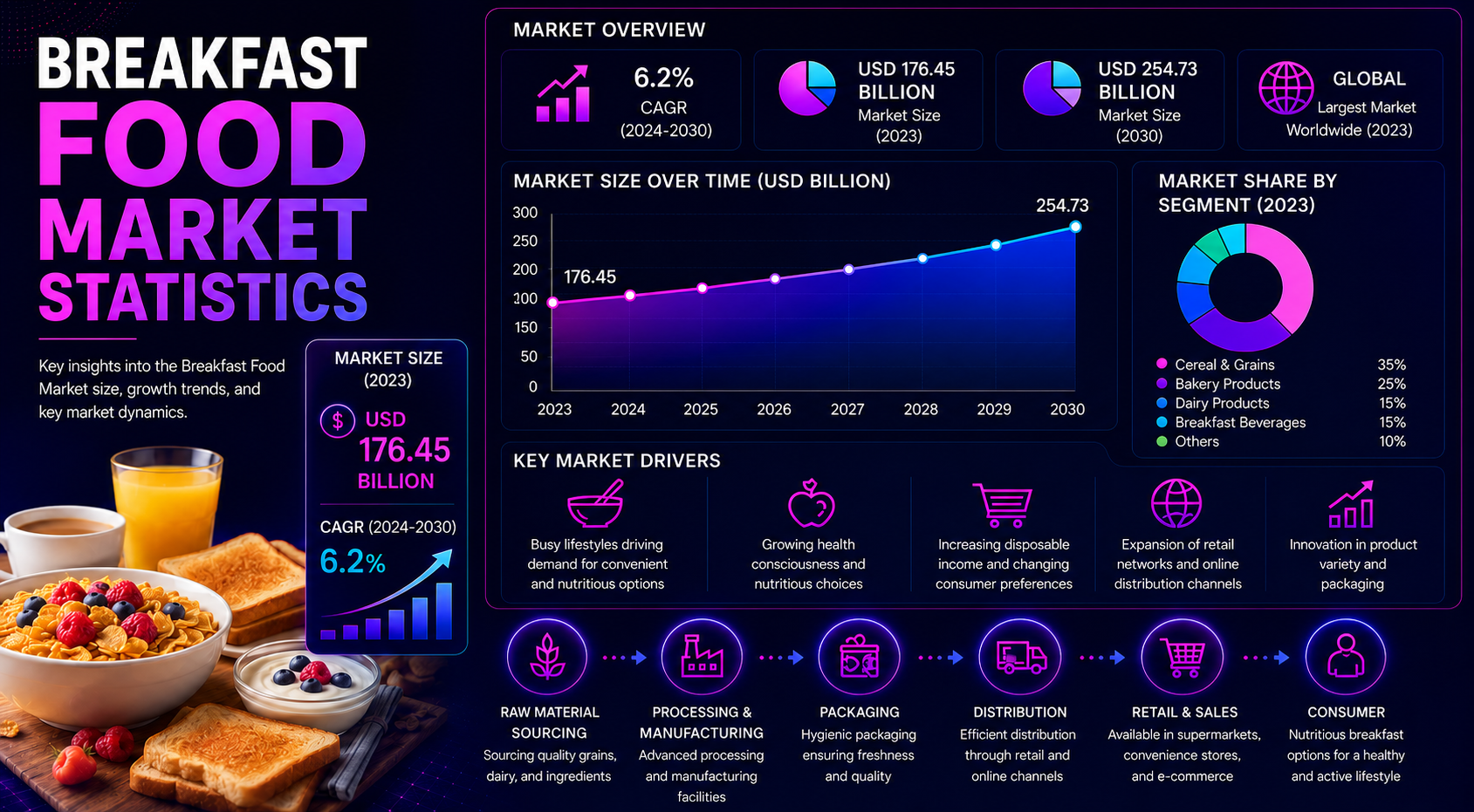
The global breakfast food market is estimated at USD 214.05 billion in 2025 and is projected to reach USD 276.81 billion by 2031, which gives the category a steady growth profile rather than a short-term spike. Breakfast cereal remains one of the most visible benchmark segments, with the broader cereal market forecast moving toward USD 50.66 billion by 2030. These headline numbers show scale, but they do not explain where demand is moving.
The more useful reading is by product format and channel. Cereal and oats still anchor pantry breakfast. Bakery and bread-based products remain central in Europe and many Latin American markets. Frozen sandwiches, waffles, burritos, yogurt cups, bars, and ready-to-drink beverages solve the time-pressure problem. QSRs, cafés, and convenience stores compete for the same morning occasion through speed, bundles, and coffee attachment.
Executive Breakfast Food Market Benchmarks
• The global breakfast food market is estimated at USD 214.05 billion in 2025, making it one of the larger high-frequency food occasions.
• The market is forecast to reach USD 276.81 billion by 2031, showing steady demand across packaged food, retail, and foodservice channels.
• The implied breakfast food CAGR is about 4.4% between 2025 and 2031, which signals durable category expansion rather than rapid volatility.
• The global breakfast cereal market is moving toward USD 50.66 billion by 2030, keeping cereal relevant even as breakfast formats diversify.
• The U.S. remains one of the most mature cereal and frozen breakfast markets, with strong grocery, club, convenience, and QSR participation.
• Asia-Pacific is one of the strongest growth regions because urbanization, modern retail, and packaged food adoption are changing breakfast routines.
• Europe remains structurally important because breakfast is often shaped by bread, bakery, oats, muesli, cereal, coffee, and dairy products.
• Frozen and ready-to-eat breakfast products benefit from time pressure because they reduce preparation time for families and working adults.
• Protein, fiber, whole grain, low-sugar, and fortified claims are increasingly important across cereal, yogurt, bars, oats, and breakfast beverages.
• Private label creates pressure in cereal, oats, bakery, and frozen breakfast because breakfast is a visible household expense.
• Foodservice breakfast depends on repeat morning traffic, beverage attachment, speed, labor control, and value bundles.
• Online grocery strengthens breakfast repeat purchase because cereal, oats, yogurt, frozen breakfast, bread, and bars fit recurring household baskets.
• Breakfast skipping changes demand rather than removing it, because many consumers still buy coffee, bars, yogurt, protein drinks, or snacks later in the morning.
• Country-level breakfast habits matter because packaged cereal, bakery, cafés, traditional meals, and convenience-store formats vary sharply by market.
| Metric | Current signal | Market implication |
|---|---|---|
| Global breakfast food market | USD 214.05 billion in 2025; USD 276.81 billion by 2031 | Defines category scale and long-term planning |
| Breakfast cereal | Forecast near USD 50.66 billion by 2030 | Pantry and family demand |
| Convenience breakfast | Frozen, ready-to-eat, portable formats | Time-pressure demand |
| Bakery breakfast | Bread, pastries, sandwiches | Regional habit differences |
| Dairy and protein breakfast | Yogurt, eggs, bars, protein drinks | Wellness-led demand |
| Retail channel | Grocery, online, club, private label | Repeat purchase behavior |
| Foodservice breakfast | QSR, cafés, convenience stores | Morning traffic opportunity |
| Regional growth | North America, Europe, Asia-Pacific | Where product mix changes |
Editorial readout
The breakfast food market should not be treated as one blended category. The strongest benchmark separates product format, channel, region, consumer routine, price pressure, and health positioning. This makes the article useful for teams deciding whether to prioritize cereal, bakery, frozen meals, dairy, bars, retail, cafés, QSR, or country-specific products.
Why Breakfast Food Remains a Large Consumer Market
Breakfast remains commercially important because it is tied to repeat behavior. A household may not buy a specialty food every week, but breakfast items such as cereal, oats, bread, yogurt, eggs, frozen waffles, coffee, and bars often sit inside recurring grocery routines. That repeat behavior gives breakfast more planning value than a one-time impulse category.
The market also benefits from routine pressure. School schedules, office hours, commutes, and family mornings reward products that are fast, familiar, affordable, and easy to restock. Hybrid work changes the location of breakfast, but it does not remove the need for quick morning food. It often shifts demand back toward pantry, freezer, and refrigerator products.
• Time pressure increases demand for ready-to-eat cereal, frozen breakfast, instant oatmeal, yogurt cups, bars, and QSR breakfast.
• Family routines support repeat purchases of cereal, bread, oats, yogurt, milk, eggs, and frozen waffles.
• Commuting supports portable breakfast formats such as bars, coffee, sandwiches, and convenience-store hot foods.
• Hybrid work supports at-home preparation, pantry stock-ups, frozen breakfast, and premium coffee pairings.
• Affordability matters because breakfast is a high-frequency meal and price changes are noticed quickly.
| Driver | What it shows | Business implication |
|---|---|---|
| Time pressure | Need for speed | Ready-to-eat and frozen formats |
| Family routine | Repeat purchase | Cereal, oats, bread, yogurt |
| Commuting | Portable breakfast | Bars, coffee, QSR breakfast |
| Hybrid work | At-home preparation | Pantry and freezer items |
| Health goals | Nutrition-led demand | Protein and fiber claims |
| Affordability | Price sensitivity | Value packs and private label |
Demand readout
Breakfast skipping does not always remove demand. It often shifts demand toward coffee, bars, yogurt, protein drinks, snacks, and later-morning food. That is why breakfast should be measured as an occasion rather than only as a sit-down meal.
Breakfast Food Market Size Statistics
A category worth USD 214.05 billion in 2025 and projected to reach USD 276.81 billion by 2031 is large enough to support separate product strategies across cereal, bakery, frozen food, dairy, bars, beverages, retail, and foodservice.
The implied CAGR of about 4.4% suggests that breakfast food is not expanding because of one short-lived trend. Growth is spread across convenience, health, urban routines, regional packaged-food adoption, retail basket behavior, and morning foodservice demand.
• Packaged breakfast products benefit from repeat grocery baskets because consumers buy many breakfast items weekly or monthly.
• Foodservice breakfast benefits when consumers attach coffee, bakery, or sandwiches to a morning trip.
• Retailers use breakfast as a routine category because cereal, bread, yogurt, eggs, oats, and frozen products drive repeat traffic.
• Growth should be read by category, because a USD 1 billion increase in cereal has different implications than a USD 1 billion increase in QSR breakfast.
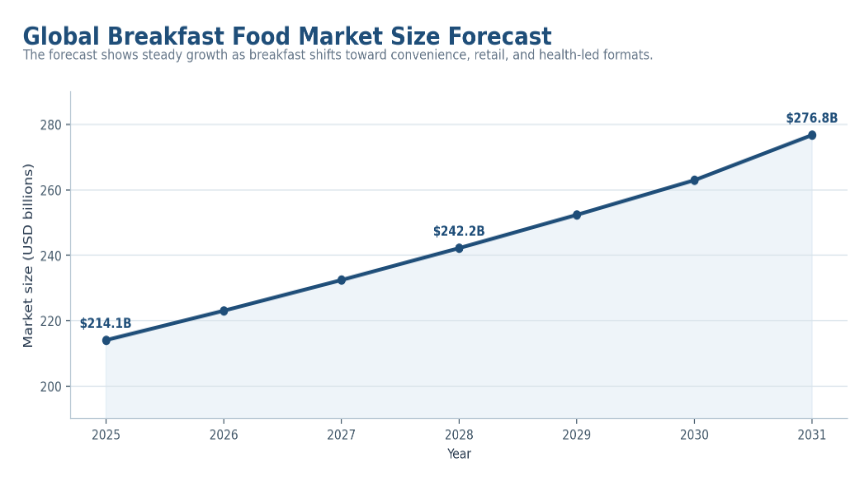
Figure 1. Breakfast food market size should be reviewed together with convenience demand, regional eating habits, and category mix because growth does not come from one product format alone.
| Market measure | Value direction | Planning implication |
|---|---|---|
| Market size | Expanding from USD 214.05B to USD 276.81B | Confirms category scale |
| CAGR | About 4.4% | Steady long-term demand |
| Packaged breakfast | High-repeat category | Retail planning |
| Foodservice breakfast | Traffic generator | QSR and café strategy |
| Regional growth | Uneven by market | Requires local category mix |
Market size readout
The market-size forecast is useful only when connected to product mix. A cereal-led breakfast market, a bakery-led market, and a frozen-breakfast market require different pricing, packaging, promotion, and channel strategies.
Breakfast Cereal Market Statistics
Breakfast cereal remains one of the clearest measurable segments inside the breakfast food market. Even when some consumers shift to yogurt, bars, smoothies, or QSR sandwiches, cereal still holds a strong pantry role because it is convenient, shelf-stable, familiar, and often bought for households rather than single occasions.
The global cereal market is forecast near USD 50.66 billion by 2030. That number matters because cereal is no longer only a children’s breakfast category. It includes ready-to-eat cereal, hot cereal, oats, granola, muesli, fortified products, lower-sugar cereals, high-fiber options, and premium wellness lines.
• Ready-to-eat cereal stays relevant because it solves speed, portioning, and shelf-stability needs.
• Hot cereal and oats benefit from health, affordability, fiber, and whole-grain positioning.
• Children’s cereal must balance taste, sugar concerns, fortification, and family budget pressure.
• Granola and muesli can support premium pricing when they connect with wellness, fiber, and ingredient quality.
• Private-label cereal grows stronger when households become more price-sensitive.
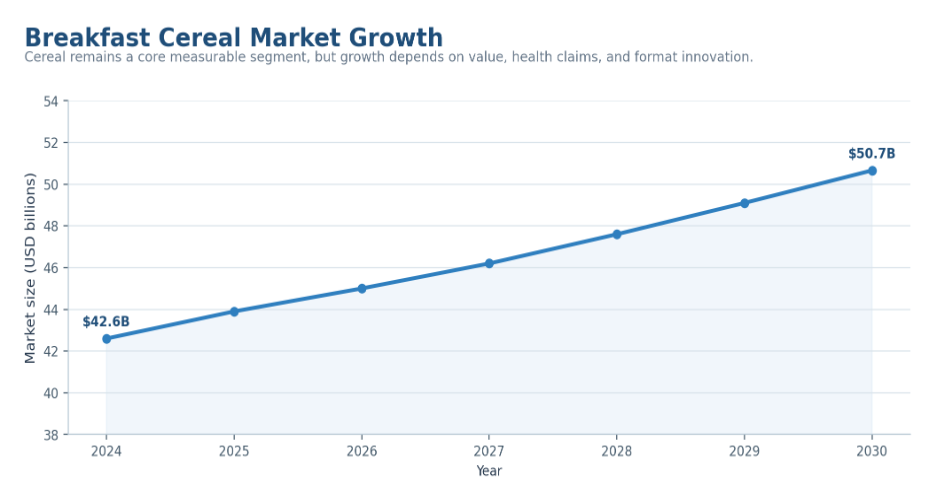
Figure 2. Breakfast cereal market growth should be read with private-label pressure, sugar expectations, and wellness-led cereal innovation.
| Segment | Demand signal | Business implication |
|---|---|---|
| Ready-to-eat cereal | Pantry staple | Defend frequency and value |
| Hot cereal and oats | Health and affordability | Fiber and whole-grain claims |
| Children’s cereal | Family routine | Balance taste, sugar, and nutrition |
| Granola and muesli | Premium wellness | Support higher price tiers |
| Private-label cereal | Value pressure | Challenge branded margins |
Cereal readout
Cereal remains important, but brands must compete with sugar concerns, private label, snackable formats, wellness-led alternatives, and changing breakfast routines. The strongest cereal strategy treats the category as pantry, snack, nutrition, and family convenience at the same time.
Bakery and Bread-Based Breakfast Statistics
Bakery and bread-based foods are central to breakfast in many markets. Bread, toast, croissants, pastries, bagels, muffins, breakfast sandwiches, and frozen bakery products all serve the morning occasion, but their commercial logic changes by channel.
In Europe, breakfast is often connected to bread, bakery, oats, coffee, dairy, and lighter morning foods. In North America, bakery breakfast overlaps more heavily with bagels, muffins, packaged bread, and breakfast sandwiches. In Latin America, bakery and coffee routines can be more important than cereal in everyday breakfast behavior.
Breakfast sandwiches connect bakery with foodservice and convenience retail. They allow QSRs and convenience stores to sell a hot, portable, filling breakfast item that pairs well with coffee and value bundles.
• Bread and toast remain routine breakfast products because they are familiar, low-cost, and versatile.
• Croissants and pastries support café and bakery occasions where freshness and premium perception matter.
• Bagels and muffins work as portable breakfast products in retail, cafés, and foodservice.
• Frozen bakery and ready-to-bake products support at-home convenience and weekend breakfast routines.
| Product | Demand role | Main channel |
|---|---|---|
| Bread and toast | Daily routine | Grocery and bakery |
| Croissants | Café and bakery occasion | Cafés and bakeries |
| Bagels and muffins | Portable breakfast | Retail and foodservice |
| Breakfast sandwiches | Convenience meal | QSR and convenience stores |
| Frozen bakery | At-home convenience | Grocery freezer aisle |
Bakery readout
Bakery breakfast is channel-specific. A packaged bread product, café pastry, and QSR breakfast sandwich may serve the same morning occasion, but they behave like different markets because freshness, speed, price, labor, and location all change the business model.
Frozen and Ready-to-Eat Breakfast Food Statistics
Frozen and ready-to-eat breakfast products are where time pressure becomes visible. Families, students, workers, and commuters need breakfast products that can be prepared quickly, eaten without much planning, and bought repeatedly without high friction.
Frozen waffles, pancakes, French toast, breakfast sandwiches, burritos, and microwave-ready meals compete directly with cereal, bakery, yogurt, and QSR breakfast. Their advantage is that they can deliver a fuller meal while still reducing preparation time.
• Frozen waffles solve family breakfast speed and work well in multipacks.
• Frozen breakfast sandwiches compete with QSR by offering a hot full meal at home.
• Breakfast burritos and bowls serve portable and filling morning occasions.
• Instant oatmeal and ready-to-eat cereal win when affordability and convenience matter together.
• Yogurt cups and bars win when no-prep and portability are more important than a hot meal.
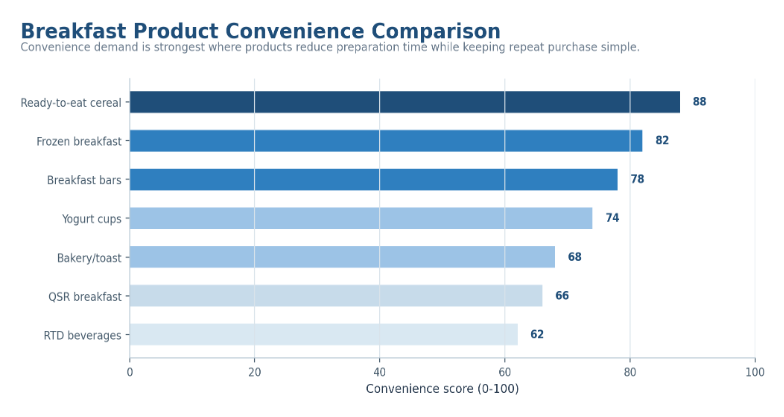
Figure 3. Breakfast convenience should be compared by preparation time, portability, repeat purchase, and whether the product can replace a full morning meal.
| Product | Consumer problem solved | Market implication |
|---|---|---|
| Frozen waffles | Fast family breakfast | Supports multipacks |
| Breakfast sandwiches | Full meal quickly | Competes with QSR |
| Breakfast burritos | Portable hot meal | Strong convenience appeal |
| Instant oatmeal | Low-cost quick prep | Supports health and value |
| Yogurt cups | No-prep nutrition | Supports dairy and protein demand |
| Breakfast bars | Portable meal | Competes with snacks |
Convenience readout
Conenience products win when they reduce preparation time without compromising taste, nutrition, or price. The strongest breakfast products feel fast without feeling like a lower-quality substitute.
Dairy, Yogurt, Protein, and Better-for-You Breakfast Statistics
Health-led breakfast is not one category. It includes yogurt, Greek yogurt, eggs, protein drinks, bars, oats, fortified cereal, smoothies, dairy beverages, plant-based alternatives, and higher-fiber grain products. These products compete because they promise a better start to the day without requiring complicated preparation.
Protein has become one of the most visible breakfast claims because it fits yogurt, eggs, bars, shakes, cereal extensions, and frozen meals. Fiber and whole grain support oats, cereal, bread, and granola. Lower sugar is especially important for cereal, yogurt, drinks, and children’s breakfast products.
• Yogurt works as both breakfast and snack, which gives it more than one consumption occasion.
• Greek yogurt supports protein and satiety positioning.
• Eggs remain a strong protein breakfast but depend on price and preparation time.
• Plant-based alternatives serve lifestyle and dietary segments but must compete on taste and price.
• Fortified breakfast products support children, families, and wellness-led positioning.
| Nutrition signal | Product response | Market implication |
|---|---|---|
| Protein | Yogurt, eggs, bars | Supports premium demand |
| Lower sugar | Cereal and yogurt reformulation | Reduces health concerns |
| Fiber and whole grain | Oats, cereal, bread | Supports wellness messaging |
| Fortification | Children’s breakfast | Supports family positioning |
| Plant-based | Dairy alternatives | Serves lifestyle segments |
Nutrition readout
Health-led breakfast grows fastest when it remains familiar, affordable, and easy to repeat. Nutrition can lift pricing power, but only when convenience and taste remain strong.
Breakfast Bars, Snacks, and On-the-Go Statistics
On-the-go breakfast is one of the clearest signs that breakfast is becoming an occasion rather than a strict meal format. Breakfast bars, granola bars, protein bars, meal replacement shakes, ready-to-drink coffee, yogurt pouches, fruit cups, and convenience-store foods all capture rushed mornings.
This segment matters because breakfast skipping often creates a later purchase instead of no purchase. A consumer who does not eat cereal at home may still buy coffee on the way to work, a protein bar at the office, or yogurt after arrival. The revenue shifts from home preparation to portable formats.
• Breakfast bars bridge breakfast and snacking because they are portable, shelf-stable, and easy to price.
• Protein bars compete with sports nutrition and meal replacement.
• Ready-to-drink coffee can act as a breakfast purchase when paired with bakery, bars, or sandwiches.
• Yogurt pouches and fruit cups support students, travel, and portion-controlled eating.
| Format | Use case | Key metric |
|---|---|---|
| Breakfast bars | Rushed mornings | Repeat purchase |
| Protein bars | Fitness and convenience | Premium price |
| Meal replacement shakes | Portable meal | Satiety and nutrition |
| RTD coffee | Beverage-led breakfast | Attach rate |
| Yogurt pouches | Kids and travel | Convenience and portioning |
On-the-go readout
On-the-go breakfast proves that breakfast statistics should include snack-like formats, not only traditional meals. This is where food brands must compare breakfast with snacking, beverages, and convenience retail.
Foodservice and QSR Breakfast Statistics
Foodservice breakfast operates differently from packaged breakfast because the main asset is repeat morning traffic. QSRs, cafés, bakery chains, coffee shops, and convenience stores use breakfast to build routine visits and increase beverage attachment.
Breakfast sandwiches are central to this model because they are portable, filling, familiar, and easy to bundle with coffee. Drive-thru, mobile ordering, and convenience-store hot food programs strengthen the speed advantage. Cafés use bakery, coffee, and premium seating occasions to win different breakfast customers.
• QSR breakfast depends on speed, value, and operational consistency.
• Coffee and breakfast pairing improves basket value and repeat behavior.
• Convenience stores compete through location, hot food, coffee, and fast checkout.
• Cafés win when bakery quality, beverage quality, and environment justify higher prices.
• Delivery and mobile ordering can expand breakfast access but may add margin pressure.
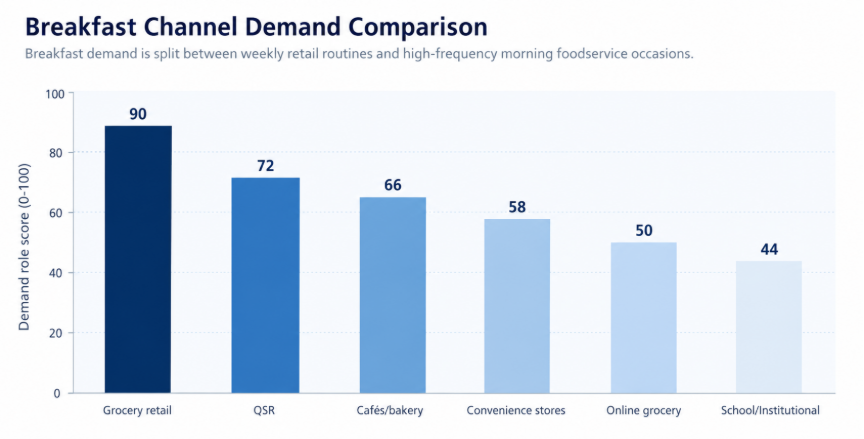
Figure 4. Breakfast channel demand should be read by repeat purchase, speed, convenience, and whether the channel owns the morning routine.
| Channel | Breakfast role | Business implication |
|---|---|---|
| Grocery retail | Weekly repeat purchase | Supports pantry and frozen items |
| QSR | Fast hot breakfast | Builds morning traffic |
| Cafés | Beverage and bakery | Supports premium routine |
| Convenience stores | Speed and location | Captures commuters |
| Online grocery | Stock-up behavior | Supports repeat baskets |
| School and institutional | Access and routine | Supports volume demand |
Foodservice readout
Foodservice breakfast is a repeat-traffic strategy. Profitability depends on speed, beverage attachment, labor control, menu simplicity, and price perception.
Retail and Online Grocery Breakfast Statistics
Retail remains the core channel for many breakfast categories because consumers buy cereal, oats, bread, yogurt, eggs, frozen breakfast, coffee, bars, and milk in repeat baskets. A strong breakfast category is valuable to retailers because it can support weekly planning, household penetration, and store loyalty.
Private label is especially important in breakfast because the products are easy to compare. Store-brand cereal, oats, bread, yogurt, and frozen breakfast can pressure branded products when shoppers become more price-sensitive.
• Supermarkets remain central because breakfast items sit across pantry, dairy, bakery, and frozen aisles.
• Club stores support bulk cereal, multipacks, and family pantry demand.
• Discount retailers gain importance when households trade down.
• Promotions influence cereal and frozen breakfast because consumers can delay or switch purchases.
• Shelf placement and online search placement shape discovery in mature categories.
| Retail signal | What to compare | Why it matters |
|---|---|---|
| Private-label share | Brand vs value | Trade-down risk |
| Promotion intensity | Full price vs deal | Margin pressure |
| Shelf space | Category visibility | Supports discovery |
| Online basket attach | Breakfast in repeat carts | Habit strength |
| Multipack sales | Family and value demand | Supports bulk strategy |
Retail readout
Retail breakfast strategy depends on routine. Products must be visible, affordable, repeatable, and easy to add to weekly baskets. Retailers should read breakfast across pantry, dairy, bakery, frozen, and beverage aisles rather than inside one shelf set.
Regional Breakfast Food Market Intelligence
North America
North America is a mature breakfast market where cereal, frozen breakfast, yogurt, protein products, QSR breakfast, coffee, convenience stores, and grocery retail all matter. Growth is less about introducing breakfast and more about defending routine, value, health claims, and speed.
• Cereal and frozen breakfast are mature, so brands must defend value and frequency.
• QSR breakfast competes for morning routine through coffee, sandwiches, and speed.
• Protein-led products and private label both influence premium and value strategy.
Europe
Europe is strongly shaped by bread, bakery, oats, muesli, cereal, dairy, coffee, and country-specific breakfast traditions. Sugar reduction, quality perception, private label, and premium bakery formats matter more than in a simple cereal-only reading.
• Bread and bakery habits shape breakfast more strongly than in many cereal-led markets.
• Oats, muesli, granola, and cereal compete with bakery and dairy.
• Health expectations, sugar reduction, and quality claims affect product positioning.
Asia-Pacific
Asia-Pacific offers strong growth potential because urbanization, modern retail, younger consumers, and packaged-food adoption are changing morning routines. The challenge is that traditional breakfasts remain important, so packaged brands must fit local tastes and price points.
• Urban consumers are more open to packaged and convenience breakfast products.
• China and India offer scale but require local flavor, price, and channel adaptation.
• Modern retail and e-commerce can accelerate packaged breakfast adoption.
Latin America
Latin America often connects breakfast with bread, bakery, dairy, coffee, affordability, and local habits. Packaged breakfast can grow through modern retail, but value and cultural fit remain critical.
• Affordability and local breakfast habits shape adoption.
• Modern retail can expand packaged breakfast visibility.
• Bakery, coffee, dairy, cereal, and convenience products must be localized.
Middle East and Africa
Middle East and Africa markets vary widely, but younger populations, urbanization, value-led shopping, bakery, cereal, and packaged foods create selected opportunities. Affordability and distribution are more important than premium positioning in many markets.
• Affordability and local breakfast habits shape adoption.
• Modern retail can expand packaged breakfast visibility.
• Bakery, coffee, dairy, cereal, and convenience products must be localized.
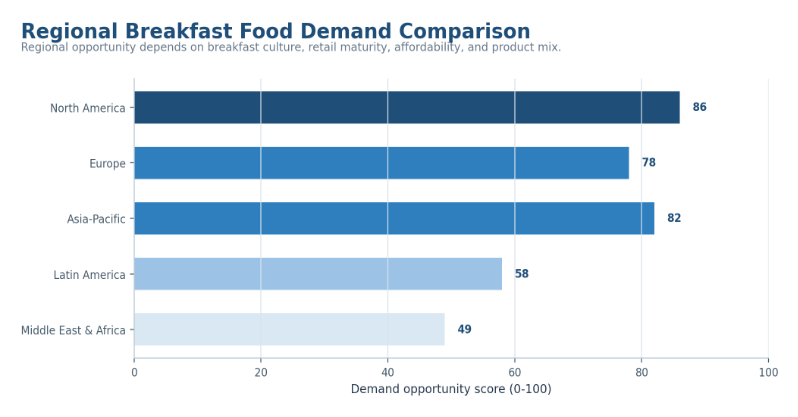
Figure 5. Regional breakfast food demand should be read by meal culture, retail maturity, affordability, and product format rather than by market size alone.
| Region | Breakfast market signal | Planning implication |
|---|---|---|
| North America | Mature packaged and QSR breakfast | Compete on value and convenience |
| Europe | Bakery, oats, cereal, health | Localize around breakfast culture |
| Asia-Pacific | Urban growth and packaged adoption | Balance local meals with convenience |
| Latin America | Bakery, dairy, coffee | Use affordability and modern retail |
| Middle East and Africa | Young, urban, value-led markets | Build accessible packaged options |
Regional readout
Regional averages can hide the real market signal. Breakfast food must be localized by meal culture, retail maturity, income, channel, and product format.
Country-Level Breakfast Food Statistics
A large economy does not automatically mean high cereal share, and a mature grocery market does not automatically mean weak bakery or café demand. The country scorecard should separate scale, product fit, channel strength, and breakfast habit. This is especially important for companies deciding where to launch packaged cereal, frozen breakfast, bars, yogurt products, bakery items, or foodservice breakfast offers.
| Country | Breakfast demand signal | Market implication |
|---|---|---|
| United States | Cereal, frozen, QSR, protein | Mature but format-diverse |
| Canada | Cereal and grocery demand | Retail-led opportunity |
| United Kingdom | Cereal, oats, bakery | Strong pantry and convenience mix |
| Germany | Bread, muesli, cereal | Bakery and wellness balance |
| France | Bakery and breakfast beverages | Premium bakery and café culture |
| China | Packaged breakfast growth | Modern retail opportunity |
| India | Urban convenience and cereal | Emerging packaged demand |
| Japan | Convenience-store breakfast | Ready-to-eat opportunity |
| Brazil | Bakery, dairy, coffee | Local habit-led growth |
| Mexico | Bread, cereal, convenience retail | Value and convenience mix |
| South Africa | Affordability and cereal | Value-led packaged demand |
| Australia | Cereal, oats, café culture | Mature breakfast routines |
Country readout
Country data should separate scale from culture. Some markets have strong packaged potential while still relying on traditional breakfasts, bakeries, cafés, or convenience stores. The best country plan starts with breakfast behavior, then adds channel and price strategy.
Consumer Behavior and Breakfast Skipping Statistics
Consumer behavior is where breakfast food statistics become practical. The market does not move only because people eat or skip breakfast. It moves because consumers change when they eat, where they buy, what they define as breakfast, and how much preparation they will accept.
Adults often treat breakfast as a routine or productivity choice. Children and teens are more tied to household routines, school schedules, and parental purchase decisions. Students and working adults are more exposed to skipping, delaying, coffee-led breakfast, bars, convenience stores, and desk meals.
• Daily breakfast behavior supports repeat pantry, dairy, bakery, and frozen purchases.
• Skipping breakfast supports portable formats when the consumer still buys something later.
• On-the-go eating supports packaging, convenience stores, QSR, cafés, bars, and beverages.
• Health-led choices support protein, fiber, fortified products, and lower-sugar reformulation.
• Family breakfast supports cereal, oats, frozen waffles, bread, yogurt, milk, and eggs.
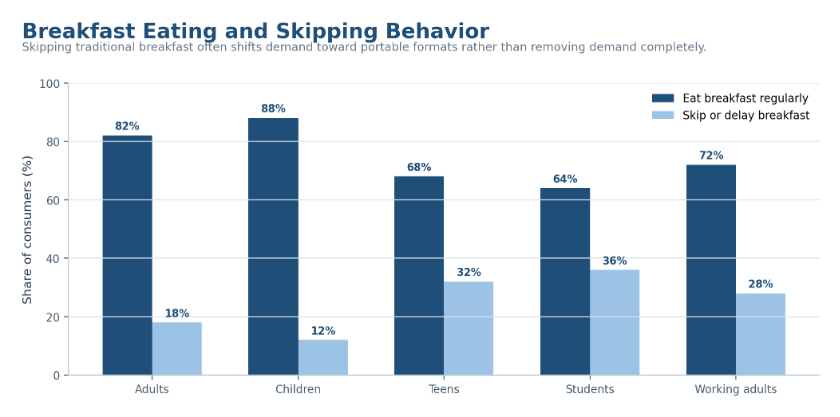
Figure 6. Breakfast eating and skipping behavior should be read as a format shift because skipped breakfasts can turn into coffee, bars, yogurt, protein drinks, or later-morning snacks.
| Behavior signal | What it means | Business implication |
|---|---|---|
| Daily breakfast | Strong routine | Repeat purchase |
| Skipping breakfast | Meal occasion shift | Bars, coffee, snacks |
| On-the-go eating | Time pressure | Portable formats |
| Health-led choices | Nutrition demand | Protein and fiber claims |
| Family breakfast | Household routine | Cereal, oats, frozen |
| Workday breakfast | Speed matters | QSR and convenience |
Behavior readout
Breakfast skipping changes the category rather than eliminating it. Many consumers still buy coffee, bars, yogurt, protein drinks, snacks, or later-morning foods. The practical question is not only whether breakfast is eaten, but what product format captures the occasion.
Health, Nutrition, and Label Claim Statistics
Nutrition claims are now central to breakfast strategy because the meal is closely linked with energy, fullness, family health, and daily routine. Protein, fiber, whole grain, lower sugar, fortification, plant-based alternatives, gluten-free options, and clean-label claims all influence positioning.
The challenge is that breakfast is also price-sensitive and convenience-led. A product cannot rely on nutrition alone if it is too expensive, slow to prepare, or unfamiliar. The strongest better-for-you breakfast products combine a recognizable eating occasion with a credible health benefit.
• Protein claims support yogurt, bars, eggs, shakes, and premium cereal extensions.
• Whole grain and fiber claims support oats, cereal, bread, and granola.
• Lower sugar matters in cereal, yogurt, beverages, and children’s breakfast products.
• Fortified products support family and children’s nutrition messaging.
• Plant-based breakfast products must compete on taste, price, and familiarity.
| Claim type | Product category | Market risk/opportunity |
|---|---|---|
| High protein | Yogurt, bars, eggs | Premium demand |
| Low sugar | Cereal, yogurt, drinks | Health trust |
| Whole grain | Cereal, oats, bread | Family and wellness appeal |
| High fiber | Oats and cereal | Functional benefit |
| Fortified | Children’s breakfast | Family nutrition |
| Plant-based | Dairy alternatives | Lifestyle segment |
| Clean label | Premium packaged foods | Trust and price premium |
Nutrition readout
Nutrition is a growth lever only when it fits taste, price, and convenience expectations. In breakfast, a better label must still serve a fast, repeatable, and familiar morning routine.
Breakfast Food Pricing, Inflation, and Private Label
Pricing pressure matters more in breakfast than in many occasional food categories because households see breakfast prices repeatedly. Cereal, bread, dairy, coffee, eggs, frozen waffles, yogurt, and bars are familiar basket items, so price changes are easier to notice.
When inflation increases household pressure, shoppers can trade down from branded cereal to private label, from café breakfast to home breakfast, from premium bars to multipacks, or from single-serve convenience to bulk pantry items. That makes value architecture central to breakfast strategy.
• Food inflation raises trade-down risk in high-frequency breakfast products.
• Cereal price increases can trigger private-label switching when shelf comparisons are easy.
• Promotion dependence can drive volume while weakening margin discipline.
• Bulk packs and family packs support value perception.
• Discount retail affects breakfast brand mix when households prioritize lower-cost baskets.
| Pricing pressure | Consumer response | Brand implication |
|---|---|---|
| Food inflation | Trade-down risk | Defend value |
| Cereal price increases | Private-label switching | Watch price gaps |
| Promotion dependence | Deal-seeking behavior | Protect margins |
| Bulk packs | Value shopping | Support families |
| Premium health products | Selective spending | Prove nutrition value |
| Discount retail | Lower-cost baskets | Adjust pack and price |
Pricing readout
Breakfast is high-frequency, so price changes are easy for households to notice. Brands must defend value through taste, convenience, portion size, trusted routines, and credible nutrition.
Breakfast Food Forecasts to 2030 and Beyond
The next stage of breakfast food growth will be shaped by convenience, health, price, and channel mix. The global market forecast through 2031 shows steady expansion, but the internal mix will keep changing as consumers move between cereal, bakery, frozen breakfast, yogurt, bars, beverages, retail, and foodservice.
Cereal is likely to remain resilient but mature. Frozen breakfast and ready-to-eat products should continue benefiting from speed. Protein products should remain attractive where consumers want satiety and wellness. Bakery breakfast will stay important where local culture supports bread, pastries, and café routines.
• Global breakfast food should keep expanding through 2031 as routine and convenience remain strong.
• Breakfast cereal should remain resilient through 2030 but must defend value and relevance.
• Frozen breakfast should benefit from time pressure and freezer innovation.
• Protein breakfast should support premium demand when taste and affordability are protected.
• Foodservice breakfast should remain a traffic opportunity for QSRs, cafés, and convenience stores.
| Market area | Expected direction | Planning implication |
|---|---|---|
| Global breakfast food | Steady growth | Use category-level scorecard |
| Breakfast cereal | Mature but resilient | Defend value and health |
| Frozen breakfast | Convenience growth | Build freezer visibility |
| Bakery breakfast | Habit-led demand | Localize by culture |
| Protein breakfast | Premium growth | Support wellness claims |
| Retail channel | Repeat purchase | Protect shelf and price |
| Foodservice breakfast | Traffic opportunity | Bundle with beverages |
| Asia-Pacific | Fastest opportunity | Adapt to local routines |
Outlook readout
Future growth will depend on where people buy breakfast, how quickly they prepare it, what nutrition they expect, and whether brands can hold value. The market will reward teams that connect category forecasts to product, channel, and country-level decisions.
Product Mix and Channel Strategy Interpretation
Breakfast food planning becomes clearer when the category is divided into product mix and channel strategy. A cereal company, frozen breakfast supplier, bakery brand, yogurt company, QSR chain, and convenience-store operator may all use the same headline market size, but the operating decisions are different. Cereal needs shelf defense and household repeat. Frozen breakfast needs freezer visibility and preparation confidence. Bakery needs freshness, location, and daypart appeal. Yogurt and protein products need nutrition credibility. QSR breakfast needs speed, value, and beverage attachment.
The first product-mix question is whether the brand is selling a routine staple or a replacement occasion. Cereal, oats, bread, milk, eggs, and yogurt usually behave like repeat household staples. Frozen sandwiches, breakfast burritos, bars, ready-to-drink beverages, and QSR breakfast often behave like problem-solving formats. They are chosen when the consumer has less time, wants more portability, or wants an alternative to cooking.
• Retail breakfast teams should track household penetration, repeat purchase, price gap, private-label share, and shelf visibility.
• Foodservice breakfast teams should track morning traffic, beverage attachment, service time, bundle performance, and labor efficiency.
• Packaged breakfast teams should track product format, preparation time, health claim performance, and promotional dependency.
• Regional teams should track whether local breakfast culture favors cereal, bakery, dairy, hot meals, cafés, or convenience stores.
Strategy readout
The practical value of breakfast food statistics is not the headline market number alone. The value comes from matching each statistic to a decision: what product to launch, where to sell it, how to price it, which claim to use, and which region or country needs a localized offer.
Brand, Retailer, and Foodservice Implications
For packaged-food brands, the key implication is that breakfast innovation should not be limited to flavor extensions. Stronger innovation connects product format with a consumer problem. A cereal launch can focus on lower sugar, whole grain, fiber, family value, or adult wellness. A frozen breakfast launch can focus on protein, speed, portion size, handheld convenience, or family multipacks. A yogurt or bar launch can focus on satiety, portability, and repeatable nutrition.
For retailers, breakfast is valuable because it cuts across several aisles. A full breakfast strategy includes cereal, oats, bakery, dairy, eggs, coffee, frozen foods, bars, fruit, beverages, and private label. Retailers should not treat breakfast as one shelf. The opportunity is to build baskets: cereal with milk, coffee with bakery, yogurt with granola, frozen waffles with syrup, and bars with ready-to-drink beverages.
For QSRs and cafés, breakfast is a daypart strategy. The strongest breakfast operators make the morning decision easy. They reduce friction through menu simplicity, bundles, drive-thru speed, mobile ordering, coffee quality, and consistent sandwich execution. The challenge is that breakfast can be labor-sensitive, so growth must be balanced with operational simplicity.
• Brands should defend everyday value while using health claims selectively where consumers will pay more.
• Retailers should use breakfast to build repeat baskets instead of treating categories in isolation.
• QSRs should focus on speed, coffee attachment, and simple bundles rather than oversized menus.
• Convenience stores should treat breakfast as a fast mission with hot food, coffee, bakery, and portable packaged products.
• Country teams should localize breakfast around actual habits rather than copying a cereal-led or café-led model from another region.
Execution readout
Breakfast food statistics become more useful when they are translated into execution. The best teams ask whether the market signal changes the shelf, the freezer, the menu, the bundle, the pack size, the price point, the claim, or the country strategy.
Breakfast Food Market Diagnostic
A practical diagnostic keeps the article from becoming a stat dump. Each metric should answer a business question: where is demand growing, which product formats are gaining, which channels are winning, where is price pressure strongest, and how does breakfast behavior change by country or consumer group?
| Problem area | Core signals to measure | Useful benchmark type |
|---|---|---|
| Market demand | Category growth, household penetration | Market size and CAGR |
| Product mix | Cereal, bakery, frozen, dairy, bars | Category share |
| Convenience demand | Prep time, portability, ready-to-eat use | On-the-go behavior |
| Health positioning | Protein, sugar, fiber, fortification | Claim performance |
| Pricing pressure | Price gaps, private label, promotions | Value switching |
| Channel mix | Grocery, QSR, convenience, online | Channel share |
| Regional demand | Country habits, retail maturity | Regional scorecard |
Diagnostic readout
The diagnostic helps teams turn statistics into decisions. A market-size number tells scale, but it does not tell whether to launch frozen breakfast, reformulate cereal, expand private label, invest in cafés, or localize for Asia-Pacific.
90-Day Breakfast Food Market Benchmark Plan
A 90-day benchmark plan gives teams a practical way to organize the breakfast category without overbuilding a data program. The goal is to move from category scale to actionable product, channel, and regional priorities.
| Timing | What to do | Output |
|---|---|---|
| Days 1–30 | Build baseline by region, country, product category, channel, price tier, and consumer segment | Market demand map |
| Days 31–60 | Compare cereal, bakery, frozen, dairy, bars, beverages, QSR, and online grocery | Category and channel opportunity view |
| Days 61–90 | Review health claims, pricing, private label, regional forecasts, and product gaps | Breakfast scorecard |
Planning principle
The best teams compare external statistics against real category questions: where breakfast is growing, where consumers are trading down, where convenience is winning, and where nutrition claims support premium demand.
Metrics Breakfast Food Market Leaders Should Track
The final scorecard should be detailed enough to find the signal without becoming a vanity dashboard. Breakfast market teams should connect demand, product mix, consumer behavior, price, channel, and geography.
| Metric | Why it matters |
|---|---|
| Market size | Category scale |
| CAGR | Future demand |
| Category growth | Winning formats |
| Household penetration | Routine strength |
| Breakfast consumption frequency | Habit stability |
| Breakfast skipping rate | Meal-format shift |
| Average selling price | Value pressure |
| Private-label share | Trade-down risk |
| Promotion dependency | Margin pressure |
| Online grocery share | Basket behavior |
| Foodservice breakfast traffic | Morning demand |
| Repeat purchase rate | Product stickiness |
| Health-claim performance | Premium potential |
| Regional growth rate | Geographic opportunity |
Scorecard readout
The scorecard should connect market size, product mix, behavior, pricing, channel, and regional demand. It should show where to invest, not just where to report.
Operational Questions for Breakfast Food Teams
Before a brand commits to a breakfast launch, the data should be translated into operating questions. The first question is whether the product solves a real morning problem. A product that is healthy but slow may struggle. A product that is fast but expensive may lose routine shoppers. A product that is affordable but not differentiated may compete directly with private label. The winning offer must match the consumer’s time, budget, taste, and nutrition expectation.
The second question is whether the channel supports the product promise. A frozen breakfast sandwich needs freezer visibility and clear preparation instructions. A breakfast bar needs portability and shelf placement near routine grab-and-go missions. A yogurt product needs cold-chain reliability and repeat visibility. A QSR breakfast item needs speed and menu simplicity. A café product needs quality cues and beverage pairing.
• Product teams should ask whether the breakfast item saves time, improves nutrition, lowers cost, or creates a better routine.
• Retail teams should ask whether breakfast products are building baskets across pantry, dairy, bakery, frozen, and beverages.
• Foodservice teams should ask whether breakfast items increase morning traffic without adding too much labor complexity.
• Regional teams should ask whether the product fits local breakfast behavior before copying a format from another country.
Operational readout
The best breakfast market analysis ends with action. A statistic should help a team decide what to launch, where to sell, how to price, which claim to use, which channel to prioritize, and which country requires localization.
Breakfast Food Market Statistics FAQ
How big is the global breakfast food market?
The global breakfast food market is estimated at USD 214.05 billion in 2025 and is forecast to reach USD 276.81 billion by 2031. The important point is that the market includes cereal, bakery, frozen breakfast, dairy, bars, beverages, retail, and foodservice rather than one narrow product type.
Is breakfast cereal still growing?
Yes, cereal remains a large and trackable segment, with the global breakfast cereal market forecast near USD 50.66 billion by 2030. Growth depends on value, private-label competition, lower sugar, whole grain, fiber, and premium wellness positioning.
Which breakfast food categories are growing fastest?
The strongest growth signals come from convenience-led and health-led products such as frozen breakfast, ready-to-eat formats, yogurt, protein products, bars, and portable beverages. These categories benefit when consumers want speed without fully giving up nutrition or taste.
Why are frozen and ready-to-eat breakfast foods growing?
They solve the time-pressure problem. Frozen waffles, breakfast sandwiches, burritos, instant oatmeal, yogurt cups, bars, and ready-to-drink products give consumers a way to eat quickly without building a meal from scratch.
Which region has the strongest breakfast food growth?
Asia-Pacific has one of the strongest growth signals because of urbanization, modern retail, packaged-food adoption, and changing routines in countries such as China and India. North America and Europe remain large, but their growth is more tied to innovation, value, and category mix.
How does breakfast skipping affect the market?
Breakfast skipping does not always reduce the opportunity. It often shifts demand toward coffee, bars, yogurt, protein drinks, convenience-store foods, snacks, and later-morning purchases.
What metrics matter most for breakfast food brands?
Brands should track market size, CAGR, category growth, household penetration, breakfast frequency, skipping rate, private-label share, average selling price, promotion dependence, repeat purchase, and channel performance. Country and regional metrics are also essential because breakfast habits differ sharply by market.
Final Takeaway
Breakfast food statistics point to one conclusion: breakfast remains a large, repeat-driven market, but growth is shifting by format, channel, region, and consumer routine. Cereal, oats, bakery, frozen breakfast, yogurt, protein products, bars, coffee, cafés, QSR breakfast, convenience stores, and online grocery all compete for the same high-frequency morning occasion.
The winning strategy is specific: use the numbers as a benchmark, then read them through product format, price position, private-label pressure, nutrition claims, regional habits, and repeat purchase behavior.