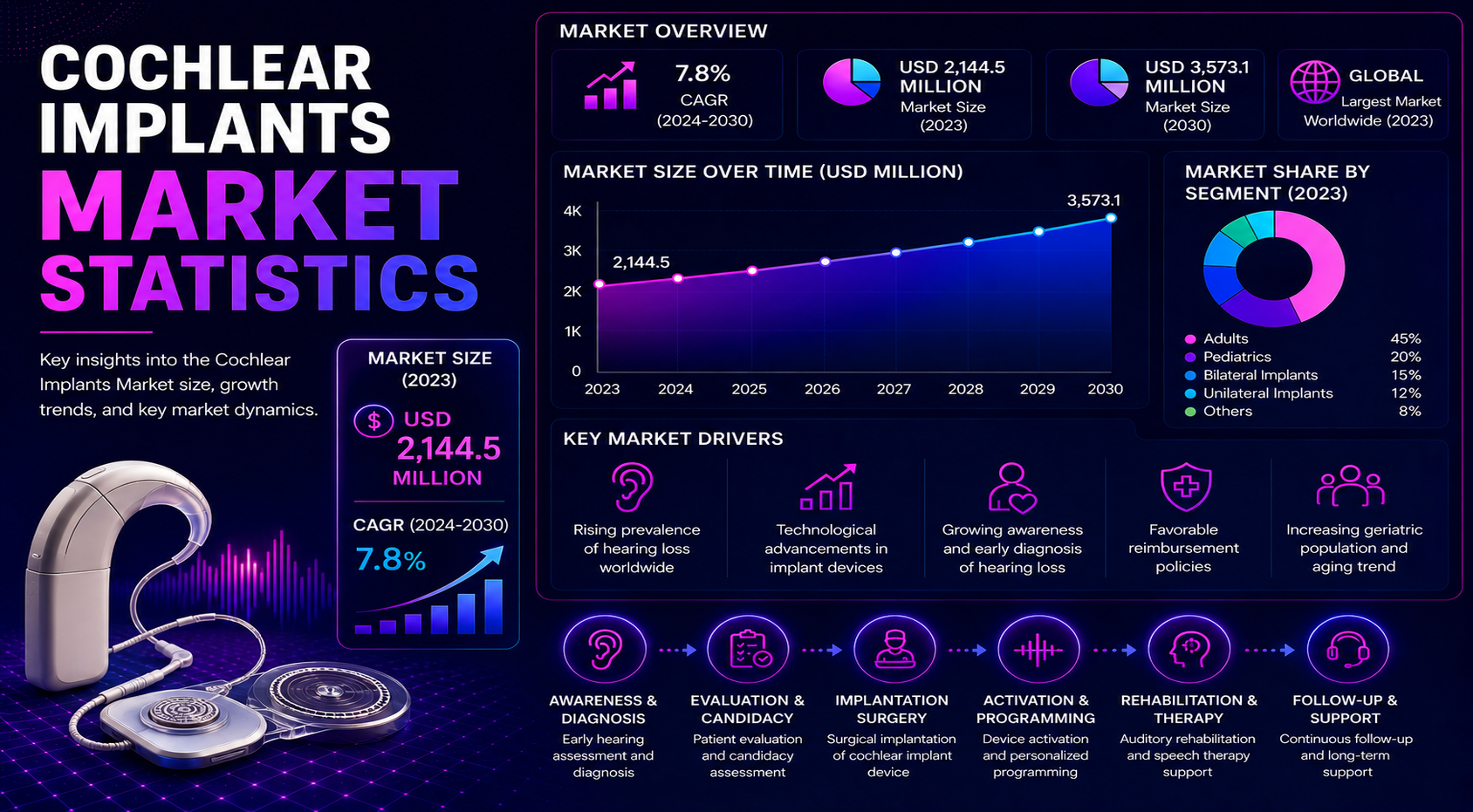
Cochlear implants sit at the intersection of hearing-care demand, surgical access, medical-device innovation, reimbursement policy, and long-term rehabilitation. The market is shaped not only by device revenue, but by how many people are screened, referred, evaluated, implanted, mapped, and supported after surgery. That makes cochlear implantation a care pathway, not only a product category.
The strongest market numbers show why cochlear implants deserve their own benchmark report. Global market estimates place cochlear implants at USD 2.80 billion in 2024 with a path toward USD 4.73 billion by 2030. At the same time, WHO estimates that more than 430 million people need rehabilitation for disabling hearing loss today and more than 700 million may need it by 2050. NIDCD reports more than 1 million cochlear implants worldwide as of 2022, with about 118,100 U.S. adults and 65,000 U.S. children implanted.
Executive Cochlear Implant Benchmarks
These are the statistics that frame the article. They show the scale of hearing-loss need, the commercial size of the implant market, the installed base of implant recipients, and the difference between potential clinical need and actual access.
The numbers that define the cochlear implant market
• MarketsandMarkets values the global cochlear implants market at USD 2.80 billion in 2024, up from USD 2.58 billion in 2023.
• The same forecast projects the global cochlear implants market will reach USD 4.73 billion by 2030, implying a 9.2% CAGR from 2025 to 2030.
• Grand View Research estimates the U.S. cochlear implants market at USD 627.7 million in 2023 and USD 659.8 million in 2024.
• The U.S. market is projected to reach USD 940.1 million by 2030 at a 6.08% CAGR from 2024 to 2030.
• WHO reports that more than 430 million people require rehabilitation for disabling hearing loss worldwide.
• WHO projects that more than 700 million people will require hearing rehabilitation by 2050 if access does not improve.
• WHO also reports that 95.1 million children aged 5–19 years live with hearing loss worldwide, showing why pediatric access matters.
• NIDCD reports more than 1 million cochlear implants worldwide as of July 2022.
• NIDCD estimates about 118,100 U.S. adults had received cochlear implants as of 2022.
• NIDCD estimates about 65,000 U.S. children had received cochlear implants as of 2022.
• About 2 to 3 out of every 1,000 U.S. children are born with a detectable level of hearing loss in one or both ears.
• Approximately 15% of American adults, or 37.5 million people, report some trouble hearing.
• Asia-Pacific is repeatedly identified as one of the highest-growth regions because large patient pools meet rising healthcare spending and expanding specialist capacity.
• Published access research has estimated global cochlear implant access at only about 2.5% of profoundly deaf individuals, showing how large the under penetration gap remains.
• Even in high-income countries, some access research places cochlear implant uptake among profoundly deaf individuals at 20% or less, making adult referral and access a major opportunity.
Editorial readout
The cochlear implant market should not be judged only by revenue. A stronger scorecard combines hearing-loss burden, candidacy identification, referral rates, procedure access, reimbursement, mapping visits, pediatric follow-up, adult underutilization, and regional affordability. A market can look attractive by revenue while still leaving many eligible patients outside the care pathway.
Why Cochlear Implants Now Carry Global Hearing-Care Stakes
Cochlear implants matter because severe hearing loss is a global health issue, not only a device-sales opportunity. The market expands when people with severe-to-profound hearing loss are identified early, referred to implant teams, approved for coverage, and supported through activation and rehabilitation. If any part of that pathway is weak, market demand remains hidden even when the clinical need is large.
The public-health context is especially important for children and older adults. Children need early detection, family counseling, surgery, mapping, and speech-language support. Adults often need better referral from hearing aid pathways into implant candidacy evaluation. Older adults may also need transportation, caregiver support, insurance guidance, and follow-up support. These needs make cochlear implants a service ecosystem as much as a product market.
• WHO projects nearly 2.5 billion people will have some degree of hearing loss by 2050, creating a long-term hearing-care demand base.
• More than 700 million people may require hearing rehabilitation by 2050, so the implant market should be viewed inside a much larger hearing-care system.
• Unaddressed hearing loss creates a global cost burden that WHO places near USD 1 trillion annually, including health, education, and productivity effects.
• Children with hearing loss need early access because delayed diagnosis can affect language, education, and family support needs.
• Adults with progressive hearing loss often move through hearing aid care first, which makes referral and candidacy testing a critical market gate.
• Newborn hearing screening can increase early identification, but screening alone does not guarantee implantation without referral, reimbursement, and rehabilitation.
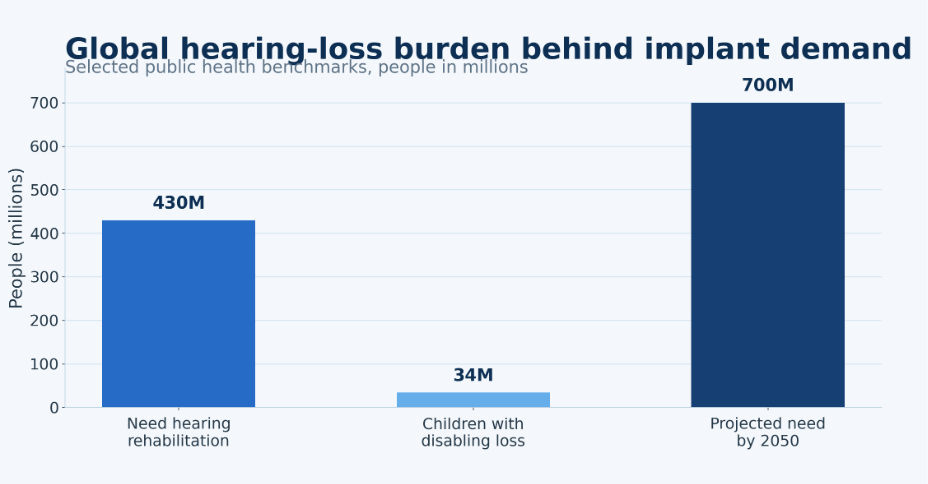
Figure 1. Hearing-loss burden shows why cochlear implant demand depends on both public-health need and access.
Global Cochlear Implants Market Size and Forecast
Market-size statistics show the commercial scale of cochlear implants, but they should be read alongside procedure access. Revenue can rise because of technology upgrades, mix shifts, bilateral implantation, or premium processors, while procedure volume may still be constrained by referral, reimbursement, or implant-center capacity.
Market-size and growth benchmarks
• The global cochlear implants market was valued at USD 2.58 billion in 2023.
• The market reached about USD 2.80 billion in 2024, showing continued momentum after the pandemic recovery period.
• Forecasts place the global market at USD 4.73 billion by 2030, representing a 9.2% CAGR from 2025 to 2030.
• Grand View Research places the broader global market at USD 2.28 billion in 2025 and projects USD 4.67 billion by 2033, using a 9.50% CAGR from 2026 to 2033.
• The U.S. cochlear implants market was valued at USD 627.7 million in 2023 and is expected to reach USD 659.8 million in 2024.
• The U.S. market is forecast to reach USD 940.1 million by 2030, indicating steady but lower growth than some emerging regions.
• Growth is supported by aging populations, higher diagnosis rates, broader candidacy, favorable reimbursement in high-income countries, and technology upgrades.
• Processor replacement and upgrade cycles create recurring demand beyond first-time implantation.
• Bilateral implantation can increase device demand when clinical guidelines, reimbursement, and family affordability support two-sided treatment.
• Emerging markets can expand faster than mature markets when public funding, specialist centers, and awareness improve together.
| Market signal | What to measure | Why it matters |
|---|---|---|
| Market size | Global revenue value | Commercial scale |
| CAGR | Forecast growth rate | Market momentum |
| Annual procedures | Implant surgeries by year | Real treatment access |
| Installed base | Recipients and devices in use | Upgrade and service opportunity |
| Reimbursement | Public and private coverage | Adoption potential |
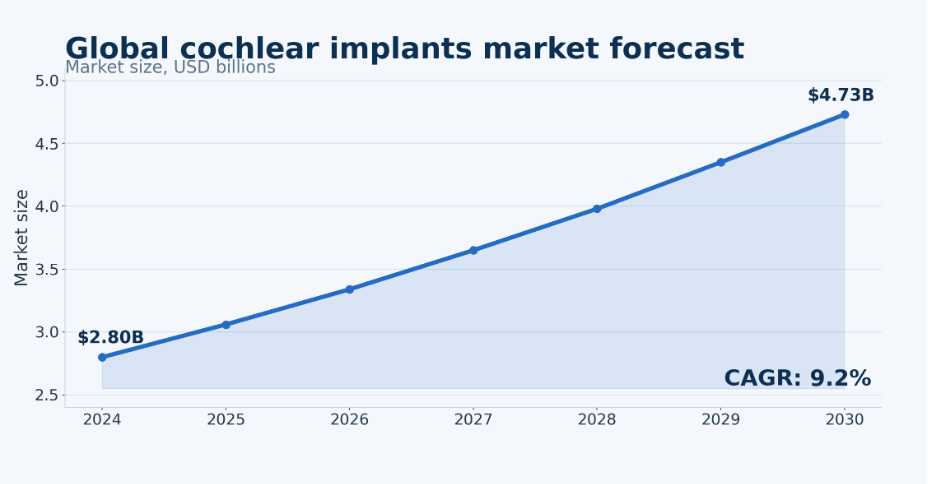
Figure 2. Global cochlear implant growth should be reviewed with forecast CAGR and access expansion.
Market-size interpretation
Market value is useful, but it does not show the whole market. The most practical reading compares revenue with procedure counts, installed-base growth, processor upgrades, reimbursement approvals, and country-level access. If revenue grows faster than procedures, leaders should ask whether mix, upgrades, bilateral adoption, or pricing is driving the change.
Hearing Loss Burden and Eligible Patient Pool
The patient pool is the foundation of cochlear implant demand. However, the eligible population is not the same as the implanted population. People must first be identified, tested, referred, evaluated, approved for coverage, and supported through surgery and post-surgical care. That is why hearing-loss burden statistics need to be paired with care-pathway data.
Hearing-loss burden benchmarks
• More than 430 million people require rehabilitation for disabling hearing loss worldwide.
• By 2050, more than 700 million people may require hearing rehabilitation, expanding the long-term addressable need for hearing-care services.
• WHO estimates nearly 2.5 billion people will have some degree of hearing loss by 2050.
• Around 95.1 million children aged 5–19 years live with hearing loss worldwide.
• In the United States, about 2 to 3 of every 1,000 children are born with detectable hearing loss in one or both ears.
• About 15% of American adults, or 37.5 million people, report some trouble hearing.
• More than 90% of deaf children are born to hearing parents, which increases the need for screening, counseling, and family education.
• Older adults represent a major demand group because hearing loss prevalence rises with age and may progress beyond conventional hearing-aid benefit.
• Low- and middle-income countries carry a large share of hearing-loss burden but often have lower access to implant centers, surgery, and rehabilitation.
• The access gap is not only a price problem; it includes awareness, testing capacity, referral systems, specialist availability, and long-term support.
| Burden signal | Market meaning |
|---|---|
| Disabling hearing loss | Broad rehabilitation need behind implant demand |
| Severe-to-profound hearing loss | Defines the closer potential implant-candidate pool |
| Children with hearing loss | Need for screening and early intervention |
| Older adults with hearing loss | Adult referral and aging-population opportunity |
| Low-income access gap | Where device availability is not enough |
Burden interpretation
The biggest cochlear implant opportunity is not only better technology. It is the gap between people who could benefit from hearing intervention and people who actually receive screening, referral, candidacy evaluation, surgery, activation, mapping, and rehabilitation. Burden data should always be tied to access data.
Cochlear Implant Adoption and Installed Base
Installed-base data shows how many people have already moved through the implant pathway. It also matters commercially because recipients need long-term mapping, processor support, accessories, service, and eventual upgrades. A large installed base can support recurring revenue even when new procedure volume changes slowly.
• NIDCD reports more than 1 million cochlear implants worldwide as of July 2022.
• About 118,100 U.S. adults had received cochlear implants as of 2022.
• About 65,000 U.S. children had received cochlear implants as of 2022.
• The combined U.S. adult and child cochlear implant count was about 183,100 as of 2022.
• Global installed-base growth supports replacement processors, service networks, mapping capacity, and user-support programs.
• Bilateral implantation expands the device opportunity because some candidates may receive implants in both ears.
• Processor upgrades create demand after the original surgery, especially when new processors offer better connectivity, battery performance, comfort, or sound processing.
• Underutilization remains a major market theme because the number of potential candidates is much larger than the number of recipients.
• Adult uptake is often constrained by late referral, lack of awareness, conservative candidacy assumptions, and fragmented hearing-care pathways.
• Pediatric uptake depends on screening systems, family counseling, reimbursement, surgical access, and speech-language therapy availability.
| Adoption signal | What it shows | Market implication |
|---|---|---|
| Cumulative implants | Treated population | Installed-base scale |
| Annual procedures | Current access level | Adoption momentum |
| Bilateral share | Depth of treatment | Device opportunity |
| Processor upgrades | Replacement demand | Recurring revenue |
| Mapping visits | Follow-up care load | Audiology capacity need |
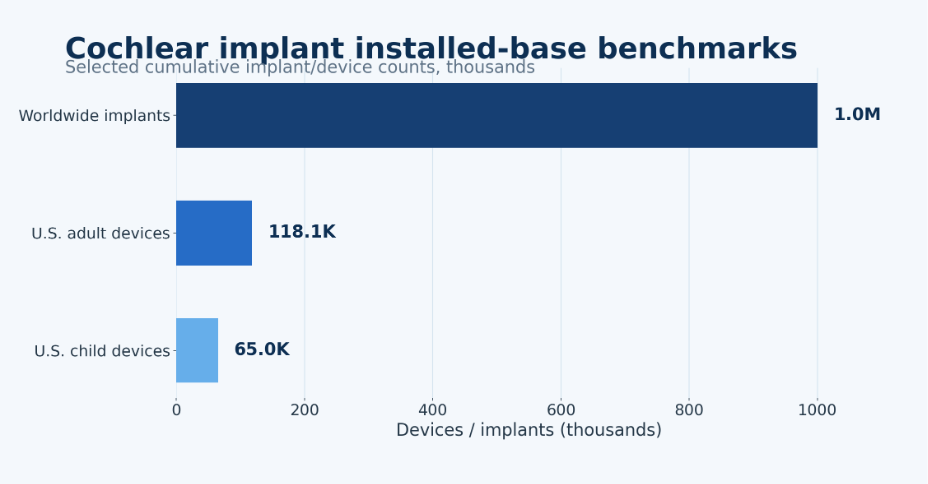
Figure 3. Installed-base data shows the gap between cumulative adoption and the wider eligible population.
Adult Cochlear Implant Market
Adult cochlear implantation is one of the largest underdeveloped opportunities in the market. Many adults with progressive hearing loss remain in hearing-aid care for years before being referred for candidacy evaluation. The adult segment is therefore shaped by awareness, audiology referral patterns, payer criteria, and whether patients understand that implantation may be considered when conventional amplification is no longer enough.
• Approximately 37.5 million U.S. adults report some trouble hearing, creating a large front end of the hearing-care funnel.
• Only a smaller subset of adults has severe-to-profound hearing loss or limited hearing-aid benefit, but referral gaps can keep candidates from evaluation.
• Adult patients may face practical barriers such as travel, caregiver needs, insurance navigation, and follow-up scheduling.
• Medicare, private insurance, and regional policy can shape adult access more strongly than technology availability alone.
• Older adults may need clear counseling about surgery, rehabilitation expectations, device maintenance, and realistic outcomes.
• Hybrid or electric-acoustic solutions can support some adults with residual low-frequency hearing, depending on candidacy and clinical judgment.
• Adult market growth improves when hearing aid providers, ENT clinics, and implant centers coordinate referral pathways.
• Adult underutilization should be measured by referral-to-evaluation rates, evaluation-to-surgery rates, and time from candidacy to implantation.
Adult market readout
The adult market is not limited by patient need alone. It is limited by whether the care pathway moves people from hearing difficulty to hearing testing, from hearing testing to candidacy referral, and from candidacy referral to surgery and follow-up. A mature adult market needs education for patients, audiologists, ENTs, and payers.
Pediatric Cochlear Implant Market
The pediatric market has a different rhythm. It is less about consumer decision-making and more about newborn screening, early diagnosis, family counseling, insurance approval, surgical timing, speech-language support, and long-term educational integration. The device is important, but the support system around the child is equally important.
• About 2 to 3 of every 1,000 U.S. children are born with detectable hearing loss in one or both ears.
• More than 90% of deaf children are born to hearing parents, making counseling and family education central to access.
• NIDCD reports about 65,000 U.S. children had received cochlear implants as of 2022.
• Pediatric demand depends on newborn screening programs that identify hearing loss early enough to support timely intervention.
• Early referral does not guarantee implantation if family travel, payer approval, or surgical capacity delays care.
• Bilateral implantation can be important in pediatric planning when coverage, candidacy, and family decision-making support it.
• Speech-language therapy, mapping visits, and school support can determine whether the care pathway remains effective after surgery.
• Low- and middle-income regions may have a larger gap between pediatric need and pediatric implantation because of cost and specialist capacity.
| Pediatric signal | What to measure | Why it matters |
|---|---|---|
| Newborn screening | Detection coverage and follow-up | Whether children enter the pathway |
| Age at implantation | Time from diagnosis to surgery | Early-intervention strength |
| Bilateral access | Coverage and clinical adoption | Depth of treatment |
| Speech therapy access | Rehab availability | Post-surgery support |
| School support | Education accommodations | Long-term care integration |
Pediatric access readout
Pediatric cochlear implant demand depends on more than device approval. It requires newborn screening, early referral, family counseling, surgery, activation, mapping, speech therapy, and school support. Pediatric statistics should therefore be read as care-system statistics, not only device statistics.
Device Type, Product, and Technology Trends
The cochlear implant market is technology-driven, but product innovation must support clinical workflows and daily user experience. Improvements in sound processors, electrode arrays, connectivity, battery life, MRI compatibility, remote care, and accessories can influence upgrades, satisfaction, and provider recommendations.
• Cochlear implant systems include an internal implant and an external sound processor, so product strategy covers both surgery and long-term wearable technology.
• External processor upgrades are a major recurring-demand category because recipients may upgrade without receiving a new internal implant.
• Electrode design matters because it affects surgical flexibility, cochlear coverage, and hearing-preservation strategies where clinically relevant.
• Smartphone connectivity and direct streaming have become important user-experience features, especially for adults in work, education, and social settings.
• Remote programming and telehealth tools can reduce follow-up burden for patients who live far from implant centers.
• MRI compatibility is increasingly important because many adult recipients are older and may need future imaging for unrelated medical conditions.
• Battery performance, water-resistant accessories, and processor comfort affect daily use and may influence upgrade decisions.
• AI-enabled or advanced noise-processing features can strengthen differentiation when they improve speech understanding in complex listening environments.
| Technology area | Market signal | Why it matters |
|---|---|---|
| Sound processing | Speech-in-noise support | Improves user experience |
| Electrode design | Hearing preservation and flexibility | Supports broader candidacy |
| Connectivity | Phone and streaming use | Improves daily usability |
| Remote care | Mapping access | Reduces visit burden |
| MRI compatibility | Imaging safety | Important for older adults |
Technology interpretation
Technology should be evaluated through adoption and long-term care, not specifications alone. A new processor, accessory, or software feature matters most when it improves daily usability, reduces follow-up friction, supports broader candidacy, or strengthens the upgrade path for existing recipients.
Hospital, ENT Clinic, and Audiology Channel Trends
The cochlear implant channel is more complex than many medical-device categories because the sale is embedded inside a clinical pathway. A patient may move from hearing screening to audiology testing, ENT review, imaging, candidacy evaluation, payer approval, surgery, activation, mapping, and rehabilitation. Each step has its own capacity and drop-off risk.
• ENT surgeons and implant centers control the surgical part of the pathway, but audiologists often control referral and follow-up momentum.
• Hospitals remain important because cochlear implantation is a surgical procedure involving operating-room capacity and specialist teams.
• Audiology clinics influence patient identification, candidacy discussions, post-activation mapping, and long-term device management.
• Speech-language professionals can be central to pediatric outcomes and long-term support after activation.
• Geographic concentration of implant centers can limit access for rural patients or families with limited travel resources.
• Provider training matters because changing candidacy criteria and technology features require consistent clinical education.
• Care coordination is a market variable because delays in testing, insurance approval, surgery, or mapping can reduce realized demand.
| Care pathway step | Primary owner | Market risk |
|---|---|---|
| Screening and testing | Audiology and public health | Eligible patients may not be identified |
| Referral | Audiology and ENT | Candidates may remain in hearing-aid care too long |
| Surgery | Hospital and surgeon | Capacity or payer approval may delay care |
| Activation and mapping | Audiology | Follow-up burden may limit access |
| Rehabilitation | Speech and hearing teams | Long-term support may be uneven |
Regional Cochlear Implant Intelligence
Regional data is one of the most useful parts of a cochlear implant statistics report. Global averages can hide wide differences in reimbursement, surgical access, hearing screening, specialist networks, device affordability, and long-term rehabilitation. A market can be large in need but weak in realized revenue if access barriers remain high.
North America
North America has a strong revenue base because of high device prices, insurance pathways, established implant centers, and a large installed base. The United States is especially important because it combines a large adult hearing-loss population with advanced device availability. The market opportunity is still constrained by adult underutilization and uneven referral from conventional hearing care into implant candidacy evaluation.
Europe
Europe is shaped by public reimbursement and country-specific care pathways. Germany, the United Kingdom, France, Italy, and Spain each have different funding rules, wait times, and implant-center networks. The region generally has mature clinical infrastructure, but centralized systems can create access variation when budget limits or referral pathways differ by country.
Asia-Pacific
Asia-Pacific carries some of the strongest long-term growth potential because large populations, aging demographics, rising healthcare spending, and expanding specialist capacity are converging. China, India, Japan, South Korea, and Australia should not be grouped as one market. Japan and Australia show mature access patterns, while China and India have large untreated pools and affordability gaps.
Latin America
Latin America is a demand-rich but access-sensitive region. Brazil and Mexico are major markets, while Argentina, Chile, and Colombia also require country-level analysis. Public funding, urban specialist concentration, and affordability strongly influence adoption. Pediatric programs can expand access, but long-term mapping and rehabilitation remain critical.
Middle East and Africa
The Middle East and Africa region includes high-resource Gulf markets alongside countries with significant affordability and specialist shortages. Some Gulf systems have advanced hospitals and medical-device access, while lower-income markets may depend on public programs, philanthropy, or limited specialist centers. Pediatric congenital hearing-loss need can be high, but access varies sharply.
| Region | Cochlear implant implication |
|---|---|
| North America | Strong revenue base, but adult underutilization remains a major opportunity |
| Europe | Public reimbursement supports access, but country rules and wait times vary |
| Asia-Pacific | Large patient pool and rising healthcare spending create high growth potential |
| Latin America | Access depends heavily on public funding and specialized implant centers |
| Middle East & Africa | Affordability and specialist capacity vary widely |
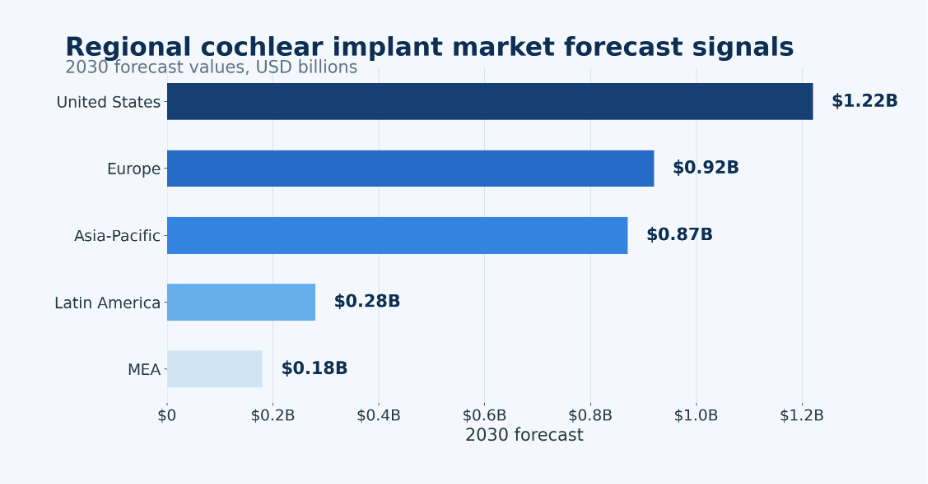
Figure 4. Regional forecasts show why cochlear implant growth should be analyzed by access conditions.
Country-Level Cochlear Implant Statistics
Country-level data is where the cochlear implant market becomes most practical. The same device category can behave very differently in the United States, Germany, China, India, Japan, Australia, and Brazil because referral systems, reimbursement, specialist access, and patient affordability differ. Country comparisons should therefore focus on market signals, not only revenue values.
United States
The United States combines a large hearing-loss population, high device availability, private and public reimbursement, and a large installed base. Grand View Research estimates the U.S. market at USD 627.7 million in 2023 and projects USD 940.1 million by 2030. NIDCD estimates about 118,100 adults and 65,000 children in the United States had received cochlear implants as of 2022.
Germany
Germany is one of Europe’s strongest cochlear implant markets because of advanced ENT care, reimbursement support, and well-developed implant-center infrastructure. The country is important for European benchmarking because it combines mature clinical access with a high-income device environment.
United Kingdom
The United Kingdom is shaped by NHS pathways, national clinical guidance, and publicly funded access. The market is less about consumer affordability and more about eligibility, wait times, referral routes, and capacity in implant centers.
France
France represents a mature European market where public reimbursement and specialist hospitals support adoption. Country-level analysis should review pediatric access, adult referrals, bilateral rules, and processor-upgrade coverage.
China
China is one of the most important long-term growth markets because the potential patient pool is large and healthcare capacity continues to expand. The main market question is how quickly affordability, public funding, surgeon capacity, and rehabilitation access improve outside major urban centers.
India
India has a very large hearing-loss need but also a substantial affordability and access gap. Growth depends on public programs, private hospitals, awareness, pediatric screening, and the availability of trained implant teams.
Japan
Japan’s aging population makes adult hearing care especially important. The country has advanced medical infrastructure, but adult referral, candidacy awareness, and reimbursement rules still shape adoption.
South Korea
South Korea is a high-technology healthcare market with advanced hospitals and strong device access. Growth is supported by adult demand, pediatric care pathways, and high expectations for processor performance and connectivity.
Australia
Australia has mature hearing-care infrastructure and strong screening systems, which makes it an important access benchmark. The market illustrates how public support, specialist networks, and long-term follow-up can improve pathway consistency.
Brazil
Brazil is a key Latin American market because of population size and specialist capacity in major cities. Access is more uneven than in high-income markets, so public funding, pediatric programs, and urban-rural distribution are central signals.
| Country | Market signal | Why it matters |
|---|---|---|
| United States | Large revenue base and installed base | Premium-device and reimbursement strength |
| Germany | Strong European implant market | Access maturity |
| United Kingdom | NHS pathway | Centralized reimbursement influence |
| China | Large untreated patient pool | Long-term growth potential |
| India | Large need and affordability gap | Underpenetrated demand |
| Japan | Aging population | Adult implant opportunity |
| Australia | Mature screening and hearing-care infrastructure | Access strength |
| Brazil | Large Latin American market | Regional opportunity |
Reimbursement, Access, and Affordability
Reimbursement is one of the most powerful adoption variables in the cochlear implant market. Implantation involves the device, surgery, hospital resources, anesthesia, imaging, activation, mapping, rehabilitation, accessories, and eventual processor replacement. Coverage for the surgical procedure alone does not solve the whole access problem.
• In high-income markets, public or private reimbursement can make cochlear implantation accessible for many candidates, but criteria and approval processes still matter.
• In the United States, coverage may involve Medicare, Medicaid, private insurance, or mixed payer arrangements depending on age, candidacy, and state rules.
• In countries with national health systems, access may depend on public funding limits, wait times, and whether bilateral implantation is covered.
• Out-of-pocket costs can include travel, time away from work, caregiver support, therapy, accessories, or processor upgrades.
• Processor upgrade coverage is important because recipients may need replacement technology years after the original surgery.
• Families may need support navigating speech therapy, school accommodations, mapping schedules, and long-term care.
• Low- and middle-income countries may require government programs, donor support, or lower-cost access models to expand implantation.
• Affordability should be measured across the whole pathway, not just the implant list price.
| Access area | What to measure | Why it matters |
|---|---|---|
| Coverage rules | Candidacy and payer approval | Whether patients can afford surgery |
| Out-of-pocket cost | Travel, therapy, upgrades, accessories | Real family burden |
| Public funding | Budget and wait-list capacity | Scale of access |
| Upgrade policy | Processor replacement coverage | Long-term support |
| Rehab access | Speech therapy and mapping availability | Post-surgery continuity |
Access interpretation
Coverage for the implant alone does not guarantee access. Patients still need candidacy evaluation, travel support, surgery, activation, mapping, rehabilitation, and long-term processor support. The best reimbursement analysis follows the full patient pathway from identification to long-term care.
Competitive Landscape and Company Statistics
The cochlear implant market is concentrated around specialized manufacturers with deep clinical support networks. Competition is not only based on the internal implant. It also depends on sound processors, software, accessories, surgeon training, audiologist support, global distribution, reliability, upgrade pathways, and brand trust among clinicians and recipients.
• Cochlear Ltd. is one of the best-known global leaders in implantable hearing solutions, with a broad recipient ecosystem and processor upgrade pathway.
• MED-EL competes with a portfolio focused on implant systems, electrode design, and hearing preservation strategies.
• Advanced Bionics, part of Sonova, competes through implant technology, sound processing, and links to broader hearing-care expertise.
• Oticon Medical’s cochlear implant business was acquired by Cochlear, showing how scale and installed-base support matter in this specialized market.
• Company performance should be measured by product portfolio, clinical support, geographic reach, processor upgrades, and service quality.
• Clinical education matters because surgeons and audiologists influence candidacy evaluation, device selection, mapping, and long-term satisfaction.
• Processor ecosystems can strengthen retention because users may remain within a manufacturer’s platform for upgrades and accessories.
• R&D investment is important because improvements in sound processing, connectivity, and remote support can influence upgrade cycles.
| Company area | What to compare | Why it matters |
|---|---|---|
| Implant portfolio | Adult, pediatric, bilateral, hybrid options | Clinical coverage |
| Processor ecosystem | Connectivity, battery, accessories | User experience |
| Clinical support | Training and mapping resources | Supports adoption |
| Geographic reach | Distributor and center presence | Regional opportunity |
| Upgrade pathway | Processor replacement cycles | Recurring demand |
Market Drivers and Barriers
The cochlear implant market grows when medical need, diagnosis, referral, reimbursement, procedure capacity, and technology improve together. It slows when any of those elements break down. That is why driver and barrier analysis should be tied to the care pathway rather than treated as a generic list.
Growth drivers worth tracking
• Aging populations increase adult hearing-care demand and expand the potential pool of older implant candidates.
• Newborn hearing screening strengthens pediatric identification and can support earlier intervention.
• Expanded candidacy criteria can bring more adults and children into evaluation when hearing-aid benefit is limited.
• Improved sound processing, connectivity, battery performance, and accessories can support user experience and upgrade demand.
• Favorable reimbursement policies can move demand from unmet need into actual procedures.
• Better ENT and audiology education can reduce under-referral and improve the evaluation funnel.
• Emerging-market healthcare investment can expand specialist centers and public funding over time.
Barriers that limit adoption
• High device, surgery, travel, and rehabilitation costs can keep eligible patients from moving forward.
• Low awareness among adults can delay referral from hearing aids to implant candidacy evaluation.
• Surgical and audiology capacity can constrain adoption even when reimbursement exists.
• Uneven public funding can create wait lists or limit bilateral access.
• Follow-up burden can be difficult for families who live far from implant centers.
• Cultural stigma and fear of surgery can slow uptake in some populations.
• Upgrade affordability can affect long-term user experience after the initial implantation.
| Market force | Primary signal | Planning implication |
|---|---|---|
| Aging population | Adult hearing-loss demand | Strengthen referral pathways |
| Newborn screening | Early identification | Improve pediatric follow-up |
| Reimbursement | Approval and out-of-pocket cost | Convert need into procedures |
| Specialist capacity | Centers and trained teams | Reduce access bottlenecks |
| Technology upgrades | Processor replacement demand | Support recurring revenue |
Cochlear Implant Market Diagnostic
A useful cochlear implant benchmark should help teams decide where to look next. The most practical diagnostic model connects market statistics to the care pathway. Each problem area has a different owner, metric, and solution.
| Problem area | Core signals to measure | Useful benchmark |
|---|---|---|
| Patient identification | Hearing screening, audiology referrals, candidacy evaluations | Whether eligible patients enter the funnel |
| Procedure access | Implant-center capacity, surgeon availability, wait times | Whether diagnosis converts into treatment |
| Reimbursement | Coverage rules, out-of-pocket cost, upgrade policies | Affordability barriers |
| Pediatric pathway | Newborn screening, time to implantation, rehab access | Early-intervention strength |
| Adult underutilization | Severe-to-profound population vs implants | Missed market opportunity |
| Regional inequality | Implants per million, public funding, center distribution | Country-level access gaps |
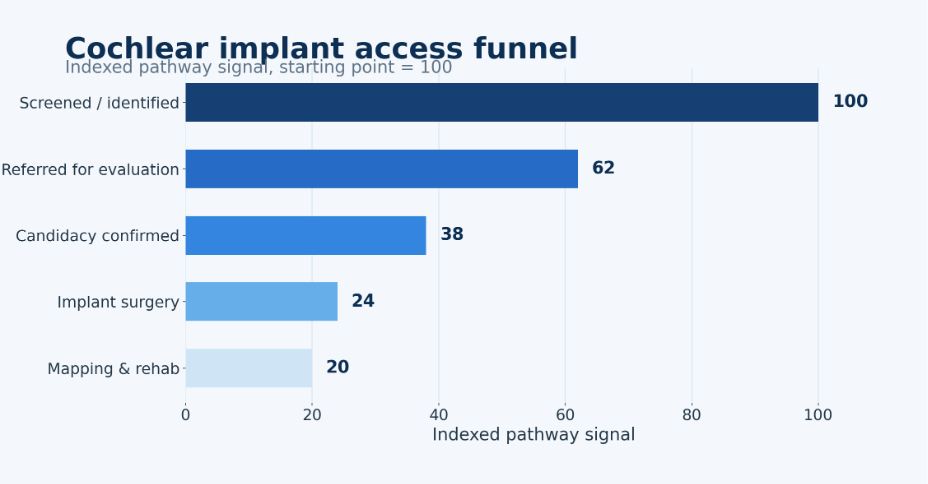
Figure 5. The cochlear implant pathway should be measured from screening through follow-up.
90-Day Cochlear Implant Benchmark Plan
Statistics become useful when they are translated into a measurement plan. A cochlear implant market review can be organized into a 90-day cycle so teams compare revenue, access, procedure volume, and long-term care capacity instead of relying on one headline market forecast.
| Timing | What to do | Output |
|---|---|---|
| Days 1-30 | Build baseline by market size, procedure volume, hearing-loss burden, region, and country | Clear map of market scale and access gaps |
| Days 31-60 | Compare adult, pediatric, bilateral, reimbursement, and implant-center data | Segment-level opportunity map |
| Days 61-90 | Review company share, regional policy, affordability, and follow-up capacity | Practical cochlear implant market scorecard |
Planning principle
The strongest cochlear implant analysis compares market revenue with patient access. A market may look attractive by value but remain underpenetrated if referrals, reimbursement, implant-center capacity, and rehabilitation access are weak. Prioritization should focus on leaks with high patient impact and clear operational ownership.
Metrics Hearing-Care Leaders Should Track
The final scorecard should be detailed enough to locate the access gap without becoming a vanity dashboard. The most useful metrics connect revenue, procedures, installed base, patient need, referral, reimbursement, and follow-up capacity.
| Metric | Why it matters |
|---|---|
| Global market size | Commercial scale |
| CAGR | Growth momentum |
| Annual implant procedures | Real treatment access |
| Cumulative recipients | Installed-base and upgrade opportunity |
| Severe-to-profound hearing-loss population | Potential need |
| Referral-to-evaluation rate | Funnel strength |
| Evaluation-to-surgery rate | Treatment conversion |
| Pediatric implantation age | Early-intervention performance |
| Bilateral implantation rate | Treatment depth |
| Processor upgrade rate | Recurring revenue |
| Reimbursement approval rate | Affordability |
| Implant centers per population | Regional access capacity |
Access Funnel and Utilization Gap
The cochlear implant market is often described through revenue, but the real demand pathway is a funnel. A person must be identified with hearing loss, tested by an audiologist, referred for implant evaluation, approved by a payer, scheduled for surgery, activated, mapped, and supported through rehabilitation. Each step can reduce access even when clinical need is large and device technology is available.
This funnel view makes the statistics more useful for market planning. A country may have a large population with severe hearing loss but still produce low procedure volume if screening, referral, reimbursement, or specialist capacity is weak. The opposite can also happen in mature markets: revenue can remain strong because of processor upgrades and bilateral procedures, while new adult-candidate conversion remains underdeveloped.
Access-funnel benchmarks worth separating
• More than 430 million people require rehabilitation for disabling hearing loss worldwide, but only a small share of that population moves into implant evaluation.
• WHO projects more than 700 million people may require hearing rehabilitation by 2050, which means the candidate funnel will become more important as populations age.
• NIDCD reports more than 1 million cochlear implants worldwide as of July 2022, showing a large installed base but still a small number relative to global hearing-loss need.
• The United States had about 118,100 adult cochlear implant recipients and about 65,000 child recipients as of 2022, creating a combined U.S. implanted base of roughly 183,100 people.
• Published access research has estimated worldwide cochlear implant access at about 2.5% of profoundly deaf individuals, highlighting a major gap between potential need and actual adoption.
• Even when surgery is covered, patients may face additional barriers from travel, pre-surgical testing, activation visits, mapping sessions, processor maintenance, and speech-language support.
• Pediatric access depends on time-sensitive steps, because screening and diagnosis must be followed by referral, family counseling, implantation, activation, and long-term rehabilitation support.
• Adult access often depends on whether hearing-aid users are referred for candidacy testing before years of severe communication difficulty reduce confidence in the care pathway.
| Access step | Core signal | Why it matters |
|---|---|---|
| Screening | Newborn, school, adult and older-adult hearing checks | Whether potential candidates are identified early enough. |
| Referral | Audiology-to-implant-center referrals | Whether hearing-aid care converts into candidacy evaluation. |
| Evaluation | Candidacy testing and payer documentation | Whether patients can enter the surgical pathway. |
| Implantation | Approved procedures and wait time | Real access to treatment, not only diagnosis. |
| Follow-up | Activation, mapping, therapy and upgrades | Whether recipients receive long-term support. |
Access interpretation
The most useful access question is not simply how many cochlear implants are sold. It is how many people move from hearing-loss identification into evaluation, surgery, activation, mapping, and long-term use. This makes referral rate, reimbursement approval, implant-center capacity, and follow-up completion just as important as market value.
Cochlear Implants Market Statistics FAQ
How big is the cochlear implants market?
The global cochlear implants market was valued at about USD 2.80 billion in 2024 and is projected to reach USD 4.73 billion by 2030. The number matters because it shows that cochlear implants are a specialized but globally meaningful medical-device category supported by patient need, reimbursement, and long-term upgrade demand.
What is the forecast CAGR for cochlear implants?
One leading forecast places the global cochlear implants market at a 9.2% CAGR from 2025 to 2030. CAGR should be read with procedure data, because revenue can grow from new recipients, bilateral implantation, premium processors, upgrades, or regional expansion.
How many people have cochlear implants worldwide?
NIDCD reports more than 1 million cochlear implants worldwide as of July 2022. That installed base is important because recipients require mapping, service, accessories, processor support, and future upgrades, making the market larger than first-time surgery alone.
How many cochlear implants have been placed in the United States?
NIDCD estimates about 118,100 U.S. adults and 65,000 U.S. children had received cochlear implants as of 2022. The combined U.S. installed base of about 183,100 recipients or devices shows a mature but still underpenetrated market.
Who is eligible for cochlear implants?
Eligibility depends on hearing status, speech understanding, hearing-aid benefit, medical evaluation, age, and local clinical criteria. In market terms, the key issue is not only eligibility rules. It is whether people are screened, referred, evaluated, approved, implanted, mapped, and supported.
Why is pediatric implantation important?
Pediatric implantation matters because children need early identification and coordinated support. About 2 to 3 of every 1,000 U.S. children are born with detectable hearing loss. The pediatric pathway depends on newborn screening, referral, family counseling, surgery, mapping, speech therapy, and school support.
Which region is growing fastest?
Asia-Pacific is often identified as one of the fastest-growth regions because large patient pools, aging populations, rising healthcare spending, and expanding specialist capacity are moving together. However, growth depends heavily on affordability, public funding, and access outside major urban centers.
Why is Asia-Pacific important for cochlear implant growth?
Asia-Pacific includes China, India, Japan, South Korea, and Australia, which have very different market profiles. China and India offer large long-term potential because of untreated need, while Japan, South Korea, and Australia show more mature healthcare infrastructure and stronger device access.
What are the biggest barriers to cochlear implant adoption?
The biggest barriers are cost, low awareness, under-referral, surgical capacity, audiologist availability, uneven reimbursement, travel burden, and long-term rehabilitation access. These barriers explain why hearing-loss burden can be very large while implant adoption remains relatively low.
Which companies lead the cochlear implant market?
Major cochlear implant companies include Cochlear Ltd., MED-EL, and Advanced Bionics. Competition is based on the internal implant, external sound processor, software, accessories, clinical support, geographic reach, reliability, and processor upgrade pathway.
How does reimbursement affect the market?
Reimbursement affects whether identified candidates become recipients. Coverage can include surgery, devices, hospital care, mapping, and processor upgrades, but access can still be limited by out-of-pocket costs, travel, therapy, wait times, and local approval rules.
What metrics should cochlear implant leaders track?
The most useful metrics are market size, CAGR, annual procedures, cumulative recipients, severe-to-profound hearing-loss population, referral-to-evaluation rate, evaluation-to-surgery rate, pediatric implantation age, bilateral implantation rate, processor upgrades, reimbursement approvals, and implant centers per population.
Final Takeaway
The cochlear implant market is growing because severe hearing loss is a large global health burden and implant technology provides a treatment pathway for patients who do not receive enough benefit from conventional hearing aids. The market’s headline value is important, but it is only one part of the picture.
The largest opportunity is not only device innovation. It is the distance between hearing-loss need, diagnosis, referral, surgery, reimbursement, activation, mapping, and rehabilitation. The countries and providers that close those gaps can expand access while also strengthening procedure volume, installed-base support, and upgrade demand.
For market leaders, the practical goal is a cochlear implant system that is clinically appropriate, financially accessible, geographically reachable, and supported over the patient’s lifetime. The best reading comes from tracking market value, annual procedures, implant recipients, pediatric access, adult underutilization, reimbursement, regional availability, company ecosystems, and long-term processor upgrade demand.